Think Forward.

Marcher pieds nus : l’urgence d’un réveil politique au Maroc... 1584

Le contexte marocain actuel est d’une intensité particulière, mais pas exceptionnelle. Le Maroc en a connu d'autres. Les manifestations qui secouent plusieurs villes du Royaume, portées notamment par le collectif **GenZ 212**, ne sont pas un simple mouvement d’humeur. Elles traduisent une **colère sociale profonde**, multiforme et longtemps contenue. Inspirées sans doute par les mobilisations de jeunesse observées ailleurs, ces protestations s’enracinent dans une réalité bien marocaine : celle d’un peuple jeune, connecté, éduqué, mais désenchanté face à un système qu'il pense ne répondre plus à ses attentes. Il exprime une colère multiple et légitime sans doute aucun, au nom de toutes les générations. Les revendications s’articulent autour de thèmes récurrents mais désormais explosifs: la **lutte contre la corruption**, la **dégradation de certains services publics du quotidien: école, santé**, la **crise du chômage des jeunes diplômés**, et les **inégalités sociales** qui se creusent dangereusement. À cela s’ajoute une critique frontale des **priorités économiques du gouvernement**. Cette jeunesse, qui ne se reconnaît plus dans les discours officiels, exprime une exigence nouvelle : celle d’un **État plus juste, plus transparent, plus proche**. Elle réclame de la cohérence entre la parole politique et l’action publique. Ce n’est pas une génération dépolitisée, comme certains voudraient le croire, mais une génération qui rejette les faux-semblants et les réponses technocratiques. Elle découvre la pratique de la politique par internet sans forcément y penser. Elle parle le langage du quotidien : celui du prix du poulet, des soins, du transport, et non celui des taux d’inflation ou des indices macroéconomiques. Elle s'exprime en click, en"avatars", "emojis" ou "stickers". Elle écrit Darija en lettres latines et chiffres. Elle s'informe vite, répond instantanément et succinctement. Elle n'aime pas les discours longs qu'elle trouve fastidieux. Elle vit dans un monde globalisé mais revendique sa spécificité marocaine et en est fière. Quand un citoyen se plaint du **prix des tomates**, ce n’est pas une courbe d’indicateur ou une note du FMI qui va le rassurer. Il parle en dirhams, pas en pourcentages. Alors que faut il sinon que les décideurs se mettent à marcher de temps en temps pieds nus. Marcher pieds nus c'est le retour à la réalité. C'est ressentir le pays. Dans ce climat de tension, la **métaphore de feu Hassan II** qui invitait les architectes à «marcher pieds nus pour ressentir le pays» prend une résonance saisissante. Jadis prononcée pour rappeler l’importance de comprendre l’âme du Maroc avant de construire, elle devient aujourd’hui un **impératif politique**. Marcher pieds nus, c’est **descendre de son piédestal**, quitter les bureaux climatisés, abandonner les powerpoints et les slogans pour **écouter le terrain**. C’est accepter de sentir la poussière des routes rurales, d’entendre les cris des hôpitaux saturés, de partager le désarroi des enseignants, ou la solitude des jeunes sans emploi. Ils doivent comprendre ce que veut dire le **Maroc à deux vitesses**, dénoncé par Sa Majesté le Roi Mohammed VI lui-même. Une partie du pays vit dans la modernité, connectée, optimiste, visible dans les projets d’infrastructures et les forums internationaux. L’autre, majoritaire, se débat dans la précarité ou l'angoisse de la pauvreté, l’oubli, l’injustice. Entre les deux, le fossé se creuse. Et c’est précisément ce fossé que les manifestations actuelles mettent à nu. Voilà quelques années naissait l'espoir d'un nouveau modèle de développement, demandé par Sa Majesté le Roi lui même. Qu'en est il aujourd'hui. Il est où se modèle et ses recommandations? Le **Nouveau Modèle de Développement (NMD)**, tant vanté lors de son lancement, semble aujourd’hui s’être perdu dans les méandres de la bureaucratie et de la communication. Ses ambitions étaient grandes : réduire les inégalités, renforcer la cohésion sociale, encourager l’initiative. Mais sur le terrain, les Marocains n’en voient guère les fruits. Il a tout simplement été oublié. L’impression qui domine est celle d’un **décalage croissant entre les promesses et la réalité**, entre les discours triomphalistes et la vie quotidienne des citoyens. Ce désenchantement n’est pas qu’économique, il est aussi moral : c’est la confiance qui s’effrite, la parole publique qui perd son sens. La jeunesse a de tout temps été la boussole morale des peuples. Elle dit haut ce que les autres pensent tout bas. La **mobilisation de la jeunesse** agit comme un électrochoc salutaire. Le mouvement n’est pas monolithique : il réunit des étudiants, des chômeurs, des jeunes actifs, des artistes, des enseignants. Mais tous partagent un sentiment commun: celui d’avoir été **mis à l’écart** d’un système politique et économique qui ne leur offre plus de perspectives. Cette jeunesse n’attaque pas son pays, elle veut le sauver d’une dérive qui le menace. Elle réclame **justice sociale, dignité, et respect**. Elle ne veut pas seulement qu’on parle d’elle, mais qu’on parle avec elle. C’est un **appel à la refondation du lien social et politique**, à une écoute véritable et non feinte. La plus grande erreur que pourraient commettre les responsables serait de **sous-estimer cette colère**, ou pire, de la mépriser. Dans un monde où les frustrations s’expriment en ligne avant de descendre dans la rue, ignorer la voix des jeunes, c’est préparer les conditions d’une crise plus grave. L'urgence est de retrouver l’esprit de ce pays millénaire. Marcher pieds nus, aujourd’hui, c’est **revenir à l’essentiel** : * aller dans les écoles de villages où les enfants manquent de tout, * visiter les hôpitaux où certains médecins font des miracles avec rien mais où d'autres sont absents ou se reposent après avoir intervenu ailleurs, * écouter les mères qui nourrissent difficilement leurs familles, * comprendre les jeunes qui refusent de vivre dans l’attente d’un miracle administratif. Un pays ne se gouverne pas à coups de slides PowerPoint, de rapports commandés à des cabinets étrangers, ni de promesses formatées pour les réseaux sociaux. Il se dirige **avec la conscience du réel, le sens du peuple, et la volonté de corriger ce qui blesse**. Le Maroc a souvent prouvé sa capacité à surmonter les crises en se réinventant. Aujourd’hui encore, il a les ressources humaines, culturelles et institutionnelles pour le faire. Mais cela suppose un **changement de regard**, une **réconciliation avec la vérité du terrain**, et une **humilité politique retrouvée**. Marcher pieds nus, c’est renouer avec le Maroc profond, celui qui souffre, mais aussi celui qui espère. Marcher pieds nus c'est aussi dire aux citoyens ses quatre vérités quand il faute, quand il est lui même la cause de son malheur. Marcher pieds nus c'est pousser les jeunes au travail et à l'innovation. C’est à cette condition seulement que la paix sociale, la cohésion nationale et l’avenir du pays pourront être garantis.

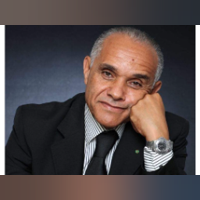
Aziz Daouda Aziz Daouda

Aziz Daouda

Directeur Technique et du Développement de la Confédération Africaine d'Athlétisme. Passionné du Maroc, passionné d'Afrique. Concerné par ce qui se passe, formulant mon point de vue quand j'en ai un. Humaniste, j'essaye de l'être, humain je veux l'être. Mon histoire est intimement liée à l'athlétisme marocain et mondial. J'ai eu le privilège de participer à la gloire de mon pays .


8100

33.0

CAF Sanctions: Disciplinary Justice with Variable Geometry? 230

The decisions by the Confederation of African Football (CAF) Disciplinary Commission regarding the incidents that marred the CAN final between Senegal and Morocco are now known. They were awaited, scrutinized, sometimes feared. But beyond their mere announcement, it is their **coherence, proportionality, and equity** that raise questions today. At first glance, the CAF sought to strike hard, giving the impression of sanctioning both parties to preserve a posture of balance. The CAF simply forgot that at its core, the conflict was squarely between Senegal and the referee, not with the Moroccan team, and thus, in the end, pitted Senegal against this very same CAF, responsible for the organization and officiating. Senegal and Morocco have thus, according to the commission's logic, presided over by a Senegalese, let us recall, been sanctioned to varying degrees. Yet, a close reading of the facts, confronted with the very content of the decisions rendered, reveals an **asymmetry that is hard to justify** between the severity of the acts observed and the weight of the sanctions imposed. The ridiculous is not far off. The central problem, namely, the officiating, has simply been swept aside. The most troubling element undoubtedly lies in the **total absence of any reference to the referee** in the Commission's ruling. As if he had never existed. Yet, the images and testimonies align: in the final moments, the referee displayed **manifest irresponsibility**. How can one justify resuming play when the minimum safety conditions were clearly not met? The stadium had been invaded by official Senegalese supporters, equipment had been vandalized, and tensions were at a boiling point. In such circumstances, the rules are clear: absolute priority must be given to the safety of players, officials, and the public. By ignoring this dimension, the Disciplinary Commission misses an **essential link in the chain of responsibilities**. They are, however, clearly identified. This is not to fully exonerate the Moroccan side. Reprehensible behaviors existed, and some hot-headed reactions could have been avoided. But the nature and gravity of these acts remain **incommensurable** with those attributable to the Senegalese delegation and its immediate environment. The most striking example remains the sanction imposed on Achraf Hakimi. Reproaching him for attempting to remove a towel belonging to the Senegalese goalkeeper—an object that, incidentally, had no business on the pitch—smacks more of a **search for artificial balance** than rigorous application of disciplinary principles. Can one seriously equate this gesture with outbursts involving pitch invasions and infrastructure damage? This harms the image of world football, beyond just African football. The inclusion of such an amalgam in the dossier and the proportionality of the sanctions are manifestly debatable. It is precisely on the terrain of proportionality that the CAF's decision falters. The sanctions imposed on the Moroccan camp appear **relatively heavy** given the facts reproached to them, especially when compared to those concerning the Senegalese side, which was linked to structurally far graver incidents. This disproportion undermines the narrative of those in Senegal and elsewhere who decried Morocco's supposed "stranglehold" on CAF bodies. If such influence truly existed, how to explain that Morocco itself ends up heavily sanctioned? Where is this alleged institutional protection when the disciplinary decisions, on the contrary, seem applied with particular rigor against it? One can only regret the missed opportunity for the CAF to show a new face of power and justice. The CAF Disciplinary Commission squandered a precious chance: to **clarify responsibilities, reaffirm the central role of officiating, and lay credible foundations** for managing crises in African competitions. By opting for punitive symmetry rather than a fine analysis of the facts, it perpetuates unease, fuels suspicions, and leaves the game's actors—players, officials, and fans, in a gray zone where perceived injustice becomes more damaging than the sanction itself. African football deserves better than disciplinary justice with variable geometry. It deserves an authority capable of owning its choices, naming responsibilities where they truly lie, and protecting the essentials: the integrity of the game and the safety of those who bring it to life. Today, some chuckle under their breath for escaping truly proportional sanctions for their misdeeds; others are stunned; still others conclude the immaturity of this African body, like other continental instances. A pitiful image for a continent whose youth aspires to development and a bright future, with football and footballers as role models. Has African football missed the chance to set an example? Did the CAF issue the wrong communiqué or target the wrong match? In any case, there is one clear winner slipping under the radar: the party at the origin of it all. Like a fugitive, the commission released its statement at an impossible hour... Funny, no? One wonders whether to hold out hope and pursue the process further, or resign oneself to admitting there is no hope for a just and credible African football body.

Najib Salmi, a Conscience Fades, a Legacy Endures 241

Najib Salmi has passed away, and with him closes one of the most beautiful chapters of Moroccan sports journalism. But beyond the collective tribute, it's also an intimate page of my own life as a columnist, colleague, and friend that turns. He leaves behind an immense professional legacy and, above all, an indelible human imprint. He was undoubtedly the greatest pen in Moroccan sports for decades. For over forty years, Najib Salmi embodied a certain idea of sports journalism, one that was demanding and responsible. In fact, he founded a school of sports journalism, having stumbled into it somewhat by chance and grown to love it. A central figure at the daily *L’Opinion*, where he directed the sports page, he marked generations of readers, especially through his cult column "Les points sur les i" (*Dotting the i's*), a rare space where freedom of tone blended with intellectual rigor and a sense of the public interest. He was an institution in himself. He belonged to that generation for which sports journalism was neither empty entertainment nor a echo chamber for blind passions, but an act of public service. At a time when Moroccan sports was entering the era of professionalization, money, and excessive media coverage, his pen knew how to denounce excesses, pinpoint responsibilities, and salute, with the same honesty, real progress and achievements when they were genuine. Najib Salmi was not just a great columnist; he was also a builder. At the helm of the Moroccan Association of Sports Press from 1993 to 2009, he fought for the profession's recognition, the defense of its ethics, and the dignity of those who practice it. He helped embed Moroccan sports journalism in regional and international bodies, earning credibility through seriousness and consistency. Wasn't it at a congress he organized in Marrakech that our friend Gianni Merlo was elected president of AIPS? Wasn't it he alone who headlined young prodigy Said Aouita after he set a new national 1500m record? He rightly predicted that Aouita would go far. He was the unwavering supporter of generations of great athletes. He attended every world championship and Olympic Games. He supported me too, with strength and determination. A man of principles, discreet but inflexible on essentials, he believed that respect for the reader and the truthfulness of information were non-negotiable. This moral uprightness, rare in an environment often subject to pressures and interests, earned him recognition from his peers as a true school of sports journalism. Abdellatif Semlali, the legendary Minister of Youth and Sports and his friend, delighted in calling him "Monsieur à côté" (*The Man on the Side*). He truly was. He never fit anyone else's mold, even during a brief stint at *Le Matin du Sahara*, then masterfully directed by Moulay Ahmed Alaoui. For me, Najib Salmi was more than a professional reference; he was a friend, a brother, and a mentor. It was thanks to his trust that I was able to write for years in *L’Opinion*'s sports pages, learning the craft day by day, line by line, under his attentive and benevolent gaze, enduring his mood swings and, above all, his corrections to style and syntax. He passed on to me more than writing techniques: a vision of what a column should be, rooted in integrity, thorough groundwork, and a rejection of shortcuts. Even today, if I continue to write, it's also because that inner voice he helped instill remains, the one that reminds us not to betray sport, the reader, or the truth. Najib Salmi passed away at the age of 78, after a long battle with illness, leaving an immense void in the newsrooms of *L’Opinion* and *Challenge*, to which he contributed with strength and diligence. He leaves a huge void in the hearts of all who crossed his path. He will rest in the Chouhada Cemetery in Rabat, where he himself had accompanied so many other friends, acquaintances, loved ones, and colleagues, and many who grew up under the benevolent shadow of his pen. May God welcome him in His mercy. To the friend, the brother, the master who showed me the way, I can say only one thing: thank you, Najib, for the delightful moments shared, for the words, the lessons, and the example. Readers will miss Najib Salmi; the family, the inner circle, and I will bury Said Hejaj. Said Hejaj departs peacefully to rest. Najib Salmi will live on in history.

From Passion to Meaning: The CAN as a Test of Truth for Africanity... 244

The Royal Cabinet's communiqué, published on January 22, 2026, following the CAN 2025 brilliantly hosted by Morocco, combines a call for calm after the Senegalese withdrawal episode with a celebration of an organizational success hailed across Africa and beyond. Through a measured and forward-looking tone, it transforms a sports tension into a demonstration of responsible continental leadership, faithful to a long-term vision for a united and prosperous Africa. Through the tone and content of the royal message, we understand that once the passion subsides, inter-African fraternity will naturally prevail: Morocco's success is also Africa's success. The CAN 2025 confirmed Morocco's ability to turn a continental tournament into a lever for development and influence. The smooth organization, modernized infrastructure, massive influx of supporters, and revitalization of key sectors such as tourism, transport, commerce, and services generated billions of dirhams in returns and around 100,000 direct and indirect jobs, with over 3,000 companies mobilized and some 500,000 supporters transported by Royal Air Maroc. The royal message places this success within a broader trajectory: that of a "great African country" which, in twenty-four months, has gained the equivalent of a decade of development in infrastructure and expertise, in service of its people and its continent. Without overlooking the "unfortunate" nature of the incidents in the Morocco-Senegal final, the communiqué opts for elevation over controversy. By recalling that once the passion has calmed, "inter-African fraternity will naturally prevail," it offers a mature reading of collective emotions and emphasizes that the Moroccan people "know how to put things in perspective" and reject resentment. The sports defeat thus turns into a symbolic and diplomatic victory: "hostile designs" and denigration are neutralized by strategic consistency, self-confidence, and the Kingdom's African anchoring. The Moroccan public in the stadium witnessed a grotesque tragedy, deliberately and premeditatedly staged, but was not fooled. They quickly understood, kept their calm and composure despite being deeply wounded. A noted and remarkable behavior that honors them and honors the Kingdom. In practice, as in history, Morocco-Senegal relations are imbued with a consolidated fraternity, strengthened on every occasion. The royal message thus takes on particular significance toward this brother country, with which relations are described as "exceptional and strategic," founded on shared memory, assumed African solidarity, deep religious fraternity, and strong economic convergences. The holding, on January 26 and 27 in Rabat, of the 15th Morocco-Senegal Joint High Commission, accompanied by an economic forum, gives concrete content to this resilient fraternity by relaunching investments, joint projects, and South-South cooperation in service of the two peoples and, by extension, all those in the region. Beyond the finalists, the communiqué addresses all African peoples by recalling that "nothing can alter the proximity cultivated over centuries" nor the "fruitful cooperation" forged with countries on the continent. It situates the CAN 2025 within a long-term strategy: capitalizing on intangible capital made of trust, visibility, and credibility, and using it as a springboard toward upcoming events, notably the 2030 World Cup, in an Africa that assumes its place on the world stage, seeks to establish it through continuity, and consolidate it. In this spirit, it is essential to reject deviations, racism, hate speech, media or ideological manipulations, from tarnishing our Africanity or denying its profound dignity. Being African means first sharing a geography, a history, cultures, struggles, and a common destiny, beyond borders, sports results, or political contingencies. We are not condemned to reproduce stupidity and hostility; on the contrary, we have the collective responsibility to make public space a place of encounter, listening, and fraternization, where intelligence, unconditional respect for human dignity, and curiosity about the other prevail over insult and stigmatization. In the straight line of the royal message, this CAN must remain a reminder: our African future will not be built in hatred or by imitating the worst reflexes, but in the ability to transform tensions into learning, competitions into bridges, and disagreements into opportunities for dialogue. We are Africans, together, through memory and through the future, and it is this shared consciousness that can make our stadiums, our cities, and our debates spaces of elevation rather than scenes of division. Attempts at destabilization orchestrated by some may, at best, cloud the horizon for the duration of a competition, but they cannot sustainably embed themselves in the consciousness of peoples. As facts emerge, they turn against their authors, now exposed to the world's gaze, unable to indefinitely mask their failures, the poverty of their mindset, and the pettiness of their designs. Where manipulation exhausts itself, truth always ends up prevailing, and with it the dignity of nations that bet on construction, fraternity, and the future rather than on intrigue and division.

African Football’s Leading Force: The Moroccan Model Amidst Regional Headwinds 492

The curtain fell on AFCON 2025, leaving a trail of striking contrasts. While the event confirmed the Kingdom’s supremacy as a world-class logistical hub, the tensions witnessed during the final on January 18, 2026, in Rabat, served as a stark reminder of the contingencies still weighing on continental football. Between the seamlessness of the infrastructure and the archaic nature of certain disciplinary attitudes, a fundamental question emerges: how will the transition from CAF’s regulatory framework to that of FIFA in 2030 reshape the management of these organic crises? This shift represents more than a mere scaling up; it is a true paradigmatic rupture where technocratic neutrality will serve to sanctify Moroccan excellence. I. Moroccan Excellence: A Technological Showcase for Africa The massive investment deployed by the Kingdom—ranging from the deep modernization of sports complexes to the systemic integration of VAR—presented the world with the image of a modern, rigorous, and visionary Morocco. This material success, lauded by international observers, aimed to establish an African benchmark. However, this pursuit of perfection encountered a persistent psychological phenomenon: the "host country complex." In this configuration, organizational mastery is sometimes perceived by competitors not as shared progress, but as a lever of dominance, mechanically fueling theories of favoritism. The events of the final illustrate this at its peak. The disallowed goal for Ismaïla Sarr and the late-match penalty became, through the lens of regional suspicion, instruments of controversy rather than technically grounded officiating decisions. Yet, data from DM Sport reveals the opposite: Morocco was among the most penalized teams in the tournament. This discrepancy highlights a major flaw: technology is insufficient to validate a result unless it is protected by a jurisdictional authority perceived as exogenous. II. Solidary Leadership and the Diplomacy of Resentment It would be erroneous, however, to view this quest for excellence as a desire for isolation. On the contrary, Morocco maintains deep and unwavering historical ties with the majority of its sister nations across the continent. Faithful to its African roots, the Kingdom continues to actively promote continental football within CAF, offering its infrastructure and expertise to federations seeking professionalization. This "open-hand" policy ensures that Moroccan success translates into success for all of Africa. Nevertheless, such leadership breeds friction. A "diplomacy of resentment" has emerged from certain foreign media spheres—particularly in specific Arab and African countries—aiming to tarnish the prestige of the Moroccan organization. By framing Morocco as a favored "ogre," these narratives attempt to transform factual superiority into moral injustice. This media harassment specifically targets the emergence of a governance model that now aligns with the most demanding global standards. III. The Advent of "Cold Justice": Legal Sanctification The transition to FIFA’s aegis in 2030 will signal the end of the geographical proximity that fosters such smear campaigns. Unlike the continental framework, the globalization of officiating bodies will dismantle zonal rivalries. Where CAF must often navigate between diplomatic compromise and sporting imperatives, FIFA deploys a "cold justice"—purely procedural in nature. The chaos observed in Rabat would meet a surgical response in 2030. Article 10 of the FIFA Disciplinary Code is unequivocal: any refusal to resume play results in an automatic forfeit and severe sanctions. In 2030, the rule of law will act as a protective cleaver for the host, rendering victimhood narratives obsolete. IV. Technology and the "2030 Bloc": Toward an Indisputable Truth The 2030 edition, spearheaded by the Morocco-Spain-Portugal trio, will benefit from total judgment automation (Shadow VAR, semi-automated offside) and absolute transparency. The FIFA Hosting Agreement will prevail as a superior norm, guaranteeing impartiality. This legal framework will serve as a shield, preventing disciplinary incidents from being politically instrumentalized against the Kingdom. AFCON 2025 was a successful demonstration of organizational strength for Morocco, confirming its role as the driving force of African football. However, it also revealed that excellence remains vulnerable to peripheral noise. In 2030, the definitive anchoring in FIFA law will allow the Kingdom to transform its organizational prowess into a lasting institutional legacy. Sport, finally shielded from geopolitical dross, will align with the strategic vision of a Morocco turned toward the universal, making the rule of law the bedrock of its global legitimacy.

Light Pollution and the End of the Construction of Imagination – Part 1 568

One of the memories I carry most fondly is when my interest in everything related to outer space first awakened. I clearly remember that in 1980 I saw a TV report about a lunar eclipse that we would be able to observe. The images shown on the news program impacted me so deeply that I could hardly sleep that night. The sight of the lunar craters, caught in that characteristic interplay of light and shadow, became etched in my mind. The next day, I questioned a teacher who was a friend of my family almost to the point of exhausting him, asking so many questions about the subject. Next year, I also saw TV advertisements announcing the theatrical release of "The Empire Strikes Back". In a way, my imagination was launched in a manner analogous to the catapult effect that spacecraft and space probes use when they swing around planets. There wasn’t a single clear night when I didn’t spend hours looking up at the sky, at the immensity of the universe. At that time, the night sky was truly dark, since light pollution caused by city lights did not yet have as significant an effect as it does today. In 1982, Carl Sagan’s series "Cosmos" also premiered on television, and even its soundtrack struck me deeply. Then, in 1984, with the debut of several animated series, two of them being "Groizer X" and "Star Blazers", the American version of "Space Battleship Yamato", I experienced yet another “gravitational catapult” effect, further fueling my imagination. In 1986, the passage of Halley’s Comet took over newspapers, magazines, TV programs, and even my school science books. That was it! This was the definitive confirmation of my passion for the space. At that time, however, I still lived in the realm of fantasy, driven solely by what my imagination brought me. I would look at the sky on clear nights and think that traveling through space was like it was in the movies, challenging, full of adventures and dangers, yet seeming simple and even comfortable. After all, in science fiction films, many aspects of physics were disregarded, using a kind of poetic license. But I grew up. I became a scientist. My gaze acquired a new perspective, yet without ever losing the magic of imagination from the beginning of this story. What came next? In the second part of this story, I will conclude… Clear skies to all, and Ad astra!

Trump’s “Council of Peace”: Strategic Pragmatism or Alarm Signal for the International Order? 1322

The invitation extended by U.S. President Donald Trump to His Majesty King Mohammed VI to join the new “Council of Peace” marks a significant turning point in contemporary international relations practice. It stems neither from protocol nor symbolism, but fits into an assumed reconfiguration of global conflict management mechanisms. The Sovereign's acceptance of this invitation, while the Algerian president was not invited and Africa remains largely underrepresented, if not ignored, highlights a selective logic based not on geography or ideology, but on political utility as perceived by the USA as a global actor. In the official communiqué announcing the Sovereign's acceptance, Morocco's diplomatic fundamentals regarding the Palestinian issue were explicitly reiterated, particularly the two-state solution with states living side by side. The trust-based relations with the concerned Arab parties, especially Palestinians in Gaza and the West Bank on one side, and Israel on the other, perfectly foreshadow the role the Kingdom will play in establishing peace and rebuilding the region. Isn't this a direct way to consecrate a results-oriented diplomacy in the face of the long-ailing multilateralism that has been faltering for quite some time? For decades, major international institutions, starting with the UN, have struggled to resolve protracted conflicts. The Security Council is paralyzed by the veto right, peace processes are stalled, UN missions lack a clear political horizon: the symptoms of a saturated system are evident. Donald Trump's envisioned Council of Peace, by contrast, follows a logic of rupture. It seeks neither to produce international law nor to impose universal norms, but to create an informal framework for direct negotiation among influential actors, including those the UN system struggles to integrate operationally. In this context, Morocco is undoubtedly a stability actor and a discreet, credible, and effective mediator. The presence of the King of Morocco in this body reflects international recognition of a diplomatic model founded on stability, continuity, and pragmatism. Morocco has established itself as an actor capable of dialoguing with partners of divergent interests while maintaining a clear strategic line, and everyone knows that it is His Majesty himself who initiated this vision and leads this distinguished diplomacy. This explains the particular nature of the invitation addressed to the Sovereign. Conversely, the exclusion of certain states reveals the limits of a diplomacy based on permanent conflictuality and blind ideological posturing. In a Trumpian logic, effectiveness trumps representativeness. Pragmatism prevails over sterility and outdated ideological blindness. The question then becomes: in this context, is the UN being marginalized or pushed toward reform? This Council does not signal the immediate end of the UN, but it exposes its existential crisis. If a parallel body achieves tangible results quickly, as claimed on certain African dossiers, among others, then the question of the UN system's functional legitimacy will arise acutely. President Trump's initiative can thus be seen as a trigger: either for a progressive weakening of the UN, which he has little fondness for, or for a profound reform of its decision-making mechanisms, particularly the Security Council. And since President Trump is already midway through his term and cannot run again, things will move very quickly. The context is also highly particular, with a transatlantic fracture revealing a malaise that has been simmering since Trump's first term, he no longer accepts defending a hostile Europe that is increasingly dependent on American budgets for its defense. The refusal of European countries, including France, to join this new body translates a growing strategic divergence between Europe and the United States. While Washington prioritizes power dynamics and direct negotiation, Europe remains attached to a normative multilateralism, sometimes disconnected from ground realities. Its diplomatic hypocrisy and double standards on many issues are laid bare here. Its position and quagmire in Ukraine testify to the anachronistic state of its strategy. The invitation to Vladimir Putin accentuates this fracture, especially in the context of the Ukraine conflict and geopolitical tensions in the Arctic. Europe no longer knows on what ground to engage with President Trump. How to interpret President Macron's statement at Davos, where he said he did not accept the law of the strongest without naming it? Who is the strongest, then, when the one he alludes to is precisely the initiator of the new Council? Isn't this truly a sharing of power? Why refuse to be part of it! And then Trump responds to Macron by declining an invitation to a G7 meeting... For now, Donald Trump's Council of Peace is neither a complete institutional alternative to the UN nor a mere conjunctural initiative. It is the symptom of a world impatient with the ineffectiveness of traditional frameworks. In this context, the role that the King of Morocco will play illustrates the rise of actors capable of articulating pragmatism, stability, and international credibility. More than an architectural change, this initiative reveals a profound transformation of the implicit rules of global governance. And since the Council's seat is not yet known, why not envision it being established in Morocco? The special invitation addressed to His Majesty King Mohammed VI is a good omen and could even be understood in this light. Morocco would thus become the nerve center of Peace in the world.

The First Kill and the Conquest of Outer Space 1716

When I watched "2001: A Space Odyssey" for the first time, directed by Stanley Kubrick, I must have been around 12 to 14 years old. Obviously, I understood absolutely nothing. I watched it driven purely by my affinity for science fiction, more specifically for the theme of space. However, when I watched it again almost 20 years later, already graduated as a biologist, I arrived at an understanding of the first act that I believe few people have had. At least that was my perception, since none of the people I spoke to about it saw the connection that I am about to present. There is a striking scene in the film that I call “The Cut”: the abrupt transition from the first to the second act, in which an ancestral primate of humankind, holding a bone, throws it into the air, and the camera follows the bone as it rises until the director cuts to a space station in a future time. The message I perceived was that, at the moment these hominids began to consume meat, since before that they gathered seeds, ate roots and vegetables alongside herbivorous animals, there was a significant change that, in my view, represented an evolutionary leap. When an individual noticed the skeleton of an animal, there was a long, robust bone, probably a femur. He picked up this bone and began to manipulate it until he discovered that it could be used as a weapon. Wisely, the director alternates scenes of this individual testing the new weapon with scenes of him killing an animal that lived among them, followed immediately by scenes of them feeding on the meat of that slaughtered animal. We know that, among all sources of protein, meat has the highest protein content in the diet, and it is very likely that this increase in protein intake in the diet of our ancestors enabled an increase in brain mass and, consequently, an increase in cranial volume. This can be observed by comparing skulls of other closely related primates, such as chimpanzees, gorillas, and orangutans, and even fossil skulls that have been found. This difference is evident, allowing us to conclude that this was what propelled us evolutionarily in relation to our relatives within the primate order. It is clear in the scenes that, in addition to using the bone as a tool to kill prey, it was also used as a weapon to attack other groups or to defend against them, since behavior related to dispute and conquest has always been part of our construction as a biological species. And what is the relationship between all of this and the famous “cut” at the end of the film’s first act? It is that, at the moment our ancestors began to feed on meat, a process of brain enlargement began, which led to an increase in intelligence, an essential condition that would later make possible the conquest of outer space, as shown in the abrupt cut from the scene of the bone being thrown into the air to a space station in orbit. Well, this was my free interpretation of that important moment in the film. For this reason, I invite everyone to take a careful look at the messages that are conveyed, whether in films, songs, or works of art in general. The author has the need to communicate something through their art.

AFCON 2025: When Morocco Believes in Itself and in Africa.. 1715

In 1961, John F.Kennedy issued an immortal challenge to Americans: "Ask not what your country can do for you—ask what you can do for your country." This call to individual responsibility helped forge a collective mindset rooted in civic engagement and self-transcendence. Contemporary America still bears the imprint of this philosophy in many ways. Decades later, Barack Obama rallied crowds with "Yes we can," a cry of unity and collective determination, while Donald Trump popularized "Make America Great Again," a slogan of national rebirth. These formulas are more than mere words: they crystallize moments when a people rediscover themselves, mobilize, and project toward the future. A kind of regeneration for a power afraid of falling, a way to revitalize a nation prone to forgetting itself or resting on its laurels? Morocco has also known this grammar of national mobilization. The late Hassan II forcefully reminded in one of his speeches: "We will only achieve this goal by translating nationalism into citizenship and by moving national consciousness from mere love for the homeland to effective engagement in building a Morocco that is a source of pride for all Moroccans." A founding vision: loving Morocco is not enough; it must be built. In the same spirit, His Majesty King Mohammed VI stated, on the occasion of the 2019 Throne Day, that "Morocco belongs to all Moroccans because it is our common home," calling on each to contribute to its construction, its development, as well as to the preservation of its unity, security, and stability. More recently, on the 2024 Throne Day, the Sovereign again emphasized the need to "pool the efforts of all Moroccans" and appealed to their patriotism as well as to their sense of individual and collective responsibility. A message that resonates, in Moroccan style, like a national "Yes we can," aimed at overcoming socio-economic challenges and consolidating achievements. **AFCON 2025: A Revealer of National Confidence.** It is in this context that Morocco experienced a major turning point with the organization of the 2025 Africa Cup of Nations. Well before kickoff, the AFCON was already acting as a powerful revealer: a revealer of the level of development achieved by the Kingdom, but also of the renewed confidence of Moroccans in their collective capacities. The international competition hosted by Morocco demonstrated unparalleled capacity: modern stadiums meeting the most demanding standards, extensive highway networks, efficient rail hubs, increasingly clean and organized cities, civility widely praised by visitors. Casablanca, Rabat, Tangier, Marrakech, or Agadir as examples only, embody this Morocco that advances, invests, and projects toward a bright future. These progresses are not the fruit of chance. They result from a strategic vision driven by His Majesty King Mohammed VI and translated into structuring investments: more than 2,000 km of highways built since the early 2000s, the Tanger Med port complex becoming a global reference in transshipment, or an ambitious energy policy aiming for over 52% renewable energies in the national mix by 2030. Thus, AFCON 2025 crowns a long-term process, not just a one-off flash. **Resilience, Solidarity, and International Credibility.** Even before the sporting event, the Al Haouz earthquake in September 2023 had already highlighted the resilience of the Moroccan nation. Faced with a major human tragedy, spontaneous solidarity—mass collections, citizen volunteering, mobilization of institutions, and the state's rapid intervention under royal impetus—demonstrated the strength of the national bond. The ongoing reconstruction has reinforced the conviction that Morocco knows how to face adversity. At the same time, macroeconomic indicators attest to an overall positive trajectory: gradual improvement in GDP per capita over the medium term, rise of sectors like automotive, aeronautics, and green energies, affirmation of the Kingdom as a central diplomatic actor in Africa. This international credibility, sometimes a source of regional tensions or criticisms, above all confirms that Morocco has crossed a strategic threshold. **A Success That Calls for More Engagement.** But this success is not an end in itself. It calls for more individual and collective efforts, more mutual trust between citizens, businesses, and institutions. More than ever, the question posed by Kennedy remains relevant: "What am I doing for my country?" Every Moroccan, at their level, is called upon. This dynamic rests on a common denominator: solidarity, extended by work, innovation, and responsibility. It translates into local initiatives, the rise of tech hubs in Casablanca, Rabat, or Tangier, investment in human capital, and adherence to the New Development Model, which aims for a more inclusive, more productive Morocco, better positioned in the global economy. **An Assumed African Ambition.** AFCON 2025 must also be understood as a moment of African fraternity. Morocco has affirmed its continental vocation there: to pull upward, share experience, strengthen South-South partnerships and economic interdependencies. Security, climate, social, and economic challenges are common; responses must be too. Morocco's destiny is inseparable from that of Africa, and Africa's depends on Morocco as well. A prosperous Morocco is an excellent locomotive for the rest of the continent, especially in the region. Sterile criticisms and entrenched or passing jealousies never withstand the seriousness of work, the constancy of effort, and the clarity of vision for long. Only the countries that advance, invest, and unite endure. **A Clear Mission.** The mission is now crystal clear: persevere, aim higher, stronger, and more united, under the leadership of His Majesty King Mohammed VI. Not by copying imported slogans, but by innovating, assuming our singularity, and confidently occupying the place that is naturally Morocco's on the global chessboard. Yes, "Yes we can," Moroccan style. Let us build together a stronger Morocco and a more confident Africa, not through denigration or sterile comparison, but through work, complementarity, and collective engagement. The world advances and waits for no one. Morocco has understood this. It is now up to each to choose: join this movement or stay on the sidelines of History. There will always be football cups.

Morocco Facing the Red Poppy Syndrome: When Success Becomes a Target... 1707

We often speak of the "red poppy syndrome," or *Tall Poppy Syndrome* in English. This is a sociological and cultural theory according to which, in certain groups or societies, those who outperform others, succeed too much, or stand out excessively are criticized, belittled, or "cut down" to preserve a semblance of equality within the group. In short, success disturbs and becomes detrimental to those who lack it. Efforts are then made in all directions to at least denigrate and gossip about those who excel. The metaphor comes precisely from the idea that, in a field of poppies, those that grow taller than the others are cut down to keep the field uniform. The red poppy syndrome thus refers to this well-known mechanism by which success that is too visible calls not for emulation, but for the will to bring it down by any means necessary. On the African regional scale, Morocco today provides the clearest illustration. Not because it proclaims itself a model, but because its achievements impose themselves, provoking tensions, jealousies, and obstructionist strategies. In essence, a Morocco that disturbs because it succeeds. In recent years, the Kingdom has relentlessly accumulated transformative successes: active African diplomacy, high-quality infrastructure, especially world-class sports facilities, recognized organizational credibility, and sports results that are no longer exceptions but the norm. This dynamic, far from rallying others around the country, has awakened in certain regional actors an obsession with systematic contestation, without scruple or limit. The hosting of the Africa Cup of Nations in Morocco should have been celebrated as a moment of continental unity and collective African success. Instead, for its detractors, it turned into a battlefield for sabotage aimed less at the event itself than at the host country. The neighborhood is not unrelated to this evident strategy of indirect sabotage that anyone can verify. In this context, it would be naive not to see the role played by Algeria, locked in a rivalry with Morocco that has become almost doctrinal. Unable to compete on the field of performance, Algiers has long shifted the battle to the terrain of discreditation, suspicion, and peripheral agitation. Failing to prevent the awarding or holding of the competition, the strategy consisted of polluting its narrative environment: questioning fairness, sowing doubt about refereeing, insinuating collusions, manufacturing suspicion where facts resist. A classic method: when you can't cut down the poppy, you try to tarnish its color. And since it always finds support among some, ideologized media relays have perfectly taken up the baton. This enterprise would not have had the same reach without the active involvement of certain ideologically aligned French journalists, often from circles marked by long-standing hostility toward Morocco and its monarchy. Throughout the competition, a segment of this so-called "progressive" press poured out venom in the form of insinuations, kangaroo courts, and barely veiled accusations against the Royal Moroccan Football Federation and its leaders, if not the Moroccan state itself. Investigative journalism here gave way to disguised activism, where suspicion substitutes for proof and Moroccan success becomes, by principle, suspect. This treatment was neither neutral nor innocent: it was part of a delegitimization strategy, carefully maintained. By ricochet, certain African complicities emerged, and recycled frustrations became uninhibited. Even more concerning, attitudes from some African officials or leaders have fueled this toxic climate. Untimely statements, outrageous contestations, misplaced victimhood postures: so many elements that gave the impression that sports frustrations were recycled into political accusations, in disregard of sports ethics. Whether conscious instrumentalization or mere opportunism, the result is the same: an attempt to weaken Morocco by voices supposed to embody the spirit of African fraternity. But despite everything, the maneuver failed and is turning against its instigators. For reality is stubborn. The Africa Cup of Nations in Morocco was a resounding organizational, popular, financial, media, economic, and sporting success. African fans, delegations, and honest observers saw and experienced it. Suspicion campaigns did not mask the essential: Morocco delivered what it promised. In the end, this episode reveals a simple and disturbing truth: the problem is not that Morocco wins, organizes, and advances. The problem, for some, is that it does so too well, too visibly, too sustainably while they fail to do so. And in an African field of poppies, those who relentlessly try to cut down the one that stands out often end up revealing their own inability to grow. The beautiful poppy will continue to grow... especially since it has been well watered by abundant rain. Thank God. As for the Cups, there will be plenty more opportunities to lift them...

The Rabat Aporia: Anatomy of a Procedural Collapse – The 2025 AFCON Final Fiasco 1770

The final chapter of the 2025 Africa Cup of Nations, pitting Morocco against Senegal in the heart of the capital, will not merely be remembered as a high-octane athletic duel. Instead, it has evolved into a definitive case study of institutional gridlock. Caught in the friction between IFAB’s Laws of the Game and the labyrinthine CAF Disciplinary Code, the incident of January 18th at the Moulay Abdellah Stadium transcends a simple disciplinary spat. It exposes a legal "gray zone" where procedure faltered alongside authority, revealing a seismic rift where subjective interpretation overrode the strictures of normative alignment. I. The Materiality of Facts: The Engineering of "Passive Resistance" Contrary to the inflammatory narratives that spread in the heat of the moment, the Senegalese squad never executed an irreversible physical withdrawal from the field of play. While there were visible inclinations toward the touchline—acting as a symbolic defiance of the officiating crew—the players remained within the technical perimeter. This effectively neutralized the immediate trigger of Article 82 of the CAF regulations. Legally, this distinction is paramount: we are not dealing with a forfeiture by abandonment, but rather a state of tactical paralysis. This maneuver appears to stem from a sophisticated instrumentalization of the rulebook, designed to occupy a space that freezes administrative sanctions. By exploiting the ambiguity between vehement protest and outright insubordination, the bench utilized the boundary lines as a strategic lever, sidestepping irreversible penalties in favor of a more pliable disciplinary framework. II. Procedural Flaws and the "Suspect Celerity" of Officiating The match’s conclusion witnessed a manifest erosion of the official’s sovereignty, underscored by two critical departures from international standards. The crux of the dispute—and the inherent weakness of any future sanction—lies in the officiating body’s management of the temporal dimension. Both IFAB directives and the CAF Disciplinary Code mandate a stringent protocol of diligence before any declaration of forfeiture: Encroachment of Technical Zones: Under Law 12, the intrusion of staff members onto the pitch should have triggered a wave of dismissals. This inertia cannot be dismissed as a mere lapse in judgment; it represents a fundamental breach of the match’s legal security. The Overlooked Notice Period: An official is required to grant a legal window for reflection—typically five to ten minutes—to allow the captain to restore order. In Rabat, this timeframe was either ignored or, at the very least, improperly formalized. By failing to explicitly notify the captain—the sole sui generis interlocutor on the pitch—that the formal "default clock" had started, the referee created a state of manifest legal insecurity. The procedural error here is twofold. By failing to formally summon the players to resume within the allotted time, the referee denied the opposing federation the chance to comply with the rules. One cannot hand down a sentence as final as a forfeiture (a 3-0 loss) without scrupulously following the "procedural roadmap" of the crisis. This indecisive haste transforms the incident into a processual failure. The chaos in Rabat was not solely the work of defiant players, but of an officiating team that failed to enforce the temporal framework dictated by international norms. The Enigma of Law 14: The decisive penalty, marred by a blatant early movement by the goalkeeper, imperatively required a VAR-led retake. Referee Jean-Jacques Ndala’s decision to blow the final whistle with such intriguing speed suggests "situational officiating." By bypassing technological verification, the official seemingly prioritized short-term security concerns over the integrity of the result. III. From Organizational Sanctions to the Imperative of Federal Recourse The erratic resumption of play just before the final whistle confirmed the impotence of the current organizational regime. Unable to formalize an organic and definitive abandonment, CAF is forced to retreat to Articles 146 and 147 of its Disciplinary Code. However, while these tools allow for the punishment of "unsportsmanlike conduct" through federal fines, they are merely bandages on an open wound, incapable of restoring the compromised sporting equity. Faced with what must be termed a denial of sporting justice, the Royal Moroccan Football Federation (FRMF) cannot remain a passive observer. It must exercise its legal right of appeal to move the dispute from the emotional sphere to a structured administrative procedure. The imperative here is normative: to demand a rigorous investigation into the procedural integrity of those final moments, transforming a legitimate sense of grievance into a sovereign and irrefutable legal action. CAF now finds itself before a mirror: to demand absolute discipline, it must first guarantee the infallibility of its officials. Such precedents must be handled with a rigor that leaves no room for arbitrariness, enshrining the excellence and normative alignment we expect. The 2025 final serves as a catalyst. Without a deep overhaul to codify "coordinated disobedience," technical compliance will remain a hostage to the balance of power on the pitch.

Chaos Magick 2011

Chaos Magick is a modern magical tradition that emerged in the late twentieth century, emphasizing practical results, flexibility, and experimentation over fixed belief systems or inherited dogma. Rather than adhering to a single cosmology or spiritual authority, Chaos Magick treats belief itself as a tool—something to be adopted, modified, or discarded according to its effectiveness. The movement is most strongly associated with Peter J. Carroll and Ray Sherwin, whose writings in the 1970s and 1980s helped formalize its principles. Drawing inspiration from earlier occult systems—such as ceremonial magic, shamanism, Eastern mysticism, and even science fiction—Chaos Magick deliberately rejects the idea that any single symbolic framework is objectively true. At the core of Chaos Magick is the principle that gnosis, or a focused altered state of consciousness, is essential for magical work. Gnosis can be achieved through intense concentration, meditation, ecstatic practices, ritualized movement, sensory overload, or deep silence. In this state, the conscious mind is bypassed, allowing intent to be impressed more directly upon the subconscious. One of the best-known techniques in Chaos Magick is sigilization. A sigil is created by transforming a clear intention into an abstract symbol, which is then charged during a gnosis state and subsequently forgotten. The forgetting is considered crucial, as it prevents conscious interference and allows the intention to operate at a deeper psychological or symbolic level. Unlike traditional magical systems, Chaos Magick places little emphasis on moral absolutes, hierarchies of spirits, or prescribed rituals. Practitioners may freely borrow gods, demons, angels, archetypes, or fictional entities, using them as temporary symbolic lenses rather than literal beings—although individual interpretations vary widely. What matters is not belief in an external authority, but whether the practice produces meaningful change. Chaos Magick is also strongly influenced by postmodern philosophy, psychology, and systems theory. It embraces uncertainty, contradiction, and paradox, viewing reality as fluid and participatory rather than fixed. This makes it particularly appealing to practitioners who are skeptical of tradition yet still interested in ritual, symbolism, and altered states of consciousness. Chaos Magick is a pragmatic and experimental approach to magic that prioritizes results over belief, adaptability over tradition, and personal experience over doctrine. It represents a distinctly modern form of occult practice—one that mirrors contemporary views of reality as dynamic, subjective, and shaped by perception and intent.

AFCON: The urgent need for a code of ethics to restore the spirit of African football 2176

The very recent Africa Cup of Nations in Morocco, intended as a celebration of African football in all its diversity and fervor, has left a bitter taste, profound bitterness, immeasurable disappointment, immense pain, and injuries. *What a shame to reward a country that gave everything to celebrate Africa in this way. What a disgrace to incite crowds to commit physical aggressions and to may leave a family orphaned.* Beyond sporting performances, several behaviors observed throughout the competition have sparked incomprehension, indignation, and sometimes shame. Verbal outbursts, provocative attitudes, repeated questioning of refereeing, and irresponsible statements from those meant to embody the very values of sport have tarnished the image of the AFCON. In press conferences, organized by the CAF to glorify the sport, and outside them, some have uttered unbelievable remarks, born of their overactive imaginations and petty foolish calculations. The peak of these excesses was reached during the final, with the unworthy behavior of a coach, now widely relayed and commented on by media and social networks. Whatever tensions are inherent to a match of this level, nothing can justify attitudes contrary to the values of sport, respect, and fair play. This is not merely a matter of emotion or rivalry, but of responsibility toward a youth and a continent in the making. The AFCON in Morocco was not just any competition. It was a showcase for African football, watched by the entire world and followed by millions of young people seeking role models. Coaches, players, officials, and leaders are not mere actors: they are references, symbols, and ambassadors. Faced with this damaging reality, it is imperative for the Confederation of African Football (CAF) to take a decisive step forward. Sporadic sanctions, often seen as late or inconsistent, are no longer enough. It is time to establish a binding, clear, and universal code of ethics that every AFCON participant must sign before the competition begins, starting from the qualifying rounds. A moral and legal commitment, a sine qua non condition for participation. Such a code would not aim to curb passion or freedom of expression, but to set clear boundaries between competition and excess, between legitimate contestation and public irresponsibility. The said AFCON Code of Ethics would rest on eight clear, precise, and binding pillars. **1. The fundamental principles of the code would be:** - Respect for football's values: fair play, integrity, dignity, and mutual respect - Respect for the image and reputation of African football - Individual and collective responsibility of every participant **2. Behavior on the field and in the technical area would be strictly regulated:** - Prohibition of any aggressive, provocative, or insulting behavior - Absolute respect for referees and officials, regardless of decisions - Prohibition of gestures, words, or attitudes inciting violence or hatred **3. Off-field behavior is part of the whole:** - Respect for opponents, supporters, media, and institutions - Prohibition of any form of discrimination: racial, national, religious, or otherwise - Exemplary behavior in public places, hotels, stadiums, and mixed zones **4. Communication and public statements must above all respect the rules:** - Obligation of restraint and responsibility in media declarations - Prohibition of questioning the integrity of refereeing without established proof, except before the relevant bodies and not through any other channel - Prohibition of inciting violence or hostile contestation through gesture or word **5. The responsibility of coaches and leaders is fundamental:** - Reinforced obligation of exemplarity due to their authority role - Direct responsibility for the behavior of the technical staff - Commitment to defuse tensions rather than fuel them **6. Social networks and digital communication are part of the game and the competition:** - Application of the code of ethics to social media posts - Personal responsibility for published or relayed messages - Prohibition of defamatory, hateful, or provocative statements **7. Sanctions must be exemplary and without complacency:** - Progressive and clearly defined sanctions: warning, fine, suspension, permanent exclusion - Immediate and transparent application of sanctions - Possibility of aggravated sanctions in case of recidivism or serious acts **8. Formal commitment is a prerequisite for participation in any competition:** - Mandatory signature of the code by all players, coaches, leaders, and officials in an individual document accompanying the lists of players and officials entered in African competitions - Signature of the code is a prerequisite for any AFCON accreditation - Mandatory written acknowledgment of sanctions in case of violation The purpose of the code is obviously to establish exemplarity to protect the future of African football and its competitions. Introducing a code of ethics into AFCON participation procedures is not an admission of weakness, but a sign of maturity. African football has reached a level of visibility and competitiveness thanks to this AFCON in Morocco. The level achieved demands high standards and guarantees. *We cannot tolerate an overheated individual causing an entire edifice to collapse and lives to be threatened, or even lost. Passion can no longer serve as an alibi for excess, victory can never justify the loss of values, and fervor cannot absolve excessive behavior.* The AFCON must remain a celebration, not a theater of excesses. By establishing a clear ethical framework, the CAF would send a strong message: African football must advance, structure itself, and respect itself. Football must unite rather than provoke hatred, hostility, repulsion, crises between nations, or even fuel diplomatic chill... Not to mention more.

Mental Archaeology for the Rescue of My True Essence 2306

Like an archaeologist, I embarked on a true journey with the purpose of finding the site where my essence was left behind and buried under new constructions. Today, I see clearly that it was a great mistake to abandon the path that had always been prepared for me. Therefore, it is now necessary to carry out a true archaeological work and excavate everything I denied, ignored, and left behind. Excavating my mind has been a hard and time-consuming task, for it is necessary to remove layers that, for a long time, have been covering my true essence. Now, what matters most is to find all of this well preserved. And once my true essence is found, I have no doubt that my spiritual growth will finally take place. But I also know that I will face heavier battles, since the egregores in which we are fully immersed do not accept this rupture, as it is we who feed them. What motivates me is knowing that it is entirely possible to break free from these egregores, from our limiting beliefs, and from everything that imprisons us while we are in this state. I felt my spirit crying out for freedom all this time, and I believed I was giving it that freedom. But today I recognize my mistake, and now I finally understand why, even believing my spirit was free, I continued to hear its cries and lamentations. My moment is now! Everything is in motion! I am broken, but the process of regeneration has already begun. And, as I heard from a very important voice, and continue to hear every day, at various moments: “It is already happening!” I have received a new strength. I am fully aware that I will still face many obstacles; however, the difference now is that, knowing I have found the true archaeological site of my mind and having already begun the excavations, and started to uncover the first artifacts that make up this lost treasure, I am filled with hope and renew my faith in my success for this second half of my life on this plane. After all, I am certain that I am worthy of all the abundance and prosperity that the universe already has prepared to deliver to me, and that I will take possession of everything that was created and envisioned for me. Seek your true essence. And if you have already found it and hold it in your hands, never let it go for anything.

Akhenouch's Departure from the RNI: Hasty Decision or Strategic Gambit? 2523

But what really happened? Why such a lightning announcement? Why such a rushed exit by Si Aziz Akhenouch from the helm of the Rassemblement National des Indépendants (RNI), when everything seemed to be going his way? Since taking the reins in 2016, the RNI has experienced a meteoric rise. From a marginal party with just a few dozen MPs, it became the leading parliamentary force after the 2021 legislative elections, with 102 elected members. Even better, it leads the Executive, chairs the House of Representatives, and holds a central position in the institutional architecture. On all classic indicators of political power, Akhenouch is at the top. So, one question arises: why leave now? And above all, why rush an extraordinary congress on February 7, originally scheduled for March, for such a modest time gain? The explanation deserves more than speculation about shadowy forces or backstage plots. Let's stick to cold, rational political logic to unpack Si Akhenouch's bombshell decision, a leader who stands out in Morocco's political landscape. Whether you like him or not, Aziz Akhenouch embodies a bold, modern politics, almost "American-style": focused on performance, communication, and organizational efficiency rather than ideology. He anticipated Morocco's transformations and supported the modernization of infrastructure (high-speed rail, ports, airports). He delivered economic growth, with GDP up 3% in 2024 and even more impressive figures for 2025, despite inflation. He also weathered or triggered a major sociological shift in politics. Gone are the nostalgic independence-era parties, stuck in left/right or rural/urban divides. Akhenouch wooed a pragmatic, de-ideologized electorate—perhaps especially Generation Z, sensitive to tangible results like expanded social coverage (generalized AMO in 2023). People want achievements that make daily life easier, not incantatory speeches. But from victorious leader, Akhenouch has become the scapegoat. Power comes at a price. Since his appointment as head of government in 2021, he has crystallized all the anger and social unrest. For the contentious public, he symbolizes illicit enrichment, the blurring of business and politics, "predatory capitalism." This often comes out in catchy slogan chants that name him explicitly. Fuel over 15 DH per liter? His fault. Vegetables up 20%? Same. Post-Covid hospital saturations? He should have anticipated. Floods, why didn't he warn? Any rational analysis becomes inaudible. Yet far from retreating, he has multiplied "made in USA" mega-rallies across the country, affirming the RNI's vitality. The message: we'll win the next elections. The confidence is there. And then, splash! The recent signal from the Interior Ministry marks a decisive turning point. That's when everything flips. Electoral preparation falls under the Interior Ministry. Behind the scenes, proposals from the Akhenouch camp—on nominations or constituencies, were reportedly ignored or rejected. In Moroccan politics, such signals are never trivial. A master strategist and sharp as he is, Akhenouch sensed the wind shifting. From major asset, he risked becoming an electoral liability, a burdensome handicap. His person, more than his record (social reforms, EU-Morocco trade deals, ongoing projects), is now seen negatively, or as virtually unproductive for the future. What to do? Perhaps step aside to save the RNI. Rather than cling on and draw all the attacks, he chooses to withdraw early, "clear the ground," and give the party a less divisive face. Pure rationality. The wildcard remains the people. The current RNI is built on an opportunistic gathering of notables, often ex-PAM, with keen instincts and conditional loyalty. For them, Akhenouch was the key to power. His departure could trigger defections to other parties or even some quitting politics altogether. A return to PAM by certain figures isn't out of the question... The RNI could thus shrink back to its old size, back to square one, for a probable comeback later with new faces and perspectives. The triggered movement opens an equation with multiple variables. Without Akhenouch, the RNI loses its charismatic engine but gains flexibility. For the country, it's a chance for subtle rebalancing before 2026. Some parties could capitalize on social discontent, while others bet on unions and "tansiqiyates." A general reconfiguration looms, with risks of fragmentation. One thing is certain: politics will never be the same. 2026 will reveal a different Morocco that only the inner circle can imagine. The rest is mere speculation. Moroccans will decide. In the end, this departure is neither flight nor defeat, but a strategic choice based on power dynamics, institutional signals, and electoral psychology. It marks the end of a cycle and opens an era of uncertainty for the entire Moroccan partisan landscape. History remains to be written, for those who, between two matches, still follow politics. In any case, Si Akhenouch has just given a real lesson to all those leaders and imams who cling to their perches and refuse to step down... Once they've tasted the perks... Citizens won't have to wait long to learn who their next head of government will be, their next scapegoat.

CAN 2025 or Morocco, an Exemplary Pan-African Showcase... 2529

The 2025 Africa Cup of Nations hosted by Morocco marks a clear break from the previous 34 editions, through the standards it imposes and the message it sends to the continent and the world. From the moment it submitted its candidacy, the Kingdom promised an exceptional edition in every respect, even boldly presenting this CAN as the best of all time. This ambition was no mere slogan: it translated into facts through unprecedented mobilization by the state, its institutions, and society. The event became a concentrate of Moroccan expertise in service to nearly the entire Africa. Morocco already had infrastructures unmatched on the continent in terms of range, capacity, and connectivity, CAN or not. Its road and rail networks are among the most developed; its airports ensure smooth connections with major continental and global capitals. Added to this is a rare network of major cities capable of hosting a top-tier international sporting event. On the strictly sporting front, the Kingdom modernized all selected stadiums and built new ones, bringing every venue to FIFA's highest standards in capacity, safety, and pitch quality. This CAN thus unveils on a grand scale a reality already known to insiders: the country boasts a robust hosting ecosystem geared toward excellence. In the background, this demonstration fits into a profound transformation underway under the reign of His Majesty King Mohammed VI. For two decades, the country has undergone all-encompassing metamorphosis: infrastructure, economy, social policies, diplomacy—nothing is overlooked. Human development is at the heart of the royal vision, and investments in stadiums, transport, accommodation, health, and education follow the same trajectory: improving citizens' quality of life while positioning the country as a central actor on the African stage. The Kingdom has tripled its GDP in 20 years—a record rarely matched on the continent. It aims to double it again in the coming decade. Hosting the CAN fits into this dynamic as a spectacular showcase of the country's logistical, technical, and human capabilities. This ambition comes with an assumed pan-African vision, based on a "win-win" partnership logic. Morocco positions itself as a driver of African integration, offering its resources and expertise. It has become the top foreign investor in West Africa and leads structuring projects like the Nigeria-Morocco gas pipeline, set to connect 16 countries to a reliable energy source—essential for any development. In Dakhla, the Kingdom is building the continent's largest deep-water port, designed as a strategic gateway for Sahel countries to the Atlantic. The Office Chérifien des Phosphates deploys innovative solutions for continental food sovereignty, while Moroccan banks support the modernization and structuring of financial systems in about twenty countries where many Western players have withdrawn. The CAN merely lifts the veil on this reality, showcasing to the general public what the Kingdom has been building for years. In this equation, football is not mere entertainment: it is envisioned as a true industry of the future for Africa. On a continent heading rapidly toward two billion inhabitants, mostly young, sport emerges as a major lever for both physical and mental health, employment, and local consumption. His Majesty the King's vision leverages this potential by placing youth at the center of priorities. Investing in academies, sports infrastructure, and competitions means investing in continental stability, and, by extension, global stability. Morocco, entrusted by its African peers with a leading role on migration issues, articulates this sports policy with an inclusive integration approach: Sub-Saharan nationals now represent over 70% of foreigners living in Morocco—more than 200,000 people, testifying to a will for welcome and co-building a shared destiny. In this context, CAN 2025 fully plays its role as a full-scale test for the 2030 World Cup, which Morocco will co-host with Spain and Portugal. It demonstrates the Kingdom's operational capacity to manage a major event: 52 matches over 31 days, 24 teams, heavy logistics for fan, media, and team flows. Smooth organization, modernized stadiums like Prince Moulay Abdellah, adequate hotel infrastructure, efficient transport networks, and mastered security all send positive signals to FIFA. Hosting over a million spectators without incidents bolsters the image of a country capable of delivering a successful global experience in stadiums and fan zones across all cities. Symbolically, the Atlas Lions' performances, fueled by popular enthusiasm, reinforce the idea of Morocco as a football pivot for Africa by 2030. The political dimension is no less present. Against the pull of North American or European models, this CAN embodies another form of cooperation—triangular and balanced—between Africa and Southern Europe. The joint Morocco-Spain-Portugal bid finds full-scale validation in this edition through the complementarity of the three countries: infrastructure synergies, connectivity, capacity to handle massive fan flows, cultural and linguistic diversity. The success of CAN 2025 bolsters this candidacy's credibility, showing Morocco as a reliable pillar in the trio, fully aligned with global sports organization standards. Beyond figures, audience stats, or economic impacts, the Kingdom's most precious gain remains intangible: the esteem of African peoples. The image left by this CAN in the memory of players, delegations, media, and fans will endure. The memory of a welcoming, organized, open country deeply rooted in its African identity is likely the most lasting legacy of this competition. It is on this capital of trust—built on respect, hospitality, and seriousness—that Morocco intends to build the next phase of its continental and global project, in football and beyond, of course.

CAN 2025: The Paradox of Origins and the Urgency to Save African Championships Through the CHAN 2534

Figures are sometimes more eloquent and edifying than speeches. The 2025 Africa Cup of Nations (CAN), unfolding under the banner of diversity and the diaspora, reveals a deeply worrying reality for the future of African football: **Africa now only partially nurtures its own flagship competition**. It imports it to a very large extent. According to a Foot Mercato study, France is the leading country of birth for players at CAN 2025, with 107 players born on its soil. A staggering figure, unmatched by any African country. Île-de-France alone provides 45 players, making it the most prolific region in the CAN—ahead of historic African football capitals like Abidjan, Bamako, Casablanca, or Dakar. This observation is far from anecdotal. It is structural, historical, and political. In reality, it represents a complete reversal of the course of history. For decades, the CAN was the showcase for African championships. Remember the one won by Morocco in 1976... Local competitions in Egypt, Cameroon, Ghana, Morocco, Tunisia, or Nigeria were the natural reservoirs for national teams. The CAN was an extension of domestic football, its pinnacle and international realization. Today, the course of history has reversed. It is no longer African championships that feed the CAN, but European training centers, European clubs, and European sports systems. Across all squads, 186 players were born in Europe—more than a quarter of participants. And this figure says nothing about the actual place of training, which is overwhelmingly European even for players born in Africa. With exceptions like Morocco's Mohammed VI Academy and Senegal's Génération Foot to a lesser extent. Thus, African championships are progressively relegated to the role of national entertainment leagues—very useful for sustaining local passion but disconnected from the continental top level. The African Champions League and the CAF Confederation Cup remain quite anecdotal. The diaspora is certainly an immeasurable wealth... but it can also signal a failure. It would be absurd to deny the human and cultural richness represented by the diaspora. CAN 2025 is a global crossroads of trajectories, memories, and multiple identities. Morocco's national team—a mix of players born and trained in the country and others born in various countries—perfectly illustrates this positive globalization of African football. But for some countries on the continent, this diversity masks a collective admission: Africa can no longer retain, train, and develop its talents on its own soil until their sporting maturity. Young players leave earlier and earlier. The best sometimes never even pass through an African championship. They arrive in the national team as "finished products," shaped elsewhere according to different economic and sporting logics. In this context, the CHAN becomes a strategic necessity, not a secondary competition at all. The African Nations Championship takes on a crucial dimension. Too often seen as a second-tier event, it is actually the last structuring bulwark for the survival and credibility of African championships. Today, the CHAN is: - the only continental competition that exclusively promotes players from local leagues; - the only space where African clubs gain visibility on a continental scale; - a concrete lever to slow the early exodus of talents; - a tool for positive pressure on states and federations to improve infrastructure, governance, and league competitiveness. Without the CHAN, African championships gradually disappear from the international—and even continental—radar. There is thus an imperative need to develop the CHAN to rebalance African football. Simply continuing to organize it is no longer enough. It must be strengthened, promoted, and fully integrated into the CAF's overall strategy for: - Better media exposure; - Better calendar alignment with local leagues; - Real financial incentives for clubs; - Clear articulation between CHAN, interclub competitions, and CAN. The CHAN must become what it should always have been: the foundation of African football, not its appendix. Countries that haven't understood this or hold a contrary view should come to their senses and step up. This concerns them and the continent as a whole in reclaiming control of our own football narrative. CAN 2025 tells a beautiful story of diasporas and shared roots. But it also tells a more worrying story: that of a continent applauding talents it no longer produces at home—or only partially. Faced with this reality, abandoning or marginalizing the CHAN would be a historic mistake. Strengthening it, on the contrary, is choosing sporting sovereignty, economic sustainability, and the dignity of African football. It's also the best way to secure a strong position as a major player in world football. The Kingdom of Morocco has perfectly integrated this. It is present at every CHAN edition and doesn't play the role of a mere bystander. On the contrary, it knows full well that this continental competition, like youth categories, is the true springboard and a solid platform for harmonious and sustainable development. Without strong championships, there is no strong football. Without the CHAN, there will soon be no more African football... only football of African origin.

The Mental Exercise of a Genius and His Imaginary Journey Through Space 2615

Greetings, inhabitants of the surface. This is Genius, speaking directly from my ship orbiting our planet. I chose to come up here because, far from the noise, the confusion, and the turbulence of the planet’s periphery, I think better. I have a bit of peace to meditate on my ideas, on what I have gathered and continue to gather throughout my life, which today I can say has not been a small one. “The message is greater than the messenger.” Have any of you ever heard this phrase? I have heard it a few times, but I remember that the first time I heard it, it was kind of loose, without much context. I didn’t pay much attention to it, yet it stayed engraved in my mind. Then I remembered my teenage years, when we always go through that phase of rebellion without a cause, when we are constantly ready to react to anything with a certain aggressiveness and a foolish arrogance, one of those attitudes that, now deeply immersed in adulthood, makes us feel that kind of shame which, just by remembering it, makes us want to hide, even though no one, absolutely no one, knows what you have just thought. Yet it feels as if everyone around you has heard your thoughts. But well, returning to the phrase in question: I understood its meaning when, one day, I observed a person, what I would call a “late adolescent,” one of those who have already reached adulthood but firmly refuse to leave adolescence behind, criticizing someone who was conveying a positive message, a truly beneficial one, bringing nothing but gains. This “late adolescent” immediately said: “He says all these things, but if you look closely, ‘behind the scenes’ he must do everything wrong, must have a rotten life, and so on…” I stopped and thought: yes, it is quite possible that this is true. It may be that this person is a hypocrite, but I am not certain. However, even if he is, it is not the hidden rot that he is transmitting in the message. No, not at all. And if he truly is a hypocrite, the bill will come due for him, not for those who received the message and genuinely took it as an example and a model to follow. And if those who received the message follow what is contained in it, we can say that the mission has been accomplished. Therefore, gentlemen “late adolescents,” let go of this senseless rebellion, this resentment over something that was not done to you, and pay attention to the message, not the messenger. Or admit that, deep down, you wish to live the very rot you use to attack the supposed hypocrite who is delivering a valuable message. That is all, inhabitants of the surface. I will now take a trip around the Moon, but upon my return to our planet’s orbit, I will bring another thought. Stay strong and have faith.

Kardec Spiritism: Origins, Principles, and Legacy 2746

Kardec Spiritism, commonly known simply as Spiritism, is a philosophical, scientific, and moral doctrine codified in the nineteenth century by Allan Kardec, the pseudonym of Hippolyte Léon Denizard Rivail (1804-1869). Educated in the pedagogical tradition of Johann Heinrich Pestalozzi (1746-1827) and shaped by Enlightenment rationalism, Rivail applied methodical inquiry and comparative analysis to the investigation of spirit communications, adopting the name Allan Kardec to distinguish this work from his earlier academic career. The results of his research were organized into a coherent body of doctrine beginning with The Spirits’ Book, which presents the fundamental principles of Spiritism in a question-and-answer format addressing God, the nature of spirits, reincarnation, moral law, and humanity’s destiny. This was followed by The Mediums’ Book, a practical and theoretical guide to mediumship that examines different types of mediums, forms of spirit communication, and the ethical responsibilities involved, emphasizing discipline, discernment, and moral purpose. Kardec later published The Gospel According to Spiritism, which interprets the moral teachings of Jesus through a Spiritist lens, focusing on charity, forgiveness, humility, and love of neighbor, while deliberately excluding dogma, miracles, and ecclesiastical authority. In Heaven and Hell, he addresses concepts of divine justice, the afterlife, and the condition of spirits after death, contrasting traditional notions of eternal reward or punishment with a dynamic model of moral responsibility and progress. His final major work, The Genesis, explores the relationship between Spiritism, science, and biblical narratives, discussing miracles, prophecy, and the origin of the world while affirming the compatibility of spiritual principles with scientific advancement. Together, these works form the doctrinal foundation of Spiritism, presenting it not as a revealed religion but as a doctrine open to reason, revision, and moral application. Spiritism teaches that spirit communication is a natural phenomenon governed by laws not yet fully understood, that human beings evolve morally and intellectually across successive lives, and that suffering serves as a means of learning and reparation rather than punishment. Although it originated in France, Spiritism found its greatest development in Brazil, where it became a widespread cultural and spiritual movement characterized by study, spiritual assistance, healing practices, and extensive charitable work. Today, Kardec Spiritism continues to emphasize critical inquiry, personal responsibility, and ethical living, maintaining that true spiritual progress is inseparable from moral progress and service to others.

Lemuria 2963

Lemuria is a legendary lost continent believed by some to have existed in the Pacific or Indian Ocean, now submerged beneath the sea. Though it originated as a 19th-century scientific hypothesis, Lemuria was rapidly transformed into a powerful myth within esoteric and occult traditions, particularly Theosophy and later New Age spiritual movements. In its mystical form, Lemuria represents not only a prehistoric civilization but also a stage in the spiritual evolution of humanity—a forgotten golden age whose echoes linger in myth, metaphysics, and sacred memory. The concept of Lemuria first emerged in 1864, when zoologist Philip Sclater (1829-1913) observed a puzzling distribution of lemur fossils in Madagascar, India, and Africa but not in the Middle East. He proposed that a now-sunken landmass, which he dubbed "Lemuria," once connected these regions. Though later rendered obsolete by the theory of continental drift, the idea of a sunken continent captivated the imagination of 19th-century occultists. Most notably, Helena Petrovna Blavatsky, co-founder of the Theosophical Society, appropriated the term and gave it profound metaphysical significance. In Theosophical cosmology, detailed in Blavatsky's The Secret Doctrine (1888), Lemuria was the third root race in the evolution of humanity, predating Atlantis and our current civilization. The Lemurians were described as a gigantic, etheric people—initially non-physical, androgynous beings who gradually became more material and sexualized over time. They possessed deep intuitive wisdom and lived in communion with nature and cosmic laws, until their civilization fell due to spiritual decline and cataclysmic upheaval, often associated with volcanic or tectonic disasters. Esoteric interpretations of Lemuria portray it not merely as a geographic location, but as a spiritual archetype: a symbol of innocence, harmony with the Earth, and the loss of higher consciousness through material attachment. This notion resonated with 20th-century mystics, clairvoyants, and channeled teachings. Edgar Cayce, Rudolf Steiner, and others continued the narrative, describing Lemuria (sometimes referred to as Mu) as a center of ancient wisdom, where early humans communicated telepathically, lived in peace, and were attuned to divine forces. In modern New Age thought, Lemuria is often associated with Mount Shasta in California, believed by some to house surviving Lemurians or spiritual beings from the lost continent. Channeled messages, crystal healing traditions, and alternative histories of the Earth frequently invoke Lemuria as the birthplace of lightworkers, starseeds, or advanced soul lineages. These narratives present Lemuria not as a literal history, but as a spiritual memory encoded in the collective unconscious—a longing for harmony, unity, and cosmic purpose. From a scholarly standpoint, Lemuria illustrates how scientific ideas, once abandoned by academia, can find new life in myth-making and spiritual philosophy. Much like Atlantis, Lemuria reflects both a critique of modern materialism and an aspiration toward a higher, purer form of existence. It blends mythology, pseudo-history, and metaphysical symbolism into a compelling narrative that has influenced literature, art, and alternative spirituality for over a century. Lemuria is less about geological reality than about spiritual meaning. It stands as a metaphor for lost wisdom, human potential, and the cycles of rise and fall that define both civilizations and souls. Whether viewed as a real continent, a mystical era, or an inner state of being, Lemuria continues to inspire seekers who long to reconnect with a forgotten Eden buried not just beneath the waves—but within the self.

The Understanding of History and the Compression of Planes 3063

Photography explained to me the concept of plane compression. And what is that? Well, when we use a telephoto lens with a long focal length, it allows us to bring elements that are far from the camera closer. As a result, these elements, or objects, if you prefer, appear much larger, creating an optical illusion. A classic example is those images in which the Moon or the Sun appears gigantic behind mountains, buildings, and so on. This effect creates the illusion that the celestial body is pressed right up against those mountains, buildings, or other distant objects. The same thing happens when we photograph a mountain range. Under the effect created by a telephoto lens, the mountains in the background appear as if they were stacked closely together, forming layers due to their different altitudes. However, if we could look at these mountains from above, we would see that they are actually far apart from one another. Another example can be seen when we observe constellations. They form figures that were named according to cultures spread across the planet, for example, the constellations of Orion, the Southern Cross, Scorpio, and many others. By connecting the points, in this case, the stars, these figures emerge. In reality, however, these stars are not on the same plane; they are at different depths in space. But because they are so far away, we have the impression that they all lie on a single two-dimensional plane. This sparked an insight in my mind and led me to create an analogy to understand historical events that have shaped, and continue to shape, our time. Be aware that you are participating in a historical event, even if you do not realize it. The episodes that eventually come together to form the historical record often do not happen all at once. They occur at widely spaced intervals of time. Yet, when we look back at the past and assemble these episodes as fragments, we are able to understand them more clearly, just as when we look at a photograph taken with a telephoto lens and see distant objects that appear united on the same plane, as if they were compressed together. This analogy led me to an understanding of history through the concept of plane compression.

The Second Intestine and the Paradoxical Diarrhea of Ideas 3346

When I was studying Biological Sciences, in the course Anatomy I, the professor introduced us to the concept of the “second brain,” referring to the intestine, since it has a very complex neural network, containing more neurons than the spinal cord, the axis that runs along the vertebral column and is part of the Central Nervous System, and is even capable of making its own decisions without needing to activate the brain to do so. Well, today, almost 30 years later, I have never forgotten this. And because I have the habit of making analogies and adapting concepts,especially when I explain certain subjects in the classroom, I ended up creating a concept entirely inspired by what I just mentioned, in an attempt to illustrate the moment I am currently going through. I am a biologist and a teacher who, probably due to some mild, undiagnosed neurodivergence, has interests in multiple areas. Some of them are, in a way, connected to science; others are not. One, however, is especially connected to the arts, and it is something I have practiced for some time now: the art of photography, with an emphasis on the landscape style—landscape photography. Natural landscapes and urban landscapes activate a kind of creative gift that I believe I have, in such a way that my head begins to boil with ideas. All it takes is a brief conversation about a certain topic, and if it has any connection to landscapes and places, within a fraction of a second an idea is born in my mind. I imagine that for many people, when reading or hearing an account like this, it may seem like something wonderful, an incredible special ability. And I must say that yes, it is an ability that many might envy. But what they do not see is that this, in a way, comes along with a series of problems. Let me explain: in my case, because of certain psychological issues that I carry with me, the fact that my head explodes with ideas causes me some suffering. That is because there are “blocks” that prevent me from putting these ideas, projects, and potential successes into practice, if they were to move forward. That is where the analogy used in the title of this text comes in. The “second intestine” is a playful expression, a pun, because I am referring to the brain, as if it were a reversed concept. And in this second intestine, my ideas are born. However, the “blocks” I mentioned earlier act like a kind of cork, which should have been eliminated when they appeared, but instead remained in the tract, drying out and becoming impacted, preventing the natural flow. And what is the problem with that? Inside, ideas never stop forming, because just as we eat daily for survival, the processing of food generates waste that needs to be eliminated. Thus, in the body, a fecaloma that blocks the natural flow of the intestinal tract is responsible for causing paradoxical diarrhea, which leaks around the sides of the fecal mass. The same thing happens with my ideas. They are born inside my head and need to come out, but my blockages keep them trapped inside. From time to time, however, part of them “leaks,” giving a glimpse of what is inside, and if they were to come out fully, in addition to relieving the pressure, they would be useful, since they would bring benefits such as personal fulfillment and financial return, which would be essential for my overall health. My second intestine is full of ideas and creations that need to come out. But for that to happen, I need to overcome a difficult and painful stage: eliminating the blockage so that the flow can finally be released.

February, Forty-Five Years Later: The Inevitable End of the Mullahs... 3418

Forty-five years ago, in February 1979, Iran tipped into what was presented to the world as a "revolution." Ayatollah Ruhollah Khomeini seized power on behalf of a people exhausted by the authoritarianism of Shah Mohammad Reza Pahlavi, only to drag the country into a political, moral, and civilizational abyss from which it has never recovered. Yet this shift did not emerge from nowhere: it fit into a tormented trajectory marked by two exiles of the shah, the first in 1953, temporarily ousted by Prime Minister Mohammad Mossadegh, and the second in January 1979, definitive and humiliating. **To understand this tipping point, we must go back to the Mossadegh period (1951-1953), a foundational episode often obscured by post-revolutionary propaganda.** Democratically elected, Mohammad Mossadegh nationalized the oil industry right under British Petroleum's nose, embodying the aspiration for economic sovereignty against Western imperialism. He sought a secular and independent Iran, multiplying social reforms and curbing British influence. This boldness triggered a chain reaction: a coup orchestrated in August 1953 by the CIA (Operation Ajax) and MI6 restored the shah to the throne, exiled Mossadegh, and ushered in an era of repression under SAVAK, the secret police. This traumatic event planted the seeds of anti-Western resentment that Khomeini would later exploit, while legitimizing for many the image of a shah as a puppet of foreign powers. *Back in power, the shah launched his "White Revolution" in 1963: a vast agrarian modernization, women's emancipation (including the right to vote), accelerated industrialization, and secular education. Iran became a prosperous oil state, a U.S. ally, with dazzling economic growth—up to 12% annually in the 1970s.* But this masked gaping flaws: endemic corruption, growing inequalities, repression of opponents (especially Shiite clergy, communists, and nationalists), and a Westernization seen as cultural betrayal. The 1978 protests, bloodily repressed in Qom and Tabriz, culminated in the shah's second exile on January 16, 1979, as he fled to Morocco and then the United States, where he died in exile a year later. Khomeini returned triumphantly from Paris on February 1, capitalizing on this vacuum and promising social justice where the shah had failed. Today, Iran is breathless. The mullahs' regime is underground, besieged by its own people. The revolt rumbles on deep, enduring, irreversible. In this ideologico-theocratic system, the regime's response is singular, mechanical, Pavlovian: accuse the people of treason. Treason to what? To a regime that has hijacked the state, stifled society, and shattered the future? *Iranians demand neither the impossible nor utopia. They seek dignity, a decent life, the freedom to breathe. Women want to exist without surveillance, humiliation, or violence. The young want to live, love, create, work, hope. They are fed up with the Revolutionary Guards *the Pasdarans* this ideological militia turned state within a state, economy within an economy, controlling 60% of GDP.* Faced with this popular anger, the mullahs' discourse is frozen in another age: everything is the fault of the USA, Israel, external plots. A victimhood rhetoric, worn to the thread by turbaned figures steeped in certainties from another century. The regime has always needed confrontation to survive. It allows them to pose as victims, artificially rally supporters, and justify internal repression. Instead of listening to the streets, those in power seek regional escalation, convinced an external enemy will erase the internal one. **Since its birth, the Islamic Republic has sought to export its ideology through proxies: in Lebanon, Hezbollah; in Syria, support for Assad; in Iraq, Shiite militias; in Yemen, the Houthis; and elsewhere. Everywhere, the result is the same: desolation, social fragmentation, destruction of states and societies. Lebanon would not be a shadow of itself without this interference. Syria would probably not be this field of ruins without Tehran's ideological obsession.** History's tragic irony: this supposedly "anti-imperialist" project has chiefly fed the world's largest arms market. The region, to protect itself from this doctrine emerging from history's underbelly, has armed and militarized itself. The war with Iraq, lasting over a decade from 1980 and costing a million lives, temporarily bolstered the Iranian regime by uniting the nation against the Sunni invader, while radicalizing Saddam. Feeling untouchable after battling Iran on behalf of the region and, he thought the world, Saddam then invaded Kuwait in 1990, sealing his doom. None of this would have happened without the existence of this radical theocratic regime, whose sole legitimacy rests on permanent confrontation. Iran is no ordinary state. It is a millennial civilization, one of humanity's most fertile. It has given the world major contributions in mathematics, philosophy, medicine, poetry, art, and foundational narratives. From Khayyam to Al-Kindi, Avicenna to Al-Farabi or Suhrawardi, the Persian heritage belongs to all humanity. And yet, for forty-five years, this civilization has been held hostage by a power that denies, despises, and distorts it. A power that confuses faith with domination, spirituality with coercion, inverting the shah's modernist dreams and Mossadegh's sovereignist ideals. Today, the regime still holds. It battles the streets, pitting weapons against bare hands, oppression against a society that fears no more. The death toll rises. The Supreme Leader's threats still echo, but they no longer make anyone tremble. The young do not flinch. They are there and will remain. History is cruel to such regimes. The Bolsheviks fell. The Chavistas are collapsing. The mullahs will follow. It is only a matter of time. *Ibn Khaldun understood it before all others: no power can survive eternally through pressure and oppression. Domination carries the seeds of its own end within it. When 'asabiyya (social cohesion) dissolves, the regime falls—as with the shah and the ousted Mossadegh, soon the mullahs.* February approaches. The historical loop may be closing. The world watches. Free peoples hope and pray that the Iranian people will finally be delivered from its false guardians of peace, and that Iran will reclaim its natural place: that of a living, serene nation contributing to civilization, not a prisoner of its gravediggers.

AFCON 2025: The Return of a Forgotten African Memory... Lumumba from the Stands: The Symbolic Star... 3584

Regardless of the outcome of the 2025 Africa Cup of Nations, whoever the winner, top scorer, goalkeeper, or best player may be, one certainty stands out: the true symbolic star of this competition is Congolese. Not due to exceptional football talent, but through a powerful historical and political reminder: the reincarnation, through gesture and attitude, of Patrice Émery Lumumba. In a tournament dominated by statistics, trophies, and records, one event emerged, upending conventional narratives. It was neither a decisive goal nor a spectacular save, but a symbolic act linking contemporary African football to a tragic page in the continent's history. At the heart of this scene: Michel Kuka Mboladinga, a supporter of the DR Congo, nicknamed "Lumumba" in the stands of Moulay El Hassan Stadium. Dressed meticulously, with a studied hairstyle and glasses, he followed his country's matches standing, motionless, right hand raised toward the sky, gaze fixed ahead, a near-statuary silhouette. This silent ritual, repeated match after match, transcended the folklore of the stands to embody dignity, steadfastness, and resistance. Even the CAF acknowledged it: its president met with Michel Kuka, affirming the reach of this "Lumumba" from the stands. At first, few understood, including some sports commentators. Some called it an original celebration, others a provocation or viral eccentricity. This misunderstanding reveals a deeper reality: for today's youth, 20th-century political memory fades behind the media flood. Patrice Lumumba, absent from the collective imagination, survives among historians and militants; for many, his name remains abstract. Assassinated on January 17, 1961, after serving as the first Prime Minister of independent Congo (June 30, 1960), Lumumba embodies the anti-colonial struggle. His disappearance, amid the Cold War and covetousness over Congolese riches, robbed Africa of a sovereign voice. On January 17, 1961, he was arrested; his mutilated body dissolved to erase even his physical trace. Marginalized since by dominant narratives and rewritten textbooks, he in fact terrified Westerners and other colonial powers, fearing his intransigence. The speech he delivered before the King of the Belgians sealed his death warrant. Recalling Lumumba at AFCON 2025 in Morocco takes on particular significance. In August 1960, shortly after Congolese independence, he visited as Prime Minister, saluting the Kingdom and its support for African independences under the late Mohammed V. Morocco at the time hosted African liberation movements and advocated, alongside committed partners, for continental unity against interferences and for genuine sovereignty. By embodying Lumumba, Michel Kuka transformed football into a space of memory and transmission. The stadium became an agora: an upright body, assumed silence, a raised hand resurrected history. This gesture delivers a brutal reminder: Africa has its martyrs, thinkers, and unfinished leaders. Sometimes, a single supporter suffices to revive a buried memory. In this context, the gesture of Algerian player Mohammed Amoura deserves mention, alas. During a celebration after his team's qualification for the quarter-finals, he mimicked Kuka's posture then collapsed in a mocking and inappropriate gesture, sparking criticism and more on social media. Ridiculing Lumumba, even out of ignorance, offends his memory and the ideal of an unsubmissive Africa. Baseness reaches its peak, moral poverty its paroxysm. The continent is today scandalized. This betrays a glaring educational void: sport here, alas through this ignoble act, tolerates frivolity where it should uphold minimal historical awareness and values of respect. A footballer must have at least basic education or refrain from gesturing when he doesn't grasp the codes or embody the values of sport and fair play. The height of it is that on nearly all Algerian channels, this poor footballer's attitude is glorified and reported with tasteless jeers and mockery. The true incarnation of media from another world. We cannot demand that African football found unity, be educational and elevate people, while allowing the symbols of African emancipation to be mocked. This schizophrenia manifestly reveals, images in evidence, the cultural and civic collapse of an entire people. Gutter press cannot elevate a people; on the contrary, it sinks it into pettiness, mediocrity, and accelerates its downfall. The footballer apologized under pressure, but that will not suffice. The damage is done. AFCON 2025 in the Kingdom of Morocco will likely be etched in memory for its quality and sporting feats. But thanks to a lucid Congolese supporter and a respectful, educated Moroccan public, it offers a lesson in memory: Lumumba bursts into the present, reminding us that we cannot project forward without owning our past. In a post-1961 continent, this gesture was vital. Heroes die only if we stop embodying them, in stadiums as elsewhere. On Moroccan soil where Lumumba in 1960 championed a free Africa, his shadow is reborn, borne by a supporter. Packed stadium, cameras trained, millions of eyes: his memory still guides consciences.

AFCON 2025: Why Morocco Should Win Its Quarterfinal Against Cameroon... 4085

The quarterfinal of the 2025 Africa Cup of Nations between Morocco and Cameroon, scheduled for January 9, 2026, at Prince Moulay Abdellah Stadium in Rabat, promises to be the hottest clash of the quarters. A matchup with the taste of revenge from another AFCON, the 1988 edition. But we're in 2025, and a lot of water has flowed under the bridges since then. As unbeaten hosts, the Atlas Lions display total mastery with 7 goals scored for just 1 conceded on penalty in four matches, outpacing the Indomitable Lions and their 6 goals for 3 conceded. This numerical superiority, fueled by Brahim Díaz's spark, El Kaabi's indomitability, a relentless defensive midfielder, a rugged defense, and home crowd advantage, positions Morocco as the clear favorite in an intense technical-tactical duel. Even if not deemed flawless by some, Morocco's run has been effective despite losing two key pieces: Saïss and, even more, playmaker Azzedine Ounahi. The Atlas Lions topped Group A with 7 points: a clinical 2-0 win over Comoros, an offensive festival 3-0 against Zambia, and a strategically understandable 1-1 draw against Mali, proving rare versatility. In the round of 16, a controlled 1-0 against Tanzania confirmed their solidity, with zero goals conceded in three of their four outings. This iron defense, led by trio Yassine Bounou, Nayef Aguerd, and Mazraoui, backed by tireless El Aynaoui, yielded only once on penalty to Mali. Overall, a +6 goal difference evoking the discipline of a team chasing continental glory at home. And Hakimi was only just returning for the last match played. This time, for the quarters, they'll face a solid but vulnerable Cameroon, marked by the team's youth and disjointed play in many phases so far. However, their margin for improvement is huge, and the metamorphosis and step-up could precisely happen here in the quarterfinal. The Indomitable Lions snatched first place in Group F with 7 points too: a precious 1-0 against Gabon, a hard-fought 1-1 against Côte d'Ivoire, and a laborious 2-1 over Mozambique. The two goals conceded in the group stage already highlighted collective defensive failings. Their quarterfinal qualification with a 2-1 over South Africa in the round of 16 showed character but also flaws: three goals conceded in total, including one from an individual error against the Bafana Bafana. Less sharp up front with only 6 goals, they rely on opportunistic realism, far from Moroccan fluidity. Morocco, meanwhile, benefits from Brahim Díaz, a maestro in the spotlight. He's likely living his golden age in the AFCON: 4 goals in 4 matches, a historic record for a Moroccan in a single finals, including a gem in the 64th against Tanzania. He's clearly responding to his club coach who seems unsure how to harness his genius. The first Lion to score in every consecutive match, the Madrid man excels in tight spaces, with Ayoub El Kaabi (3 goals) as his faithful, cutting lieutenant. Facing a solid Cameroonian defense with imperial but sometimes hesitant André Onana, this individual threat—even if small in stature: 4 shots on target per match on average—could tip a locked scenario, as in the round of 16 where his runs unsettled the Taifa Stars. Overall technical mastery and ball dominance also tilt toward Morocco, who crush the collective stats: 2,184 successful passes, an absolute record, 89% accuracy, and 71% possession against Tanzania—an ocean of control. Achraf Hakimi, back with a bang and an assist, will surely animate a hellish right flank, while El Khanouss, just settling in, dictates the midfield tempo despite Azzedine Ounahi's absence. In contrast, Cameroon lags at 77% accuracy and 43% average possession, struggling in quick transitions with Frank Zambo Anguissa as their sole pivot. This technical asymmetry promises a prolonged siege by the Atlas Lions on the opposing box. With Amrabat as sentinel to handle Anguissa, it's game over. Other facts and assets also favor the Atlas Lions: psychological and historical factors could be decisive. Euphoric hosts, the Moroccans are riding a 23-match unbeaten streak and a fired-up crowd in Rabat, where the atmosphere will echo the 2022 World Cup. The overall head-to-head favors Cameroon with 6 wins, 5 draws, 2 losses in 13 duels, untouchable in AFCON with 2 wins and 1 draw, but the last two clashes tilt to Morocco: a 1-0 in 2019 AFCON qualifiers and a humiliating 4-0 at the 2020 CHAN. This is thus a generational arm-wrestle for sure, but Morocco's freshness with fewer minutes played and perfect adaptation to the climate outweighs the Indomitable Lions' experience. These combined elements forge an ideal scenario for a conquering Morocco chasing a second star, to be decided at the final whistle at Moulay Abdellah complex, Friday around 10 PM. While a surprise elimination is always possible in a tournament as tight as the AFCON, Morocco holds today's strongest statistical signals for victory: ✔ Best overall offensive output ✔ Only one team that scored against them vs. two for Cameroon ✔ Collective mastery of ball and tempo ✔ Two scorers in top form (Díaz and El Kaabi) ✔ Home turf and fan support advantage These elements form an objective basis for arguing a Moroccan success in this quarterfinal.

Venezuela after Maduro: Democratic Transition or New Imbroglio? 4097

Whether one agrees with Donald Trump or not, the fall of Nicolás Maduro marks a historic turning point in Venezuelan history and, more broadly, in the history of the region and the world. After more than a decade of authoritarian governance, economic collapse, and mass exile, Maduro's capture appears both as a relief for part of the population and as a shock to the international legal order. The arrest of the president, or the suspect, depending on one's perspective, who was exfiltrated and then indicted in the USA for narcotrafficking and corruption, thus concentrates hopes for political transition and accusations of imperialist interference. Venezuela, despite possessing the world's largest proven oil reserves, has experienced a rapid degradation of its democratic institutions since the beginnings of the Bolivarian Revolution. First under Hugo Chávez, then under Maduro, the country has seen its economy crumble, with recurrent hyperinflation, collapse of the national currency, and widespread impoverishment. From 2014 onward, the crisis turned into a full-blown humanitarian catastrophe: shortages of medicines, collapse of public services, and endemic insecurity. The human dimension of this crisis is equally dramatic: nearly eight million Venezuelans have left the country over the past decade, fleeing hunger, repression, and lack of prospects. Internally, political opponents have been marginalized, judicial independence undermined, and fundamental freedoms curtailed, to the point that many international organizations describe it as an authoritarian regime or hybrid dictatorship. Chavismo has morphed into a corrupt oligarchy, capturing oil rents for the benefit of a politico-military elite and criminal networks, a model far from unique. The Trump administration, back in power with an uncompromising discourse against regimes labeled "socialist" or "narco-states," has gradually hardened its strategy toward Caracas. For several years, Washington has multiplied pressures: heavy economic sanctions targeting the national oil company, financial restrictions, naval blockade, and designation of Maduro's inner circle as a transnational criminal organization. Officially, these measures aimed to choke the regime's resources, particularly oil revenues and narcotrafficking flows. In January 2026, this maximum pressure strategy reaches its peak with an operation of exceptional magnitude. Targeted strikes and a special operation coordinated by the United States Southern Command result in Maduro's capture in his bed, followed by his transfer out of Venezuelan territory. President Trump himself publicly announces that Maduro and his wife have been arrested and will be tried in the USA for narcotrafficking, corruption, and participation in an alleged cartel designated as a terrorist organization. In the aftermath, Trump promises that the United States will guarantee a "safe and orderly" political transition for Venezuela, even going so far as to mention the possibility of "managing" the country until credible elections are organized. This military intervention immediately triggered a cascade of contrasting reactions, revealing deep polarization both domestically and internationally. For its supporters, the operation is a form of liberation: it ends a regime accused of repressing its people, rigging elections, and diverting the country's wealth to politico-mafia networks. Part of the Venezuelan opposition, whether in exile or still on the ground, presents Maduro's capture as a historic opportunity to rebuild democratic institutions and revive a bloodless economy. For its detractors, on the other hand, the U.S. intervention constitutes a flagrant violation of Venezuelan sovereignty and international law, particularly the principle of non-use of force enshrined in the UN Charter. Some Latin American and European governments, as well as UN spokespeople, have denounced a unilateral U.S. operation and warned against a dangerous precedent legitimizing similar actions elsewhere in the world. Even within the Venezuelan opposition, some actors fear that the end of internal authoritarianism might open the door to a lasting external tutelage, further exacerbating the divide between pro- and anti-intervention factions. Beyond moral or legal justifications, the geopolitical and energy dimensions are central to understanding the initiative. Venezuela holds considerable but low-quality oil reserves that actors like China and Russia have sought to secure through long-term agreements, massive loans, and equity stakes. This increased presence of rival powers at the gates of the United States runs counter to the old Monroe Doctrine and fuels, on the American side, the perception of a strategic challenge in what Washington considers its "backyard." From this perspective, the intervention cannot be read solely through the prism of human rights or solidarity with the Venezuelan people. Washington also seeks to regain control of the region, reduce Moscow and Beijing's influence in Latin America amid heightened global rivalry. This ambivalence, between rhetoric of democratic liberation and strategic interests, fuels mistrust, particularly in the Global South. Whatever one's opinion of the U.S. intervention, one point remains central: no lasting political transition can succeed without the full adhesion and active participation of the entire Venezuelan people. The end of the Maduro era opens a window of opportunity to rebuild democratic institutions, restore the rule of law, guarantee freedom of expression, and revive the economy, but this window can close quickly if the transition is led solely by external actors. Recent examples from Iraq, Libya, and Syria confirm this. True liberation will not come solely from the fall of a leader, however authoritarian, nor from the promises of a foreign power, however influential. It will depend on an inclusive political process capable of bringing together a deeply fractured society, preventing score-settling, and avoiding the emergence of a new system of dependency, whether economic, security-related, or diplomatic. It is up to the Venezuelans to define, over the long term, the contours of their future, if possible with international support based on law, cooperation, and respect for their sovereignty. The position of the military also warrants close scrutiny.