Think Forward.

Football marocain : entre passion et violence, l’heure du choix décisif... 2029

La violence dans les stades marocains n'est plus un épiphénomène. Chaque saison, les affrontements entre supporters, les dégradations d’infrastructures et, parfois, des drames humains rappellent que les joutes de football, censées être une fête populaire, tournent trop souvent en champ de bataille. La violence est physique, mais pas seulement. Les chants des "supporters" peuvent également être d'une violence inouïe envers les supporters adverses et de plus en plus souvent aussi envers les institutions. Le phénomène est en constante aggravation. Les comportements dangereux, bien que trop peu nombreux, du KACM et ceux de Dkheira, récemment promus en Botola, ou encore les faits perpétrés à Mansouria l'an passé, pour ne citer que quelques exemples, montrent combien la tendance est à la généralisation, même là où l'enjeu n'est pas important. La préoccupation dépasse désormais la simple gestion ponctuelle d'incidents divers : elle exige une prise de position ferme, morale, institutionnelle et médiatique pour restaurer un climat sain et sécurisé. Les incidents relevés en marge des manifestations de ce qui est désormais appelé Génération Z, montrent combien la frontière entre la violence dans les stades et dans la rue est plus que poreuse. Il s'agit des mêmes comportements d'une jeunesse désemparée, sensible aux discours nihilistes ambiants et certainement parfaitement bien manipulable. La jonction est facile. Les adeptes de la violence n'ont aucun mal à passer à l'acte, munis de slogans creux, pensant porter la bonne parole. Les clubs et la Fédération ne sont aucunement responsables dans cette situation alarmante, mais leur silence est lourd et peut engendrer des conséquences fâcheuses pour l'ensemble du pays, hors football. Les clubs de football marocains, ainsi que la Fédération Royale Marocaine de Football (FRMF), occupent une place centrale dans le système sportif, culturel et économique national, mais leur posture peut sembler ambiguë. Leur rôle n'est pas uniquement d'organiser des rencontres et des matchs; il s'étend bien au delà des enceintes sportives. Malgré les condamnations officielles des violences, une relation parfois tacite et passive persiste entre certains groupes radicaux de supporters et les clubs souvent impuissants, peut être inconscients de la profondeur de la problématique. Ils en deviennent souvent victimes. Leur rôle d'encadrements des fans étant loin de ce qu'il est supposé être. La ferveur spectaculaire qui remplit les stades et captive les médias certes, nourrit hélas également un engrenage de violence difficilement contrôlable. Des études montrent que les supporters violents sont souvent des jeunes issus de milieux socio-économiques modestes, principalement âgés de 18 à 34 ans. Beaucoup n'ont d'exutoire que le stade et d'identité que celle du club qu'ils supportent. Ils crée à chaque occasion une atmosphère où la passion se mêle dangereusement à la transgression. Pour une lutte crédible contre ce type de violence, une rupture claire est nécessaire : le football marocain doit se désolidariser totalement des groupes violents, en refusant tout chantage symbolique ou organisationnel. La persistance d’une complicité indirecte compromet les efforts déployés et retarde la mise en place d’une véritable politique contre Achaghab. Force est de relever aussi le rôle ambivalent des médias en particulier quand ils, jouent un rôle ambivalent. Ils couvrent abondamment les manifestations "spectaculaires" dans les tribunes: fumigènes, craquages, tifos gigantesques, chorégraphies pyrotechniques, souvent présentées comme des preuves de passion et de créativité, alors que certains de ces aspects sont interdits par les lois nationales et les règlements de la FIFA. Derrière des mises en scène festives peut se cacher une réalité beaucoup plus sombre, où violence et affrontements sont inhérents à ces pratiques. Cette glorification médiatique contribue involontairement à renforcer une "culture" devenue néfaste. Une couverture responsable devrait privilégier la valorisation du jeu, des initiatives éducatives, citoyennes, et des efforts des joueurs et entraîneurs plutôt que la mise en avant d’une spirale de violence. Ce changement d’angle médiatique est indispensable pour déconstruire le mythe que la violence appartient intrinsèquement au football, Ce n'est point vrai. Les exemples ne manquent pas. Il s'agit donc de déconstruire le mythe de la passion violente. Nombreux sont ceux qui justifient la violence dans les stades comme étant le revers inévitable de la ferveur populaire. Ce fatalisme est trompeur et dangereux. De grands championnats, à travers des politiques strictes et des investissements dans la sécurité et l’éducation sportive, ont réussi à encadrer et réduire drastiquement ces comportements. Le Maroc n’y échappera pas. Tôt ou tard il va falloir changer de cap. Mieux vaut tôt que tard. La violence est un problème social qu’il faut combattre avec détermination et non l'accepter comme une fatalité. Il ne s'agit pas de promulguer des lois, mais de les mettre en application, mais surtout de les accompagner de politiques et de programmes éducatifs et de dissuasion dans le cadre d'une responsabilité collective à assumer. La lutte contre la violence dans les stades ne peut être réduite à la seule action des forces de l’ordre. Plus on évitera de mettre face à face les jeunes et les forces de l'ordre mieux ca vaudra. Elle requiert une mobilisation collective et concertée : - Les clubs et la FRMF doivent clairement rompre avec les groupes violents et s'en désolidariser, mettant en place des sanctions strictes et des mesures pour protéger les stades. - Les médias doivent cesser la valorisation esthétique des actes violents et adopter un traitement plus sensible et éducatif du football. - L’État et les collectivités territoriales doivent investir dans l’éducation civique par le sport et offrir aux jeunes des espaces d’expression et de loisirs hors des tribunes, notamment dans les quartiers défavorisés où la frustration sociale est un facteur aggravant. - Les supporters responsables doivent être encouragés et protégés pour rééquilibrer l’image du public footballistique marocain, souvent déformée par une minorité violente. C'est là un choix sociétal déterminant. La problématique dépasse largement le cadre sportif pour toucher à la vision même de la société marocaine. Si le football est un miroir de la nation, il appartient à tous, institutions et citoyens, de décider si ce miroir doit refléter la passion, la créativité et l’unité, ou la haine, la destruction et la division. Il est grand temps que le football marocain choisisse clairement son camp, en mettant fin à toute complaisance vis-à-vis de la violence et en s’engageant résolument dans la construction d’une culture sportive et sociale pacifique, saine et constructive. Ce choix déterminera l’avenir et la grandeur de ce sport extrêmement populaire dans le Royaume. Aujourd'hui on est champion du monde.
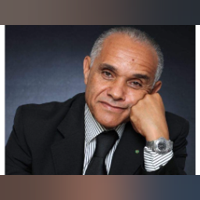
Aziz Daouda Aziz Daouda

Aziz Daouda

Directeur Technique et du Développement de la Confédération Africaine d'Athlétisme. Passionné du Maroc, passionné d'Afrique. Concerné par ce qui se passe, formulant mon point de vue quand j'en ai un. Humaniste, j'essaye de l'être, humain je veux l'être. Mon histoire est intimement liée à l'athlétisme marocain et mondial. J'ai eu le privilège de participer à la gloire de mon pays .


8900

33.0

Christopher Ross or Diplomacy Against the Current 44

It sometimes happens that diplomats, once their mission is complete, opt for the discretion demanded by their former status. Others prefer to continue intervening in debates they themselves helped complicate. Christopher Ross clearly belongs to this second category. In a recent article, the former envoy for the Moroccan Sahara has once again taken a stance on this sensitive issue. With the benefit of hindsight, his analysis has gained neither nuance nor critical distance. Reading his text suggests quite the opposite: the same interpretive framework, the same assumptions, and above all, the same indulgence toward Algiers. This persistence raises a fundamental question: what is Ross seeking today by intervening again in a dossier where he was one of the most contested mediators? Appointed in 2009 by Ban Ki-moon, he succeeded a series of envoys who had faced the same difficulty: breaking out of a diplomatic impasse inherited from the Cold War. This conflict indeed traces its roots to the geopolitical upheavals of the 1970s. Morocco consolidated its historical sovereignty over the region in 1975, prompting Spain's withdrawal, while the Polisario, backed politically, financially, and militarily by Algeria and Libya, claimed the creation of an independent state. The dossier took on an international dimension with the creation, in 1991, of the MINURSO, tasked with supervising a referendum; an idea proposed by the late Hassan II in a speech delivered in Nairobi at an OAU summit. Very quickly, the obstacles created by the Polisario, particularly regarding voter identification, made this project nearly impossible, and the process stalled. It was then that Morocco proposed, in 2007, a major political initiative: a plan for broad autonomy for the southern provinces under Moroccan sovereignty. The project was presented to the Security Council as a realistic and pragmatic solution and garnered growing international support, described as "serious and credible" in several resolutions. It marked a true turning point in diplomatic realism. Since then, the diplomatic landscape around the Sahara has profoundly evolved. Numerous states now view Morocco's autonomy plan as the most credible basis for a lasting political solution. In 2020, the Trump administration officially announced recognition of Morocco's sovereignty over the Sahara, a major turning point in the dossier's diplomatic balance. In its wake, several Western powers reaffirmed their support for the autonomy plan, while Arab, European, and African countries opened consulates in Laâyoune or Dakhla, de facto recognizing Moroccan administration of the territory. Within the UN, the terminology used in Security Council resolutions has also evolved: the notion of a "realistic, pragmatic, and durable political solution" has become the guiding principle of the process. This shift toward a pragmatic approach reflects a simple reality: the referendum envisioned in the 1990s is no longer seen as a viable option. It is precisely this diplomatic turning point that Ross, still prisoner to an outdated vision, seems to refuse to integrate. In his recent statements, he continues to defend an interpretation of the conflict harking back to a bygone era, clinging to diplomatic frameworks long surpassed by geopolitical realities. This stance even calls into question the man's integrity. During his tenure, the Kingdom had already expressed serious reservations about his impartiality and officially demanded his replacement in 2012, as trust had been gravely undermined. A mediator, by definition, must maintain equitable distance between the parties. When that distance vanishes, mediation loses its credibility. In fact, Ross never truly dispelled suspicions of closeness to the Algerian position. Algeria's role in this conflict is central. One of the most controversial points in his discourse concerns precisely Algiers' place in the dossier. For fifty years, Algeria has officially claimed to be merely an "observing country" in this conflict. The diplomatic and strategic reality is entirely different. Algiers hosts, arms, and finances the Polisario, and shelters thousands of refugees in Tindouf, a significant portion of whom are not even from the territory in question. There is little doubt that the conflict is primarily a dispute pitting Algeria against Morocco, an analysis now widely shared by the main international actors. No lasting solution can emerge without Algiers' direct involvement in the negotiations. In this context, Ross's repeated positions appear anachronistic and undermine his credibility. By continuing, in effect, to align with Algeria and the Polisario, he gives the impression of prolonging a political fight rather than illuminating the debate. The responsibility of former international mediators is thus in question. When a former UN representative speaks out so trenchantly in public, he indirectly engages the image of the institution he served. Yet the credibility of international diplomacy rests precisely on the neutrality of its intermediaries. The diplomatic history of the Sahara is dotted with mediation attempts, successive plans, and failed initiatives. Before Ross, other envoys had tried to unblock the situation, notably James Baker, who proposed a transition plan in the early 2000s that was ultimately rejected. Each attempt has recalled a fundamental truth: without regional political will, no framework can succeed. This is precisely why current international diplomacy favors a realistic solution based on autonomy and regional cooperation, rather than maximalist constructs inherited from the Cold War. In essence, the question is not whether Ross has the right to express an opinion. Like any former diplomat, he can, of course, participate in the debate. But when he persists in defending a vision that ignores major geopolitical shifts, his discourse takes on the appearance of a rearguard battle. The world has changed, as have regional balances. The Sahara under Moroccan sovereignty is no longer merely a decolonization issue: it now lies at the heart of a strategic reconfiguration of the Atlantic and North Africa. Faced with these transformations, international diplomacy seems to have chosen pragmatism. Christopher Ross, by contrast, appears to have chosen nostalgia for a bygone paradigm. In international affairs, history shows that those who cling to past paradigms almost always end up swimming against the current of present realities.

Paradoxical Ramadan: Piety, Irritability, Overconsumption and Slumping Productivity... 864

Every year, Ramadan settles in Morocco as a form of collective breathing space. Daily rhythms change or are inverted, habits are reorganized or fall apart, nights come alive and days slow down. A sacred month par excellence, it is first and foremost a time of fasting, contemplation, piety and solidarity. But it is also, increasingly, a national paradox: intense spiritual fervor coexists with heightened social irritability, massive food waste and a noticeable drop in productivity. Ramadan, as it is prescribed and recommended, is a time of inner discipline. Fasting is not just abstaining from food; it is self‑control, restraint, patience. Religious scholars and schoolteachers insist on the moral dimension of fasting: refraining from anger, insults and injustice. In short, putting aside all forms of deceitfulness. Yet in contemporary Moroccan reality, the holy month sometimes seems to produce the opposite effect. It becomes the month of unjustified social tension. In large cities such as Casablanca, Rabat or Marrakech, if the mornings are relatively calm, late afternoon turns into a critical moment. Traffic is saturated, impatience is palpable, and road altercations become more frequent. Emergency services and police stations traditionally observe an increase in minor conflicts and aggressive behavior at the end of the day. There is also a rise in cases handled by gastro‑enterology and other specialties… People eat too much, and poorly. Fasting, combined with lack of sleep due to long evenings after iftar and waking up for suhoor, among other things, affects physiological balance. Irritability, reduced concentration and chronic fatigue become commonplace. In a country where emotional regulation is already under strain in everyday life, Ramadan acts as an amplifier. This nervousness is by no means a religious inevitability; it is a sociological consequence of how the month is organized, in a way that has gradually drifted away from its original spirit of moderation, self‑mastery and day‑and‑night contemplation. The immediate consequence is a slump in productivity. On the economic front, the impact is tangible. Administrative working hours are reduced, offices empty out in the afternoon without valid reasons, and construction sites run in slow motion. In some sectors, the drop in activity is accepted; in others, it causes structural delays. Ramadan excuses and explains everything. People shift the burden of their disengagement onto the community without the slightest embarrassment. Morocco aspires to accelerate its growth, attract investment and improve its competitiveness. Yet for nearly one month every year, the economy runs in degraded mode. The private sector adapts, but at what cost? The drop in productivity is not only quantitative; it is also qualitative: decisions are postponed, meetings cut short, projects delayed. The public administration and its staff amplify all this. It would be caricatural to place the blame on religion. The problem is not Ramadan; it is the absence of a culture of performance that is compatible with spiritual requirements. Output and accountability ought to be part of the values of the holy month. Another major contradiction is the paradox of food waste. While fasting is supposed to remind us of the hunger of the poorest, iftar tables are overloaded. Multiple soups, an abundance of pastries, redundant dishes. Markets are booming, food spending rises sharply, and a significant part of what is bought ends up in the trash. Wallets empty out and suffer. This phenomenon reveals a cultural transformation that may be surprising: Ramadan has partly become a social and consumerist event. Large retailers post their best figures, advertising intensifies, and TV channels compete with special programming to capture a deliberately captive nocturnal audience. At the start of the month, national channels record more than 70% of total viewership, a share they are far from reaching under normal circumstances, as Moroccans are very fond of foreign channels. The month of frugality paradoxically turns into a month of overconsumption. One can then ask: is this authentic spirituality, or a social ritualization? It would be unfair to reduce Moroccan Ramadan to its excesses. Thousands of solidarity initiatives emerge. Associations, mosques and volunteers distribute meals and aid to the most vulnerable. Families come together, intergenerational ties are strengthened. The mosque regains a vibrant centrality. The issue, therefore, is not to criticize Ramadan, but to question its contemporary practice. Are we faithful to its spirit, or prisoners of cultural habits that distort its meaning? If the holy month becomes synonymous with chronic fatigue, road rage, weakened productivity and waste, then there is a gap between the spiritual principle and its social translation. It is certainly time to advocate for a Ramadan of responsibility. A calm national debate is needed: how can we reconcile spiritual requirements with collective performance? How can we preserve the sacredness of the month while maintaining the efficiency of institutions? How can we turn fasting into a lever for self‑discipline rather than a pretext for slackness? Ramadan could be a laboratory for positive transformation: learning self‑control, optimizing time, rationalizing consumption, structuring solidarity. It could become a month of moral and professional excellence. Morocco, a country of deep religious tradition and clear economic ambition, has every interest in taking up this challenge. Because beyond productivity statistics or scenes of urban irritation, the real question is this: are we turning Ramadan into a simple collective ritual, or into a genuine exercise in inner and social reform? The answer, each year, is played out in the streets, offices and homes, and above all in each person’s conscience. We have a little less than two weeks left to think about it… seriously.

Thelema 1590

Thelema is a spiritual philosophy and religious system established by Aleister Crowley (1875–1947) in the early twentieth century. The system is based on the teachings found in The Book of the Law, which Crowley believed was revealed to him by a spiritual entity named Aiwass in Cairo in 1904. The name Thelema comes from a Greek word meaning “will.” At the heart of the philosophy is the concept of True Will, which Crowley described as the unique purpose or direction of each individual’s life. The central teaching of the tradition is expressed in the phrase: “Do what thou wilt shall be the whole of the Law.” In Thelemic philosophy this statement does not mean simple freedom to do anything one desires. Instead, it refers to discovering and fulfilling one’s True Will, which represents the natural path of a person within the larger order of the universe. According to Crowley, suffering and conflict often arise when people live in ways that are not aligned with their true nature. Another key phrase in Thelema is: “Love is the law, love under will.” This statement suggests that love and harmony should guide human actions, but that these expressions of love must be consistent with one’s deeper purpose. Crowley believed that human spiritual history unfolds through different Aeons, or epochs of consciousness. He proposed that humanity had recently entered the Aeon of Horus, a new era in which individuals would move beyond the authoritarian religious structures of the past and instead seek spiritual knowledge through personal discovery and self-realization. Thelema integrates ideas from many sources, including Hermetic philosophy, the Kabbalah, ceremonial magick, astrology, alchemy, and Eastern spiritual practices such as yoga and meditation. These traditions are used as practical systems of spiritual training designed to transform consciousness rather than merely a belief system. Practitioners of Thelema often use rituals, meditation, symbolic study, and magickal exercises to better understand themselves and align with their True Will. Crowley also established magickal orders to help organize and transmit these teachings, including the A∴A∴ and his later leadership within Ordo Templi Orientis. Today Thelema continues to influence modern ceremonial magick, occult philosophy, and spiritual movements that emphasize self-discovery, personal freedom, and conscious evolution. While interpretations vary among practitioners, the core idea remains the same: each individual has a unique role in the universe, and spiritual growth comes from discovering and fulfilling that role with clarity, discipline, and awareness.

Iran Facing the Reality Test: The End of a Regional Myth? 1788

Another major sequence of tensions in the Middle East highlights the deep fragilities of the Iranian regime. Since its advent in 1979, the Islamic Republic has built itself on a political narrative of revolutionary power in direct opposition to the "Great Satan" the USA, unwavering defender of the Palestinian cause and Jerusalem's liberation. **This ideological positioning allowed Tehran to gain relays in parts of the Arab world, particularly among movements hostile to Israel. It developed an influence strategy based on creating, funding, and arming affiliated groups: Hezbollah in Lebanon, Shiite militias in Iraq, support for the Syrian regime, Houthis in Yemen, forming what it presents as the "axis of resistance." It surely finances other movements in many other countries, with an unnatural connivance with Sunni Islamists. An expansion strategy with destabilizing effects.** Where Iran has extended its influence, its footprint is inseparable from increased militarization and state fragmentation. The projection relies less on state-building than on the rise of parallel politico-military networks challenging national institutions. This has certainly enabled Tehran to hold leverage over its adversaries and position itself as the champion of "resistance" to the US-dominated regional order and its allies. But it has also prolonged conflicts, weakened already fragile state institutions, and exacerbated sectarian fractures. In the long term, the human and economic cost of this "strategy" is considerable for the affected countries and for Iran itself, subjected to severe sanctions and persistent international isolation. *The Palestinian cause is in fact more instrumentalized than defended, for nearly half a century, while the Iranian regime claims it as a central pillar of its diplomacy and revolutionary legitimacy.* Tehran has forged ties with armed Palestinian actors like Hamas or Islamic Jihad, presenting them as extensions of its own "resistance." Yet it must be acknowledged that Palestinians' situation has in no way improved: rampant occupation, colonization, and blockade continue, while cycles of violence recur without credible political prospects. Palestine has lost vast territory, lives, and even sympathy within the Arab world itself. Palestinian internal divisions, locking the cause into an essentially militarized logic absent diplomatic horizons, question the real effectiveness of this posture. Like the Gamal Abdel Nasser era marked by imprudent pan-Arabism, the current period has brought no progress. Iran has, in part, supplanted certain Arab leadership on the dossier without producing tangible results for a lasting settlement—nor concrete improvements in Palestinians' lives, quite the contrary. **Beyond geopolitics, the regime faces profound internal contestation. Recent protest movements, and those triggered after Jina Mahsa Amini's death in September 2022, revealed a major fracture between part of Iranian society and its leaders. Repression, as the sole response, resulted in thousands of deaths and arrests, documented by international organizations and UN mechanisms.** The rigidity of security and ideology contrasts with the aspirations of a connected youth seeking civic and individual freedoms. Today's Iran is no longer that of 1979: society has transformed, the regime has not. The gap between revolutionary discourse, promises of social justice, and socio-economic reality: inflation, unemployment, precarity, brain drain, corruption, diplomatic isolation—fuels disillusionment that undermines state legitimacy. Morocco officially severed ties with Iran in 2018, as Tehran supported the Polisario Front via Hezbollah and its embassy in Algiers, with Algeria's backing. Rabat holds evidence of arms deliveries and Polisario cadre training. Morocco's rupture appears as a strategic decision to prevent any perception of interference in its vital interests, particularly in the Sahara. It also fits into a broader realignment of regional alliances, marked by Rabat's rapprochement with certain Gulf partners and the USA, amid growing rivalries with the Iran-Algeria axis. Recent military and diplomatic developments highlight a troubling reality for Tehran: Iran often seems to react urgently rather than master the strategic tempo. The multiplication of peripheral fronts, from Lebanon to Gaza, Iraq to Yemen, occurs as its regional relays face growing pressures, sanctions, and targeted eliminations eroding "axis of resistance" cohesion. This situation can appear as much an admission of fragility. The ease with which the USA and Israel neutralize leaders even questions state competence. That said, announcing the regime's imminent collapse would be reckless. The security apparatus remains powerful, regional influence networks active. But will the regime once again demonstrate resilience, even at the cost of increased internal violence and harsh contestation management? **The regime must be clearly distinguished from the Iranian people, caught in a vise. Heir to a millennial civilization and rich intellectual tradition, it should not be reduced to the politico-religious elite's choices. Sanctions, repression, and isolation's sufferings weigh first on ordinary citizens, including those aspiring to peaceful change and the country's reintegration into the international community.** *History teaches much in identical situations. Transitions demand lucidity, responsibility, and an inclusive vision of the future. Regional stability will not arise from ideological escalation or destruction, but from rebalancing based on law, sovereignty, collective security, cooperation, and trust, today sorely eroded.* In this troubled sequence, solidarity first goes to the region's peoples, caught in dynamics beyond them. The mullahs will sooner or later answer to history—and to a simple but decisive question: did they serve the people, or sacrifice them to a political myth that time has made increasingly hard to sustain?

South Africa’s Democratic Model Under Scrutiny: Who Really Decides? 1785

South Africa prides itself on being one of Africa's democratic models.Heir to a transition celebrated worldwide after apartheid, it claims solid institutions, a respected Constitution, and vigorous public debate.Yet recent developments raise a troubling question: can the country be so disorganized in conducting its strategic affairs, particularly African ones? The question "Who really decides?" is not purely rhetorical: several recent episodes highlight a genuine discipline problem at the top of the South African military, particularly around naval cooperation with Iran. The general staff allegedly ignored clear instructions from Cyril Ramaphosa to exclude Tehran from naval exercises off the country's coast in early 2026. Iran was nevertheless present and visible. Beyond official statements, therefore, a question persists: who really decides in South Africa when it comes to sensitive diplomatic positions or major geopolitical dossiers? Can this be extrapolated to the Moroccan Sahara issue? Does the country have a multi-voiced diplomacy? A military exercise is no trivial matter, especially when it involves a country like Iran... Officially, South Africa's foreign policy falls under the executive power, embodied by the president and his government. Under Cyril Ramaphosa's presidency, the country claims to defend the principles of international law, peoples' self-determination, and multilateralism. But when military or security actors seem to take initiatives that don't clearly align with the stated line of elected authorities, institutional coherence comes into question. Can a mature democracy tolerate military officials adopting positions or making decisions that indirectly engage foreign policy without explicit political validation? In any consolidated democracy, the army's subordination to civilian power is a cardinal principle. Yet any impression of strategic autonomy by the military, especially on sensitive diplomatic dossiers, sends a worrying signal. These internal ambiguities don't go unnoticed internationally. In the United States, President Donald Trump had already expressed dissatisfaction with certain South African orientations in the past. In a global geopolitical context marked by polarization, every diplomatic, and here military, gesture is scrutinized. If South Africa projects the image of a country with fuzzy decision-making centers, where the diplomatic line can be circumvented or opportunistically interpreted, it weakens its credibility. Washington's gaze then becomes an aggravating factor. A democracy perceived as disorganized becomes vulnerable to external pressures. It loses its influence capacity and sees its status as an African power erode. *One is entitled here to question South Africa's position on the Sahara dossier in recent years. Is it a matter of coherence or simply an ideological posture?* **The African National Congress (ANC), the ruling party, has historically adopted a position aligned with Algiers, supporting the Polisario in the name of self-determination. This line fits into an ideological tradition inherited from liberation struggles. During apartheid, the ANC had ideological and militant ties with other liberation movements, including the Polisario, notably via Algeria and the Tindouf camps. After 1994, democratic Pretoria consolidated this line and officially recognized the SADR in 2004, in keeping with a commitment made by Mandela.** But today, the African context has evolved. Many states on the continent have strengthened relations with Morocco, recognizing de facto or explicitly its sovereignty over its southern provinces. Moroccan diplomacy, both active and economic, has established itself as a structuring actor in Africa. In this framework, South Africa's position deserves debate: is it the fruit of a maturely considered national strategy based on recent developments, validated by all elected institutions, or the result of specific internal influences—ideological, partisan, or security-related? **The question becomes even more sensitive when proximity to the Algerian regime is mentioned, marked by strong military presence in the decision-making sphere. Algeria remains the central actor in the Saharan dossier and maintains historic relations with Pretoria.** If South African military officials act with significant autonomy, this can fuel the idea of connivance between security apparatuses beyond classical diplomatic channels. Even if this perception isn't entirely founded, it can impose itself in international analyses. The boundary between military impunity and strategic affinities easily erodes here. Yet in foreign policy, perception counts as much as reality. *South Africa remains incontestably an institutional democracy, with competitive elections, free press, and dynamic civil society. But a regime's solidity isn't measured solely by its constitutional texts; it's also judged by the clarity of its decision-making chain and the discipline of its institutions.* If decisions with diplomatic or strategic reach seem to escape direct political control, this undermines the image of a unified state. And in a world where geopolitical balances are rapidly redrawing, any ambiguity can be exploited. The question therefore isn't to deny South Africa's democratic nature, but to ask: is this democracy fully coherent in its exercise of power, particularly on sensitive African affairs? And above all, who really speaks for Pretoria when stakes cross national borders? Or further, who dictates decisions, and based on what interest? For once again, how to explain that the president says one thing and his army does another? That's precisely the case here. South Africa's position on the Moroccan Sahara could, who knows, stem from connivances between Pretoria's and Algiers' militaries rather than the explicit will of Pretoria's political authorities. *These interrogations, far from hostile, fit into a legitimate debate on the institutional maturity of a continental power called to play a major role in Africa. In any case, regarding the Moroccan Sahara, these days, it would be time for South Africa to re-examine itself, or rather, redeem itself.*