Think Forward.

Le Maroc, uni et indivisible : le 31 octobre, mémoire et vision d’un Royaume rassemblé... 1283

Il est des dates qui cessent d’être de simples repères pour devenir des symboles forts. En instituant le **31 octobre “Fête de l’Unité”**, Sa Majesté le Roi Mohammed VI n’a pas seulement ajouté un jour au calendrier national des fêtes : il a inscrit dans la mémoire collective une certitude, celle d’un Maroc uni, fidèle à son histoire, confiant en son destin, certain de son avenir. Ce choix, placé à la veille de l’anniversaire de la Marche Verte, n’est pas une coïncidence, mais un message. Il relie deux moments : l’un de mémoire, l’autre d’espérance, pour rappeler qu’au Maroc, l’unité n’est pas une posture, mais une philosophie collective de vie, une continuité historique, une conviction chevillée à l’âme du pays et de chacun des citoyens. **L’unité séculaire du Royaume est le fil d’or de l’histoire marocaine.** Le 6 novembre 1975, trois cent cinquante mille Marocains, le Coran dans une main et le drapeau dans l’autre, faut il le rappeler, épaulé par de très nombreux ressortissants de pays amis, y compris d'un Prince et non des moindres, ont marché vers le Sud pour retrouver ce qui n’aurait jamais dû être perdu : le Sahara, matrice du Royaume. La **Marche Verte** n’était pas une conquête ; elle fut un retour, une affirmation pacifique d’une légitimité plus ancienne que les frontières tracées à la règle sur les cartes coloniales. Ce fut aussi un serment entre le Trône et le peuple, entre le passé et l’avenir. Un serment que rien, ni les manœuvres diplomatiques, ni les campagnes hostiles, ni la propagande à coup de milliards de dollars, n’ont pu ébranler. Le marocain ne plie pas. le marocain est fidèle à ses engagements. Le marocain tient parole, le marocain est conscient de la diversité de son pays mais ne le conçoit que dans l'unité et la cohésion. En décidant de faire du 31 octobre la **Fête de l’Unité**, Sa Majesté le Roi Mohammed VI réactive ce serment et le transpose dans le temps présent : l’unité du Maroc n’est pas un souvenir glorieux, mais un horizon qui se construit chaque jour, un avenir qui se forge sur le droit et la foi, la diplomatie et la constance, le développement et la prospérité partagée. Depuis un demi-siècle, la diplomatie marocaine déroule patiemment le fil d’une stratégie claire : défendre la marocanité du Sahara sans jamais céder à la provocation, faire triompher la légitimité par la raison et non par la force. Les récentes **résolutions du Conseil de sécurité** ont confirmé la justesse de cette ligne. Elles consacrent le sérieux et la crédibilité de la proposition marocaine d’autonomie, une voie réaliste, moderne, conforme aux aspirations des populations locales et de l’ensemble du peuple marocain qui y a adhéré mesurant parfaitement le sacrifice demandé. À l’inverse, l’Algérie persiste dans une posture anachronique, arc-boutée sur son soutien à un **Polisario** qui ne représente plus qu’une ombre de lui-même. Un mouvement construit sur le mensonge, l'infox et la propagande à coup de milliards de dollars. C'est sans doute la situation la plus couteuse du genre depuis que l'humain est humain. Jamais on n’a su combien de Sahraouis ont véritablement suivi le Polisario, ni combien, avec l’aide de ses parrains, il a fait venir de Mauritaniens, de Maliens, de Nigérians de Tchadiens et d’ailleurs pour renforcer ses rangs. La générosité de Kaddafi ayant beaucoup aidé, faut il l'oublier! Aujourd’hui, l’Algérie est acculée à permettre le **recensement des populations des camps** et qui dit recensement dit, en parallèle, identification. Le discours figé des séparatistes n’a plus de prise sur le réel : pendant que les camps de Tindouf s’enlisent dans l’attente, les provinces du Sud Marocain s’éveillent à la vie, au développement, à la dignité. Le contraste est saisissant : là-bas, l’immobilisme ; ici, la construction. Là-bas, l’idéologie ; ici, la réalité. La Marche Verte n’a jamais été un épisode clos, c'est un serment devenu doctrine nationale, un récit fondateur, un mythe vivant, la croyance d’une nation: **la plus ancienne nation au monde**. Elle a forgé une conscience nationale rare, faite de loyauté et de foi dans la continuité du Royaume. Dans un monde traversé par les fragmentations et les identités blessées, le Maroc a fait de son unité une boussole, non une nostalgie. À **Laâyoune**, **Dakhla**, **Smara**, **Boujdour** ou Bir Guendouz, la ferveur des célébrations du 31 octobre dit mieux que les discours la profondeur de ce lien. Ces villes, naguère marginalisées, incarnent aujourd’hui un Maroc en marche, sûr de lui, fidèle à ses racines et tourné vers son avenir. Le Sud n’est plus un bout du Royaume : il en est le cœur battant. **Le Sahara est une promesse d’avenir, un laboratoire de développement et un pôle stratégique du Royaume.** Les investissements dans les énergies renouvelables, la pêche, les infrastructures, le tourisme ou la logistique ont transformé la région en un carrefour incontournable entre l’Afrique, l’Atlantique et l'Europe. C’est là que s’expérimente, à ciel ouvert, la vision royale d’un Maroc moderne, équilibré et inclusif, un Maroc qui ne laisse aucune région à l’écart. La **Fête de l’Unité** n’est pas seulement un hommage au passé : elle est une projection vers l’avenir. La **Fête de l'Unité**dit à la jeunesse marocaine que l’unité n’est pas un héritage qu’on contemple, mais un édifice qu’on bâtit, qu’on construit jour après jour, par le travail, la fidélité et la foi en la nation, avec un inflexible respect de la mémoire des sacrifices et une croyance ferme en la promesse de continuité. Le 31 octobre, le Maroc fait la fête, mais se souvient :des soldats tombés sur les dunes, des diplomates qui ont défendu la cause nationale sur toutes les tribunes du monde, des pionniers qui ont bâti dans le sable les fondations d’un développement exemplaire. À travers eux, c’est tout un pays qui se regarde dans le miroir de son histoire, non pour s’y complaire, mais pour y puiser la force d’aller plus loin. Car au fond, **l’unité du Maroc n’est pas un acte politique ; c’est une vérité historique, un état d’esprit, une fidélité viscérale.**Le 31 octobre vient simplement lui donner un nom, une date, un souffle renouvelé. **Il n’y a pas d’unité sans mémoire, ni de mémoire sans avenir.**Le Maroc n'a jamais célébré le passé pour le passé mais toujours comme évocation pour se projeter dans l'avenir. Jamais il n'a cru en une rente mémorielle figée. Fort de son histoire et de sa souveraineté retrouvée, il avance désormais avec la sérénité de ceux qui n’ont rien à prouver, mais seulement à poursuivre. Son ADN est particulier mais jamais pour s'isoler. Au contraire, le Royaume se voit être une partie d'un monde, ouvert à la coopération, à la liberté, à la prospérité. Dans le vent du Sud, au loin, résonne toujours le même serment : **Un seul Royaume, une seule âme, un seul destin.**
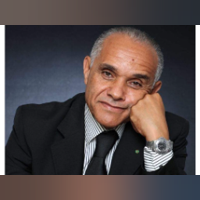
Aziz Daouda Aziz Daouda

Aziz Daouda

Directeur Technique et du Développement de la Confédération Africaine d'Athlétisme. Passionné du Maroc, passionné d'Afrique. Concerné par ce qui se passe, formulant mon point de vue quand j'en ai un. Humaniste, j'essaye de l'être, humain je veux l'être. Mon histoire est intimement liée à l'athlétisme marocain et mondial. J'ai eu le privilège de participer à la gloire de mon pays .


8100

33.0

African Football’s Leading Force: The Moroccan Model Amidst Regional Headwinds 301

The curtain fell on AFCON 2025, leaving a trail of striking contrasts. While the event confirmed the Kingdom’s supremacy as a world-class logistical hub, the tensions witnessed during the final on January 18, 2026, in Rabat, served as a stark reminder of the contingencies still weighing on continental football. Between the seamlessness of the infrastructure and the archaic nature of certain disciplinary attitudes, a fundamental question emerges: how will the transition from CAF’s regulatory framework to that of FIFA in 2030 reshape the management of these organic crises? This shift represents more than a mere scaling up; it is a true paradigmatic rupture where technocratic neutrality will serve to sanctify Moroccan excellence. I. Moroccan Excellence: A Technological Showcase for Africa The massive investment deployed by the Kingdom—ranging from the deep modernization of sports complexes to the systemic integration of VAR—presented the world with the image of a modern, rigorous, and visionary Morocco. This material success, lauded by international observers, aimed to establish an African benchmark. However, this pursuit of perfection encountered a persistent psychological phenomenon: the "host country complex." In this configuration, organizational mastery is sometimes perceived by competitors not as shared progress, but as a lever of dominance, mechanically fueling theories of favoritism. The events of the final illustrate this at its peak. The disallowed goal for Ismaïla Sarr and the late-match penalty became, through the lens of regional suspicion, instruments of controversy rather than technically grounded officiating decisions. Yet, data from DM Sport reveals the opposite: Morocco was among the most penalized teams in the tournament. This discrepancy highlights a major flaw: technology is insufficient to validate a result unless it is protected by a jurisdictional authority perceived as exogenous. II. Solidary Leadership and the Diplomacy of Resentment It would be erroneous, however, to view this quest for excellence as a desire for isolation. On the contrary, Morocco maintains deep and unwavering historical ties with the majority of its sister nations across the continent. Faithful to its African roots, the Kingdom continues to actively promote continental football within CAF, offering its infrastructure and expertise to federations seeking professionalization. This "open-hand" policy ensures that Moroccan success translates into success for all of Africa. Nevertheless, such leadership breeds friction. A "diplomacy of resentment" has emerged from certain foreign media spheres—particularly in specific Arab and African countries—aiming to tarnish the prestige of the Moroccan organization. By framing Morocco as a favored "ogre," these narratives attempt to transform factual superiority into moral injustice. This media harassment specifically targets the emergence of a governance model that now aligns with the most demanding global standards. III. The Advent of "Cold Justice": Legal Sanctification The transition to FIFA’s aegis in 2030 will signal the end of the geographical proximity that fosters such smear campaigns. Unlike the continental framework, the globalization of officiating bodies will dismantle zonal rivalries. Where CAF must often navigate between diplomatic compromise and sporting imperatives, FIFA deploys a "cold justice"—purely procedural in nature. The chaos observed in Rabat would meet a surgical response in 2030. Article 10 of the FIFA Disciplinary Code is unequivocal: any refusal to resume play results in an automatic forfeit and severe sanctions. In 2030, the rule of law will act as a protective cleaver for the host, rendering victimhood narratives obsolete. IV. Technology and the "2030 Bloc": Toward an Indisputable Truth The 2030 edition, spearheaded by the Morocco-Spain-Portugal trio, will benefit from total judgment automation (Shadow VAR, semi-automated offside) and absolute transparency. The FIFA Hosting Agreement will prevail as a superior norm, guaranteeing impartiality. This legal framework will serve as a shield, preventing disciplinary incidents from being politically instrumentalized against the Kingdom. AFCON 2025 was a successful demonstration of organizational strength for Morocco, confirming its role as the driving force of African football. However, it also revealed that excellence remains vulnerable to peripheral noise. In 2030, the definitive anchoring in FIFA law will allow the Kingdom to transform its organizational prowess into a lasting institutional legacy. Sport, finally shielded from geopolitical dross, will align with the strategic vision of a Morocco turned toward the universal, making the rule of law the bedrock of its global legitimacy.

Light Pollution and the End of the Construction of Imagination – Part 1 378

One of the memories I carry most fondly is when my interest in everything related to outer space first awakened. I clearly remember that in 1980 I saw a TV report about a lunar eclipse that we would be able to observe. The images shown on the news program impacted me so deeply that I could hardly sleep that night. The sight of the lunar craters, caught in that characteristic interplay of light and shadow, became etched in my mind. The next day, I questioned a teacher who was a friend of my family almost to the point of exhausting him, asking so many questions about the subject. Next year, I also saw TV advertisements announcing the theatrical release of "The Empire Strikes Back". In a way, my imagination was launched in a manner analogous to the catapult effect that spacecraft and space probes use when they swing around planets. There wasn’t a single clear night when I didn’t spend hours looking up at the sky, at the immensity of the universe. At that time, the night sky was truly dark, since light pollution caused by city lights did not yet have as significant an effect as it does today. In 1982, Carl Sagan’s series "Cosmos" also premiered on television, and even its soundtrack struck me deeply. Then, in 1984, with the debut of several animated series, two of them being "Groizer X" and "Star Blazers", the American version of "Space Battleship Yamato", I experienced yet another “gravitational catapult” effect, further fueling my imagination. In 1986, the passage of Halley’s Comet took over newspapers, magazines, TV programs, and even my school science books. That was it! This was the definitive confirmation of my passion for the space. At that time, however, I still lived in the realm of fantasy, driven solely by what my imagination brought me. I would look at the sky on clear nights and think that traveling through space was like it was in the movies, challenging, full of adventures and dangers, yet seeming simple and even comfortable. After all, in science fiction films, many aspects of physics were disregarded, using a kind of poetic license. But I grew up. I became a scientist. My gaze acquired a new perspective, yet without ever losing the magic of imagination from the beginning of this story. What came next? In the second part of this story, I will conclude… Clear skies to all, and Ad astra!

Trump’s “Council of Peace”: Strategic Pragmatism or Alarm Signal for the International Order? 1132

The invitation extended by U.S. President Donald Trump to His Majesty King Mohammed VI to join the new “Council of Peace” marks a significant turning point in contemporary international relations practice. It stems neither from protocol nor symbolism, but fits into an assumed reconfiguration of global conflict management mechanisms. The Sovereign's acceptance of this invitation, while the Algerian president was not invited and Africa remains largely underrepresented, if not ignored, highlights a selective logic based not on geography or ideology, but on political utility as perceived by the USA as a global actor. In the official communiqué announcing the Sovereign's acceptance, Morocco's diplomatic fundamentals regarding the Palestinian issue were explicitly reiterated, particularly the two-state solution with states living side by side. The trust-based relations with the concerned Arab parties, especially Palestinians in Gaza and the West Bank on one side, and Israel on the other, perfectly foreshadow the role the Kingdom will play in establishing peace and rebuilding the region. Isn't this a direct way to consecrate a results-oriented diplomacy in the face of the long-ailing multilateralism that has been faltering for quite some time? For decades, major international institutions, starting with the UN, have struggled to resolve protracted conflicts. The Security Council is paralyzed by the veto right, peace processes are stalled, UN missions lack a clear political horizon: the symptoms of a saturated system are evident. Donald Trump's envisioned Council of Peace, by contrast, follows a logic of rupture. It seeks neither to produce international law nor to impose universal norms, but to create an informal framework for direct negotiation among influential actors, including those the UN system struggles to integrate operationally. In this context, Morocco is undoubtedly a stability actor and a discreet, credible, and effective mediator. The presence of the King of Morocco in this body reflects international recognition of a diplomatic model founded on stability, continuity, and pragmatism. Morocco has established itself as an actor capable of dialoguing with partners of divergent interests while maintaining a clear strategic line, and everyone knows that it is His Majesty himself who initiated this vision and leads this distinguished diplomacy. This explains the particular nature of the invitation addressed to the Sovereign. Conversely, the exclusion of certain states reveals the limits of a diplomacy based on permanent conflictuality and blind ideological posturing. In a Trumpian logic, effectiveness trumps representativeness. Pragmatism prevails over sterility and outdated ideological blindness. The question then becomes: in this context, is the UN being marginalized or pushed toward reform? This Council does not signal the immediate end of the UN, but it exposes its existential crisis. If a parallel body achieves tangible results quickly, as claimed on certain African dossiers, among others, then the question of the UN system's functional legitimacy will arise acutely. President Trump's initiative can thus be seen as a trigger: either for a progressive weakening of the UN, which he has little fondness for, or for a profound reform of its decision-making mechanisms, particularly the Security Council. And since President Trump is already midway through his term and cannot run again, things will move very quickly. The context is also highly particular, with a transatlantic fracture revealing a malaise that has been simmering since Trump's first term, he no longer accepts defending a hostile Europe that is increasingly dependent on American budgets for its defense. The refusal of European countries, including France, to join this new body translates a growing strategic divergence between Europe and the United States. While Washington prioritizes power dynamics and direct negotiation, Europe remains attached to a normative multilateralism, sometimes disconnected from ground realities. Its diplomatic hypocrisy and double standards on many issues are laid bare here. Its position and quagmire in Ukraine testify to the anachronistic state of its strategy. The invitation to Vladimir Putin accentuates this fracture, especially in the context of the Ukraine conflict and geopolitical tensions in the Arctic. Europe no longer knows on what ground to engage with President Trump. How to interpret President Macron's statement at Davos, where he said he did not accept the law of the strongest without naming it? Who is the strongest, then, when the one he alludes to is precisely the initiator of the new Council? Isn't this truly a sharing of power? Why refuse to be part of it! And then Trump responds to Macron by declining an invitation to a G7 meeting... For now, Donald Trump's Council of Peace is neither a complete institutional alternative to the UN nor a mere conjunctural initiative. It is the symptom of a world impatient with the ineffectiveness of traditional frameworks. In this context, the role that the King of Morocco will play illustrates the rise of actors capable of articulating pragmatism, stability, and international credibility. More than an architectural change, this initiative reveals a profound transformation of the implicit rules of global governance. And since the Council's seat is not yet known, why not envision it being established in Morocco? The special invitation addressed to His Majesty King Mohammed VI is a good omen and could even be understood in this light. Morocco would thus become the nerve center of Peace in the world.