Think Forward.

Libération stratégique de Boualem Sansal: sauver la face d'Alger... 677

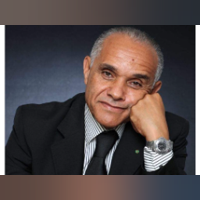
L’écrivain algérien Boualem Sansal, également français, âgé de 81 ans, avait été arrêté à l’aéroport d’Alger le 16 novembre 2024 suite à une interview dans laquelle il évoquait quelques vérités historiques qui, selon les autorités algériennes, constituent une menace à l'intégrité du pays. Saluant la décision du Président Macron de reconnaitre la marocanité du Sahara, il avait notamment parlé du fait que la France avait mutilé le Maroc, rattachant des territoires très importants à l'Algérie. C'est un sujet très irritant pour le pouvoir à Alger. En mars 2025, un tribunal avait donc condamné Sansal à cinq ans de prison pour «atteinte à l’unité nationale », accusation très lourde. À la surprise générale, ou presque, le 12 novembre, le président Abdelmadjid Tebboune a accordé son pardon à Sansal, suite à une demande expresse du président allemand Frank-Walter Steinmeier. Sansal est transféré en Allemagne où il a été immédiatement hospitalisé. L'homme atteint d'un cancer à vu sa santé beaucoup se détériorer durant l'incarcération. L'évolution rapide du dossier fait donc suite à la médiation allemande, alors que les appels répétés de la France pour la libération de Sansal étaient restés sans effet. Le pardon est officiellement présenté comme un "acte humanitaire, généreux". Cependant, cette libération ne peut être envisagée hors de tout enjeu géopolitique et constitue de toute évidence en filigrane, une manœuvre pour désamorcer la crise franco-algérienne, accentuée depuis quelques mois déjà. La médiation allemande s’inscrit, chacun le sait, dans un contexte tendu entre Alger et Paris. En octobre 2024, la France a reconnu la souveraineté du Maroc sur le Sahara Marocain, provoquant une colère rouge à Alger et un refroidissement immédiat et notable des relations bilatérales. L’arrestation de Sansal, figure algérienne contestataire, a été perçue comme un levier de pression sur la France dont il porte la nationalité. Rien n'y a fait : en janvier, le Parlement européen avait condamné cette arrestation et exigé la libération de l’auteur, mais l'Algérie était restée sourde. Qu’est-ce qui expliquerait ce rôle surprise de l’Allemagne, alors que d'autres pays auraient, paraît-il, essayé en vain de faire plier Alger ? L’Allemagne entretient en fait des relations plus neutres avec l’Algérie que la France et offre ainsi une issue diplomatique acceptable pour Alger, qui évite une perte majeure de prestige. Boualem Sansal était devenu une véritable patate chaude dont il fallait se débarrasser au plus vite. Il est même dit, ça et là à Alger, que son arrestation avait été une erreur. Le fait que le président Tebboune ait été soigné en Allemagne renforce ces liens avec l'Allemagne. Par ce canal, Alger améliore son image internationale sans céder directement à la France, ce qui atténue la perception d’une capitulation. Il faut aussi rappeler que Boualem Sansal est très apprécié et lu en Allemagne où il avait obtenu la plus prestigieuse des distinctions littéraires du pays. Cela couvre un peu cette médiation surprise. La libération semble s’inscrire dans une stratégie algérienne de gestion des pressions internationales sans compromis direct avec Paris, préservant ainsi la face du régime. L’Allemagne, en tant qu’intermédiaire, permet d’apaiser les tensions tout en maintenant la stabilité politique intérieure algérienne. Comme à leur habitude, les médias algériens, n'ont pas tardé à organiser des débats chantant l'humanisme et la grande sagesse du président Tebboune. Ils n'ont pas arrêté de chanter victoire. On ne sait pas sur qui, mais victoire quand même. Des débats où, comme à chaque fois, sont cités pêle-mêle : sionisme, makhzen, ennemi français, défense du pays, etc. Sansal est gracié mais reste le traitre exécrable de la nation. La vérité est que le contexte économique et stratégique que connaît l'Algérie ne lui permet plus de bomber le torse. Face à un isolement diplomatique grandissant, une dépendance aux hydrocarbures et un ralentissement économique avec dévaluation historique du dinar, le régime algérien utilise la libération de Sansal comme acte symbolique destiné à redorer son image car même ses partenaires historiques que sont les Russes et les Chinois, lui ont tourné le dos en faveur du Maroc. On peut également faire une autre lecture et convoquer l'hypothèse des intérêts croisés. L’Allemagne a vraisemblablement servi d’intermédiaire utile, répondant indirectement aux intérêts de la France et de l’Algérie. Pour Paris, transférer la médiation à Berlin préserve une posture humanitaire crédible sans confrontation directe avec Alger. Pour Alger, répondre à une demande allemande permet d’éviter un recul symbolique face à l’ancien colonisateur. Les perspectives et les implications sont alors plus claires. Le régime algérien conserve son cadre autoritaire ; la libération de Sansal ne constitue donc pas un signe de faiblesse. Les médias algériens cherchent même à montrer que l’affaire révèle la perte d’influence de la France, qui aurait cherché à isoler Alger. Avec cette libération, la diplomatie algérienne serait devenue désormais multipolaire. En réalité, le compromis était nécessaire pour limiter l’isolement diplomatique et économique de l'Algérie. Les défis structurels du pays restent importants et profonds. Les médias algériens cherchent désespérément à montrer que la libération de Sansal par l’intermédiaire allemand témoigne d’un changement profond dans l’équilibre diplomatique régional en sa faveur. La France aurait perdu son quasi-monopole historique sur les relations, confrontée à une Algérie souveraine et puissante qui a diversifié ses alliances européennes. Selon ces médias, cette évolution aurait affaibli symboliquement Paris et renforcé la diplomatie multipolaire de l'Algérie conquérante. Au-delà de tel ou tel propos parfois ridicules dont le seul but est de calmer le front interne algérien, cette libération aura un impact positif sur les relations franco-algériennes et, au-delà, sur la diplomatie allemande dans la région. Pour l’Allemagne, ce succès diplomatique consolide son rôle géopolitique en Méditerranée et en Afrique du Nord, lui offrant de nouvelles marges de manœuvre politiques, économiques et sécuritaires. Berlin améliore sa position auprès des autorités algériennes et des pays voisins, et renforce ses partenariats stratégiques dans une région clé pour ses intérêts. L'Allemagne, rappelons-le, s'était déjà prononcée positivement sur le projet marocain d'autodétermination au Sahara marocain. La libération de Boualem Sansal dépasse donc la simple dimension humanitaire pour devenir un point de convergence diplomatique, symbolique et économique. Le choix de l’Allemagne comme médiateur a permis à l’Algérie de répondre à la pression internationale en sauvegardant en apparence son image vis-à-vis de la France, tout au moins pour sa propre population. La France a atteint son objectif: libérer Boualam Sansal. Alger en avait pourtant fait une affaire de dignité nationale.

Aziz Daouda Aziz Daouda

Aziz Daouda

Directeur Technique et du Développement de la Confédération Africaine d'Athlétisme. Passionné du Maroc, passionné d'Afrique. Concerné par ce qui se passe, formulant mon point de vue quand j'en ai un. Humaniste, j'essaye de l'être, humain je veux l'être. Mon histoire est intimement liée à l'athlétisme marocain et mondial. J'ai eu le privilège de participer à la gloire de mon pays .


8100

33.0

Agentic AI Beyond Benchmarks: Meta-Agents & the Future of AI Evaluation with Khalil Mrini 270

I recently sat down with Khalil Mrini to talk about his work and international experiences. He has spent time in Marrakech, Switzerland, India, and the United States, each place influencing his perspective in different ways. We also mentioned his visit at the UM6P, his experience of the university, students and innkvative AI curriculum. Khalil presented his new paper on agentic AI. The paper focuses on the use of autonomous agents to evaluate and benchmark other agents: essentially, systems that can test one another’s capabilities. He described how this approach could provide a more dynamic and optimal method for measuring progress in AI research. We ended the conversation by discussing AI ethics. Our exchange raised open questions about responsibility, transparency, and how the field can ensure that increasingly autonomous systems align with human values.
youtu.be/zE7PKRjrid4

A Historical Triptych: How Morocco, Spain, and Portugal are Forging the Success of the 2030 World Cup 381

The assignment of the 2030 FIFA World Cup hosting rights to the unprecedented trio of Morocco, Portugal, and Spain marks the opening of a new chapter in the history of international and sporting relations. The joint organization of this event confirms an unparalleled dynamic, engaging the three nations in a triangular cooperation whose efficiency will be the decisive marker of this global event's success. This trilateral partnership transcends mere logistical collaboration to become a true lever for strategic development. The question is no longer whether bilateral relations are ready, but how their integration into a strengthened trilateral framework will guarantee the success of a mega-event poised to connect, for the first time, two continents through the medium of sport. Historical ties and geographical proximity provide a fertile ground for a remarkable intensification of relations between these three partners. The announcement of their tripartite bid has, in fact, elevated the need for harmonized coordination in the logistical, economic, and security domains to the level of a strategic imperative. I. The Political and Economic Foundations of Enhanced Cooperation The alignment around the 2030 project is not fortuitous; it is rooted in deep political and economic considerations that mutualize the interests of the three countries. •⁠ ⁠The Imperative of Convergence suffers no ambivalence: Spain and Portugal, while operating within the structural framework of the European Union, recognize Morocco as an essential strategic partner, a genuine gateway and pivot to the African continent. This dynamic is not unilateral; the Kingdom is consolidating its Euro-African anchor with heightened clarity through this same alliance. The World Cup deadline, far from being a simple calendar constraint, acts as a powerful lever, forcing the acceleration—often judged too slow—of regulatory, customs, and security convergence processes among the three capitals. Crucially, the political will displayed at the highest level—symbolized by the direct monitoring of Moroccan commitments by His Majesty King Mohammed VI—stands as a decisive catalyst, ensuring the establishment of a unified and enduring policy line, even in the face of contingencies and fluctuations in political majorities within the allied states. •⁠ ⁠Mutualization of Investments and Benefits: On the economic front, the World Cup represents an unprecedented opportunity to boost trade and investment. The trilateral agreements directly influence the planning of major works: the goal is no longer to build isolated infrastructures, but integrated networks (ports, air links, potential high-speed rail connections) designed for interoperability. The harmonization of tourism offerings and incentivizing fiscal regimes for sponsors and investors is crucial to maximize shared benefits. The success of coordination in the logistical, economic, and security domains will not be merely a performance indicator; it will be the symbol of a collective capacity to manage a complex event on a transcontinental scale. II. Managing Complexities: The Challenges of Co-Development An event of this magnitude, operated by three sovereign states, naturally generates frictions and coordination challenges that require first-rate diplomatic and technical management. •⁠ ⁠The Challenge of Global Security and Integrated Transport: The primary obstacle is the creation of a unified security space for the millions of supporters on the move. This demands real-time information sharing, coordination of law enforcement agencies, and the harmonization of emergency protocols. Concurrently, the transport system must be conceived as a single network. The transit of teams and supporters between Europe and Africa must be fluid, reliable, and ecological, necessitating targeted investments in airport capacity and maritime services. •⁠ ⁠The Cultural and Civilizational Vector: Beyond sport, the World Cup is a diplomatic platform. The secondary, but fundamental, challenge is to move beyond simple technical organization to present an ideal model of intercultural coexistence. Morocco, Spain, and Portugal must invest in promoting their cross-cultural heritages, consolidating the values of peace and mutual respect. This involves qualifying national institutions not only in logistics but also in public management and global media interaction, to avoid the pitfalls of fragmented or sensationalist coverage. III. The Structuring Influence of Bilateral Agreements on Logistics The influence of existing agreements between the three countries is vital for infrastructure development. The current stage is characterized by high anticipation from the private sectors and sports observers, who are watching for the concrete acceleration of construction projects. The overall efficiency of the operation—whether considering the pre-event phase, execution during the tournament, or the post-realization legacy—rests entirely on the solidity of the triangular commitment. The transformation of infrastructures, from stadiums to training centers and reception areas, must be carried out in a spirit of normative alignment. In conclusion, the 2030 World Cup is not merely the sum of three national organizations; it is a project of strategic co-development. The strong historical relations uniting the Kingdom of Morocco, Portugal, and Spain, amplified by a constant and high-level political will, constitute the decisive element for transforming this bid into a resounding success, offering the world a precedent of successful integration between two shores.

Law 30-09: A “Tree with Bitter Fruits” Hindering the Development of Moroccan Sports 383

While Morocco’s recent performances on the international stage—particularly in football—demonstrate its growing dynamism, the legal framework governing the sports sector seems unable to keep pace with this evolution. Conceived in the wake of the 2008 Royal Letter and enacted in 2010, Law No. 30-09, which was meant to modernize the national sports system, now reveals—fifteen years after its delayed implementation—serious limitations. Marked by internal inconsistencies, deficient enforcement, and pervasive state interference, the law ultimately undermines its original purpose: to professionalize Moroccan sport and align it with international standards. I. Excessive Requirements and Forgotten Sanctions Born from a clear political will to reform Moroccan sport and provide it with a modern legal framework, Law 30-09 has quickly become a rigid and impractical instrument. One of its most emblematic—and controversial—provisions is the obligation imposed on certain sports associations to establish sports corporations (Sociétés Anonymes). While the intent was to ensure sound governance, fiscal transparency, and executive accountability, practice has revealed the limits of this approach. •⁠ ⁠A disproportionate constraint. Most associations lack the financial and organizational capacity to comply with such structural obligations. •⁠ ⁠A flawed and inapplicable framework. The law establishes three non-cumulative conditions triggering the obligation to form a sports company. Only the first has been clarified by regulation, while the other two—relating to turnover and payroll—were never defined by governmental decree. As a result, the rule remains largely inoperative, especially since the penalties for non-compliance are systematically ignored. •⁠ ⁠An unfinished reform. Even among the few clubs that have complied, the parent association still holds the majority of the share capital. This structural lock prevents the opening of capital to private investors, thus maintaining dependency on the old associative model rather than promoting professionalization. II. The Persistent Shadow of the State: An Interference Contrary to Autonomy Principles By its very nature, sport is a sphere of autonomy, an ethos enshrined in the Moroccan Constitution and in the regulations of international organizations such as FIFA. Yet Law 30-09 establishes the supervising ministry as the true guardian of the sector, concentrating significant and often excessive powers: •⁠ ⁠An extensive right of scrutiny. The ministry approves statutes, grants accreditation, and confers authorization to national federations. •⁠ ⁠A pronounced power of interference. The administration may impose standard contracts and, more seriously, revoke authorization or dissolve a federation in the event of a “serious violation.” Such prerogatives contradict the spirit of the Constitution, which reserves this power to the judiciary. •⁠ ⁠Institutional omnipresence. A state representative must sit within the governing bodies of both the national federations and the Moroccan National Olympic Committee (CNOM), reinforcing state oversight at the expense of autonomy. This predominant executive control contradicts the principles of independence that underpin both national constitutional law and the global sports governance model. III. The Ambiguous Status of Athletes: The Law’s Major Omission Beyond institutional deficiencies, Law 30-09 exposes a serious legal vacuum regarding the status of athletes. The professional athlete’s contract is treated as an ordinary employment contract—an assimilation that raises significant difficulties. •⁠ ⁠The legislator had to create several exceptions to the Labour Code (five-year fixed-term contracts, exclusivity clauses, conditions for unilateral termination), resulting in an incoherent hybrid regime. •⁠ ⁠Although classified as “employees,” professional athletes do not enjoy the social protection and retirement benefits normally afforded to workers. •⁠ ⁠As for amateur athletes, their status remains completely unaddressed by the law. The provisions aimed at supporting athlete training and post-career reconversion are equally deficient. They are neither mandatory nor widely implemented, few training centers exist, and many athletes lack the educational background needed to benefit from such programs. IV. The Need for a Moroccan Sports Code Faced with these structural weaknesses, a piecemeal revision of the law is no longer adequate. The codification of sports law—through the adoption of a comprehensive Moroccan Sports Code—is now an imperative step toward supporting the country’s international ambition. Drawing inspiration from the French model, such a reform would serve several key purposes: 1.⁠ ⁠Clarifying and consolidating the dispersed legal texts, regulations, and case law to facilitate specialization among legal practitioners. 2.⁠ ⁠Correcting inconsistencies by redefining the jurisdictional competences of the State and creating a sui generis legal status for professional and amateur athletes. 3.⁠ ⁠Modernizing the legal framework by integrating fiscal and social regimes specific to sports entities and individuals. Despite its initial promise of modernization, Law 30-09 has become a “tree with bitter fruits.” Instead of fostering professionalism, it has constrained the sector and amplified its institutional fragility. Only a complete codification—reflecting Morocco’s socio-economic realities and the principles of good governance—can ensure a coherent, autonomous, and sustainable framework for the country’s sports development.

Chapter 5: Synthesis- The Consilience of the Framework 471

The evidentiary power and utility of this integrated framework—Orbits, Latticework, Pipeline—lies in its consilience. It weaves breakthroughs from wildly disparate fields into a single, coherent explanatory tapestry, revealing a universal pattern of successful inquiry. From Ballpark to Trading Floor: The narratives of Moneyball and The Big Short are isomorphic: Both begin with a philosophical reframing of value (what makes a baseball player valuable; what is the true risk of a mortgage bond). Both proceed through scientific, data-driven discovery of a massive market inefficiency (OBP vs. price; real default risk vs. AAA ratings). Both culminate in the formulation and execution of a winning model (a roster of undervalued players; a portfolio of credit default swaps). They are the same story, told in different arenas. From Sideline to Boardroom- José Mourinho’s Tactical Objectivity: The strategic success of football manager José Mourinho, particularly in his early career at Porto, Chelsea, and Inter Milan, can be precisely deconstructed through this lens. Lacking a storied playing career, he was unburdened by the sport’s internal, dogmatic "ways of knowing." His Outer Orbit philosophy was defined with stark clarity: winning is the sole aesthetic. His Middle Orbit work became legendary: obsessive, scientific analysis of opponents, involving countless hours of video to identify specific tactical vulnerabilities in individual players and systemic gaps in team shape. His Inner Orbit genius was in formulation: he would design rigorous, often defensively-oriented game models tailored to exploit those precise weaknesses, demanding robotic discipline from his players. His famous 1-0 victories, frequently derided as "anti-football" or "boring," were direct, logical products of pursuing objective victory over subjective aesthetic approval. He demonstrated that objectivity often requires enduring backlash from a consensus invested in a different, more romantic model of the game. From Factory Flow to Protein Fold: Taiichi Ohno’s andon cord and Demis Hassabis’s AlphaFold: Both are profound interventions based on latticework understanding. Ohno designed a human-technological system to make local truth (a defect) instantly global, optimizing a physical manufacturing lattice. Hassabis built a computational system to infer the spatial relationship lattice of amino acids from evolutionary data, optimizing our understanding of the biological lattice. One is mechanical and human, the other digital and abstract, but both are solutions born from seeing a problem as a network of relationships to be modeled and managed. The Contemporary Imperative-The Age of the Synthesist: The historical drift of knowledge since the Enlightenment has been from integration toward fragmentation. The Renaissance ideal of the uomo universale (universal man) gave way to the Industrial Age’s demand for the hyper-specialist. The 20th century perfected the silo. The 21st century, however, presents us with a stark imperative that demands a synthesis, a return to integrated thinking, but now armed with powerful new tools and facing problems of unprecedented scale. Two convergent forces make the orbital, latticework methodology not merely beneficial, but essential for competent navigation of our time. The Nature of Our Tools: Our most powerful analytical engines—Artificial Intelligence (particularly machine learning and large language models) and, on the horizon, Quantum Computing—are inherently cross-orbital and lattice-native. Deploying AI effectively on any complex problem, from drug discovery to climate modeling to ethical dilemma resolution, requires precise philosophical framing (defining objectives, values, and constraints to avoid perverse outcomes), robust and curated scientific data grounding, and exquisite mathematical formulation of the model architecture and training paradigm. These tools fail, often catastrophically and insidiously, with fragmented, siloed, or philosophically unexamined input. They demand, and therefore will select for, synthesist thinkers who can navigate all three orbits and think in terms of interconnected systems. The Nature of Our Challenges: The existential problems that define our epoch are quintessential latticework challenges. They cannot be contained within academic departments or government agencies. They are not "physics problems" or "economics problems." They are system problems. The specialized intellect, trained to dig ever deeper into a single vertical silo, is architecturally unequipped to even properly define them, let alone solve them. These challenges demand minds capable of orbital thinking across the lattice, minds that can hold multiple models, trace second- and third-order consequences, and formulate strategies that are robust across multiple domains of reality. Objectivity as the Foundational Operating System. The pursuit of objective truth is not a passive state of receiving revealed wisdom. It is an active, disciplined, and often confrontational chase. It requires the moral courage to question foundational premises in the Outer Orbit, the intellectual rigor to map reality without favor or illusion in the Middle Orbit, and the creative potency to formally synthesize understanding in the Inner Orbit. It demands that we see the world not as a collection of unrelated events, but as a vast, dynamic lattice of interlocking causes and effects. And it is best navigated with the structured, self-correcting protocol of the Objectivity Pipeline. This framework proposes objectivity not as the cold, emotionless province of a narrow scientism, but as a universal operating system for understanding, a scalable, rigorous, and ultimately humane methodology applicable with equal force to the equations of a physicist, the ethical calculus of a jurist, the investment thesis of a historian, the innovation of an engineer, and the strategy of a state. Subjectivity is the fog of un-modeled complexity. The Orbits Model, the Latticework Theory, and the Objectivity Pipeline constitute the navigation system—the charts, the compass, and the piloting protocol. In an epoch defined by overwhelming information, pervasive misinformation, and tools of god-like power whose misuse carries existential risk, mastering this chase is no longer an intellectual luxury or a philosophical pastime. It is the essential meta-skill, the foundational logic upon which reliable judgment, effective action, and meaningful progress depend. The choice before us is not between a subjective world and an objective one, but between wandering in the fog and building a lighthouse. The architecture for the lighthouse is here. The materials are the disciplines of thought we have inherited and refined. The builders must now be us.