Think Forward.

Aziz Daouda

1465954
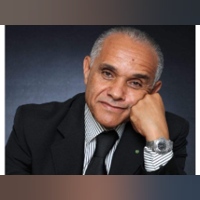
Directeur Technique et du Développement de la Confédération Africaine d'Athlétisme. Passionné du Maroc, passionné d'Afrique. Concerné par ce qui se passe, formulant mon point de vue quand j'en ai un. Humaniste, j'essaye de l'être, humain je veux l'être. Mon histoire est intimement liée à l'athlétisme marocain et mondial. J'ai eu le privilège de participer à la gloire de mon pays .
8100
33.0

The Sighs of Azemmour 5383

As we were heading towards Walidia, just to enjoy its beautiful lagoon, oysters and fish, my daughter, my wife, and I decided to make a short stop in Azemmour. I had promised myself I woud show my daughter the city as soon as I had the chance. We are here a stone's throw from Casablanca, a handful of kilometers from El-Jadida and not far from Jorf Lasfar, a pride of the industrialization of modern Morocco. Personally, I am rather fond of this city. Few are so captivating. I cannot explain why. There, you can be at times a berber in short Jellaba, tchamir and rounded or pointed toe slippers; sometimes a Phoenician clad in white in the style of the Greeks in their time of glory; sometimes wearing the toga of a proud Roman citizen or the blue turban of a rough Berghouata. You can daydream about the Portuguese singing their triumph at the capture of the city. You hear, the sound of your steps on an aged pavement, evoking that of the Saadian army taking possession of the city walls. The noise and vociferations of the soldiers resound there again and again; but in silence. At the turn of an alley of the ancient city, you hear the distant and confused voice of Sidi Abderahman El Mejdoub, wailing his pain in front of evil, questioning the world and the universe. At the turn of a street, you are greeted by the whispering voice, barely audible, of Rabbi Abraham Moul Ness and his prayers at the rising of the sun and its setting Sidi Brahim for Muslims. Religions struggle to find boundaries here... Moreover, it is a sort of miracle that revealed to the two communities that Abraham was indeed a saint. The citizens had just installed a mill right in front of the cave where he spent his time meditating and praying. The animals that powered the mill quickly fell ill and died one after the other. It was then understood that Abraham did not want to be disturbed in his meditation. Since then, he is Rabbi Abraham for the Jews, Sidi Brahim for the Muslims, holy for both. Farther inside the city, you can see rather silent young people, looking sullen, crestfallen, who face you at the turn of a lane. Some of those who walk by you look haggard, as though they expressed weariness or disgust; perhaps even deep anger and repeated hurt. At the corner of neighbouring street, on a small shapeless square, it is the jerky sound of a loom that catches your ear. One of the last Deraz still in activity weaves silken or woolen scarves. Tourists like them but do not come often... He works, he loves his job and keeps doing it, waiting for better days to come; or at least hoping that the war in the Middle East stops. Deep down, he must wish that his Israeli friends return to reason and quickly drive out their current leaders; neurotics thirsty for blood more than other thing. He is waiting for the Moussem but does not know if the Jewish Moroccans who return annually for the pilgrimage will still be numerous. The Arts and Crafts House is silent and expectant too. It spends long spells of time waiting that a small group would pass by to finally enliven it for an hour or so. The master craftsmen who stay there seem to contemplate the passage of time. Their eyes are nostalgic for a recent past certainly idealized, and a more distant past loaded with wealth and power, forever gone. A lady of a certain age, without any discomfort, dressed in battered pajamas, is there in front of her home, sitting on an stool. The blue door of her modest house, is wide open. The lady is a bit too large for her stool. Her gaze is blank. She does not notice our silhouettes and seems not to hear our involuntarily light steps, as if not to disturb the history or stir the anger of abandoned walls, houses with walled doors, those that time has knocked down and those that passively wait for the signal of the tumbling of tired stones that no longer have anything to hold onto. Behind the heavy doors of ancient buildings - and there are still many thank God - and some houses not yet walled up or fallen into oblivion of time and humans, we can guess the presence of young girls busying themselves with embroidery. Few are those who still have a passion for this ancestral art specific to the city with its bright colours and dragons. What are dragons doing here, if not recall a past so distant that it fades into the background of history. Some say that it is a Portuguese merchant who introduced this art behind the walls of the city. At the corner of a small square, as there are many in the city, in front of a small and neglected grocery store, stand idle young men. One of them must look like Mustapha Azemmouri, also called Esteban the Moor or Estevanico. He may even carry his genes. Without Estevanico, North America would never have been what it is now. What a destiny. To leave one country and travel so far, and change the course of history on the other side of the Atlantic Ocean. Walking out through one of the gates of the ancient city, one only has one thought: Azemmour is looking for a present that does not come. It is dying and dying. Maybe it is already dead. Some time ago, Karim Boukhari wrote in an article « I have visited Azemmour. A friend, from the city, warned me: Watch out, he said, it is a dead city. » Go and walk the promenade around the city walls. An esplanade that my friend Zaki Semlali has laid out with the little he had to revive this special relationship that the city has with river Oum Rebi3. Today, plastic is unfortunately more abundant than fish. Gone are the shad and the beautiful, fleshy ambrines. Some sections of the wall and houses collapse and flow towards the oued like tears of agony. The nostalgic Azemmour peeks at the Atlantic Ocean and watches, helplessly, the waves smashing in the distance. I pray the Almighty that this piece of our precious history can finally benefit from the attention of our rulers. My daughter, my wife, and I left the place sad, wounded in the depths of our souls; but the sublime voice of Sanaa Marahati singing some poems written somewhere in the city makes us hope for a better future for Azemmour.
youtu.be/T4BIRCsXQWs?si=KmRqI3mq...

Vinicius'Jr. paving stone: moving World Cup form Spain... 5373

The recent statement by Vinicius Jr., Real Madrid's best player, concerning the awarding of the World Cup to Spain continues to provoke strong reactions. He basically said that the 2030 World Cup should be played in another country if things don't improve, and that he is often the victim of racial insults in Spain. ‘I hope that Spain will learn not to insult people because of their skin colour. If things don't change by 2030, the World Cup should move on. ‘If the players don't feel safe from racism, it's hard to play,’ he told CNN in essence. The power of the chosen media is well interwoven with that of the word of one of the best-known players on the planet. He has thus embarrassed the whole Spain, aware of the star power he enjoys and knowing full well that the opinions of top sportsmen and women have an impact and can affect institutions and countries. Has he thought carefully about the possible or probable consequences of his remarks before embarking on such an adventure: the consequences for his club, which is working with FIFA to make the renovated Santiago Bernabeu the venue for the World Cup Final? This statement sounds like a warning that black sportsmen in Spain are fed up, and perhaps even a sign of revenge. Venicius Jr. surely knows that his comments will not be well received by fans of sport and Spanish football in particular, but he is making it clear that in Spain you can be insulted in a racist way in sport as well as in everyday life... It's a real problem for society. Vinicius Jr. took the precaution of qualifying his remarks by not saying explicitly and categorically that Spain was a racist country, but rather ‘a country where you can suffer from racism’. Nevertheless. Everyone understood that he simply meant that Spain is a racist country where players of colour do not necessarily feel very comfortable; otherwise why did he go so far as to ask FIFA, in a barely attenuated manner, to think before awarding the 2030 World Cup to Spain? Spain is in a three-way bid with Morocco and Portugal to host the centenary edition of the World Cup. It won't be long before comments like these create a rift between those who will rise up and reject them out of hand and those who will rally behind Vini... Let's bet there won't be many of the latter. One thing is certain: this will not be without consequences... even for Real Madrid, who will no doubt be thinking about how to calm things down before taking a decision on the player's future with the club... Some people have already gone ahead and dismissed the Brazilian's comments, pointing out that the most adored players in Spain at the moment, and particularly in the Spanish national team, are LAMINE YAMAL AND NICO WILLIAMS, and they are not white... Isn't this a way of discrediting Vinicius Jr. with a touch of irony? Will the Madrid striker's comments have helped to silence insults and unpleasant and inappropriate comments in the stands of football stadiums in the future? Only time will tell. What is certain is that it has sparked a real debate throughout a Spain that breathes nothing but football... It will have made some people ask serious questions about their behavior in tolerating or participating in acts of a racist nature in Spain and beyond. The player's words spread like wildfire across Spain and the world in the space of a few hours, demonstrating the power of the voice of top sportsmen and women. FIFA will no doubt be hearing about this, but not to the extent of going along with the player's idea of not giving Spain the World Cup if the situation does not change before 2030. Let's hope that things really do change. Every one will then say Thanks Vini.
music.youtube.com/watch?v=-E1N_k...

Africa's inescapable awakening must be taken into account as a matter of urgency. 4451

Is the world truly aware of the great changes taking place before our eyes? Probably yes. But then what does he do to anticipate them, accompany them, prepare and above all to make them assets of development, peace, harmony and coexistence. What do we do to combine them in efforts to understand each other, in common strategies, while geopolitics is impacted and is evolving, a little freewheeling anyway? The answer is unequivocal: not much. Instead, some are trying to save time, some pushing the dust under the carpet and or are just resisting. For what reason and until’ when? It is clear that the "dominant powers" do not want to see things evolve differently, no desire to see contexts move other than in the consolidation of their historical, economic and political gains. For « The up’ until when », the answer is even more complex. Depending on whether one is located north or south, the perspective is different. The youth of the south, is now more and more qualified, better and better trained, more and more ambitious. It no longer understands things with the defeatist and resigned logic of their elders. The populations of the south, especially those of ’Afrique, are no longer sensitive to the hollow discourse of revolutionary ideologies, formerly served as a poultice to coax them, or even silence them, while waiting for better days. Napoleon is attributed in 1816 : « So Let China sleep, because when China S’awaken, the whole world will tremble ». We know since that China is very much awake... and in what way. Alain Peyrefitte predicted it well, in turn. Funny story, no one has ever said such a thing with regard to Africa.. And yet,’Africa is well out of its sleep... So wait for to get rid of a little. China, is not much’ in front of’Africa, if not the resurrected legacy of Confucius skillfully combined with a communist pragmatism that nobody’ had imagined. Africa is much larger, with a larger and constantly growing population. Its young people are lively and enthusiastic. It's the world's largest island, compared with all the other continents. The so-called ‘dark continent’ has many assets, but it probably also has a few disadvantages that could block or slow down the momentum. We can list them in no particular order: the subservience of certain leaders, a number of failing political regimes, toxic borders inherited from colonialism, endemic corruption encouraged and supported by multinationals and certain Western regimes and their services, and a deeply rooted fatalism. But Africa is also determinedly dynamic. Travel to the east, west, north or south of the continent and you will see that Africa is in turmoil. Young people are talking, acting, working, innovating; they are doing politics differently and they want to change things. Their aspirations are growing, if not limitless. Of course, there are still some fools who swear by immigration, but that will soon fade. Growth prospects and the rates already achieved in some countries will change the situation. Overall, the 54 African countries have understood what is at stake and are increasingly aware of the possibility of imposing themselves and their point of view for the benefit of their young people. Remember the altercation between the President of the DRC and President Macron, or the historic speech by King Mohammed VI on the occasion of Morocco's return to African Unity. (you can find the link to the speech below) The ambitious ZLEKAF is undoubtedly the most daring response, as are the Nigeria-Morocco gas pipeline, the fertilizer manufacturing platforms, the tunnel project between Morocco and Spain, and the Giga factories that are being set up there, to name but a few. Two factors determine these trends: geography and demography. Both are in Africa's favor. In this changing context, there are two ways to act: either integrate the continent into a process of recognition, esteem, respect for dignity and co-development; or risk the most bitter confrontations and clashes. France has been aware of this during recent time... and this is only the beginning. The one and a half billion inhabitants, i.e. more than a quarter of the members of the United Nations, must be taken into account as a matter of urgency. So shouldn't Africa be integrated into global governance as soon as possible? Should we not heed Africa's solemn appeal to be given seats on the Security Council as soon as possible in place of the three non-permanent members? Should we not start paying a fair price for what the West is pumping into Africa? These are all questions that urgently need to be answered sensibly and pragmatically, because the normal course of history is as Ibn Khaldun already observed... Either evolution is controlled and channeled to the benefit of all, or change is going to come with pain... to the benefit of the most numerous, whom neither weapons, borders nor migratory blockade policies will be able to curb or stop. Africa is in the process of cleaning itself up, but not for long before its great awakening. An inevitable resurrection.
youtu.be/17gPwhdXIc8?si=Ysd6BekN...

Jamal Berraoui has gone... to his resting place and the earth trembled. 4892

Si Jamal Berraoui, you are no longer with us in this world, and country that you loved so much and for which you fought all your life. You fought for justice, progress, fairness, dignity and so many other values to which you gave your own meaning. Sometimes a philosopher, sometimes a philanthropist, you navigated between common sense and loyalty to an ideology that seized you at a young age but which you managed to tame in your own way. Your loyalty to your party did not blind you, and your selflessness gave you freedom of tone and time. You managed to tame time. Sometimes a writer, sometimes a columnist, sometimes a journalist, but never silent. Disappointment, discouragement and nihilism never got the better of you. Life was hard for you, but you loved it with tenderness. You were a renowned journalist and an outstanding political analyst. Your significant contributions to Moroccan journalism and your incisive analyses of the country's political, economic, social and sporting issues made you an influential voice on behalf of the silent majority. Your critical and informed perspective on current events has been passed on to everyone in an ‘Ach Waqe3’ that you have shaped in your own way. In this way, you brought politics back to its rightful place, within everyone's reach. In your own darija, you gave many people a taste for debate, a willingness to think and a desire to participate in politics. On your own, you did more than all the parties put together, more than all the media, more than all of us. Your weekly appearances on the Décryptage programme, every Sunday morning in the studios, from your hospital bed or simply from your home by telephone, were key moments, sublime moments of intelligence and humanism. I'll confide in you, my dear: even though I won't be seeing you again because God has decided it's best, How proud I was each time you quoted my name, one of my words or one of my positions! Sidi Jamal, how many journalists have you educated and trained? How many citizens have you made happy with your words? In your own safiote way, you have contributed to the evolution of the Moroccan media landscape. Your public appearances have always been closely followed, tackling complex subjects with simplicity, clarity and rigor. The large audience that Moroccans have reserved for you speaks volumes is telling more about the great respect they have for you among your peers. They saw themselves in you. You have always defended press freedom and your desire to see independent and rigorous journalism develop. You made a major contribution to ‘tamaghrabiyt’ in your own way, subtly referring to your hometown, your neighborhood in Casablanca, your neighbors, music, history, , the Raja, everything that links us to our rich culture, our largely ignored or despoiled history, our roots, our continent and the world. Rest in peace, my friend, after so many years of winning battles, of self-sacrifice and courage. You have finally beaten the disease. Your doctors, your family, your friends, your readers and listeners know it very well. It wasn't the disease that finally got you, it was you who decided to put an end to the disease and to your mission. I know you let out a long sigh and a charming little smile as you left us, because it's in your nature to always smile. In the end you decided to rest. We miss you already, Sidi Jamal. Si Abdelaziz Erromani will never again have to ask at the start of a show ‘Qi Bqat Shiha Si Jamal? No more of the ‘ana matafeqch m3a si Hadad’ that punctuated your contributions to Décryptage from time to time. Mission accomplished! You were a real treasure. And what a coincidence, even the earth shook that day... (On this sad occasion, let's listen to the song linked below, which I'm sure will please Si Jamal)
youtu.be/fbH7VJz2F2o?si=9MErGVWO...

25 years of His Majesty Mohammed VI's reign, as far as sport is concerned... 4860

It should be remembered that the reign of His Majesty Mohammed VI, may God glorify him, began with the greatest feat ever achieved by Moroccan athletics: placing 5th in the world championships held at the time in Seville, Spain. The country brought home an excellent haul of medals. The athletes felt it was the best present they could have given His Majesty on the occasion of his enthronement. In return, Her Majesty responded in the most beautiful way, with a royal solicitude that will remain with each and every one of us forever. From the outset, His Majesty gave a number of signals to make everyone understand the importance of sport in sustainable socio-economic development, the fulfilment of Moroccan citizens and, of course, the consolidation of the country's brand image. Having probably noticed a certain slowness in the fulfilment and implementation of the Royal vision, in 2008, on 24 October to be precise, His Majesty sent a historic letter to the various stakeholders in sporting life, who were brought together for a national conference. After leaving no doubt as to the King's lack of satisfaction, this letter mapped out the path and indicated the axes for the hoped-for development. The letter even went so far as to spell out how this could be achieved according to the enlightened vision of the august sovereign. This letter is still relevant today, and no one involved in sport can afford the luxury of ignoring its contents. To show the way and point the way, His Majesty personally inaugurated the Mohammed VI Football Academy and the Mohammed VI National Centre for the Disabled, where sport was seen as a cornerstone in the integration of people with special needs. In 2011, following the Royal initiative to revise the country's Constitution, the Moroccan people voted overwhelmingly in favour of the project, which for the first time in the country's history included sport and physical activity as a right for Moroccan citizens. There are few constitutions in the world that enshrine sport so explicitly and so clearly. This is how His Majesty's vision is being put into practice today, and this explains the major investment in sport, the qualitative change in infrastructure and the level of results achieved in certain sporting activities. Unfortunately, other disciplines are still slow to seize the opportunities offered to them to reach the desired level, no doubt due to a lack of foresight or skill. The royal vision has also proved to be very clear and ambitious for the country in terms of Morocco's place in the concert of countries capable of organising major sporting events. The country has organised numerous African championships in various sports. The Kingdom will make this vision a reality by hosting the All-Africa Games for the first time in its history. These are the biggest sporting event on the continent. All 54 African countries took part. At the instigation of His Majesty, may God assist him, Morocco did not give up when it came to defending its right to host the Football World Cup. The country has presented its bid six times without ever losing heart. With each bid, the country assured the FIFA authorities that its determination was strong and legitimate, and whatever happened, the bid was a real guarantee for the country and the projects included in it were going to be carried out in any case. On each occasion, Morocco has kept its word. It has always seen the Football World Cup as a catalyst for development, not as a one-off event. We must also remember the occasion and circumstances of the last presentation of the Moroccan bid. The African Football Congress was held in Kigali, Rwanda. Morocco was represented there, of course, by the Royal Moroccan Football Federation, but also, at official level, by the Minister of National Education, Preschool and Sport, Chakib Benmoussa. He was officially present to receive the Prize for Excellence awarded by CAF to the Moroccan sovereign and President Kagame. The minister then read the message that His Majesty had kindly addressed to the audience. In this message, His Majesty announced to Moroccans, Africans and citizens of the world, the news of the bid to organise the Football World Cup. This time, the bid is being made jointly with Spain and Portugal. The formula announced by the Sovereign is historically new: to organise the competitions on the two shores of the Western Mediterranean: a strong civilisational signal to FIFA and to the world. The primacy given to His Majesty in making this important announcement speaks volumes about the esteem in which the Sovereign is held in the region. Indeed, His Majesty made the announcement not only on behalf of the three countries, but also on behalf of the entire continent. On this occasion, the Football World Cup will be celebrating its 100th anniversary. In his message on the occasion of the presentation in Kigali of the CAF Excellence Award for 2022, just before the announcement of the tripartite bid for the World Cup, the Sovereign had said, ‘I remain faithful to the conviction I expressed in my speech on the occasion of the 29ᵉ African Union Summit in 2017: “Africa's future lies with its youth” and only “a proactive policy geared towards youth will channel the energy for development”.’ This demonstrates the royal conviction that Africa's development can only be achieved within the framework of his vision of the continent, namely the need for understanding, respect, complementarity and win-win cooperation. Taking care of young people and opening up the necessary opportunities for them in this process is essential and unavoidable. Everyone knows the role that football plays in the development of young people, which is why His Majesty said later in his message: ‘...In my country, the Kingdom of Morocco, I have made a point of making football a lever for success and sustainable human development’. A way of inviting the countries of the continent to do the same. Today, we Moroccans are celebrating the 25th anniversary of the reign of His Majesty Mohammed VI, may God help him. But it should be noted that almost all the peoples of Africa are also celebrating with us, given the radiance of the royal personality on the continent and the fact that Morocco is seen as a definite ally for the development and well-being of its citizens. Our country is seen as an example and an ally, and we should all work to consolidate this special place, built up by the many visits and royal solicitude in different parts of Africa.
youtu.be/1qG_z0g2xo4?si=8gO8c_6i...

The African Union and the "Ten Commandments" for improving women's education 4593

The African Union and the "Ten Commandments" for improving women's education A piece of information has just caught my attention and aroused my astonishment, so obvious is it. It is a reminder of one of the known chronic deficits of the African continent, at the root of its socio-economic situation and its difficulties in leaving the zone of systemic precariousness of a large fringe of the population. On 4 and 5 July 2024, African Unity organised a gathering of great importance, which was given the name of Conference. The conference was devoted to debating the importance of education for girls and women. Of course, for the sake of fashion and to fit in with a modern narrative, we talked about strategy. The conference discussed a strategy for increased access to "inclusive, lifelong, quality and relevant learning in Africa". My astonishment stems from the fact that it was only in 2024 that African Unity finally took an interest in a recurring problem that has been present throughout the continent since the dawn of time. A problem that everyone believes to be one of the main causes of the continent's underdevelopment and the pervasive precariousness of its population. In fact, for a very long time now, the pan-African organisation, whether in its old form or in its new one, has been floundering in so-called political difficulties. It lives to the rhythm of petty conflicts and never-ending conciliations between petty warlords imbued with imported ideologies in which they themselves do not believe, but who cares? All it does is denounce or try to appease the perpetrators of massacres in the name of causes that are often in the interests of this or that interest, without ever succeeding in imposing or settling anything... Finally, in July 2024, the Commissioner dedicated to this mission within African Unity will give us his prophecy. In essence, he said: "As Member States, we must redouble our efforts to support girls' education by acting on knowledge and skills. Let's support girls' education at primary, secondary and even tertiary levels, so that our girls complete their studies successfully and become very responsible citizens, capable of making very sound decisions". Fantastic. All we have to do, Commissioner, is prepare our girls and women to make the right decisions... What decisions are we talking about, Commissioner: stopping the conflicts that are making more than one rich region tired, stopping the squandering of public money on far-fetched projects and misguided policies, creating work for young people by encouraging investment, primarily in the country itself, helping to improve governance for the benefit of all, improving health services and other public necessities? To do this, Commissioner, we need to go further and deeper and question the political systems in particular and the way in which power is seized in certain countries... Thank you, Commissioner, for reminding Africa of something it should have been doing a long time ago. You would just have added 'so much time wasted on infighting and idiotic debates instead of addressing the continent's real problems'. What's even more astonishing is that, in order to supposedly help overcome the endemic situation of women on the continent, we are still making recommendations... As the Conference was only consultative, the only outcome was obviously the publication of recommendations. There were ten of them. Even Moses has not been able to impose his recommendations for thousands of years, despite the divine words: "You shall not kill, you shall not steal, you shall not bear witness". Commissioner, wouldn't it have been wise to recall these Commandments of Moses as a preamble to the Conference's recommendations? Perhaps... In its 'Ten Commandments', for example, the Conference calls on the parties concerned, those who finance or can do so, to put a little more money into education budgets... The problem that the conference did not address, but did it have the courage to do so, is how to ensure that this money, which is supposed to be forthcoming, will be protected so that it is really spent on education for education's sake... and does not, as in many cases, end up in the pockets and distant accounts of those who are supposed to manage it for the good of Africans...

But what is happening before our eyes? 4765

What is happening to the world? France is about to stand to attention under the rule of a man who has barely passed his baccalaureate, but who is nonetheless charming and appealing. An angel's face that has managed to conceal an entire history of adulated hatred, obvious racism, claimed segregationism and the overt fascism of the party it embodies. As if by magic, with the help of the bought-in media, the young bachelor managed in the twinkling of an eye to disguise an entire ideology and bamboozle the people of France, who would eventually realise that Vichy was no accident and that a very large proportion of the population at the time was not in the Resistance but rather in the Collaboration... France is moving to the right, but nothing is really likely to change, at least not immediately, because for that to happen you need full power, and that requires a RN President, a RN Prime Minister and a RN parliamentary majority. The RN are not stupid and will know how to wait... unless young Bardella is in a hurry and has his own agenda aimed at overtaking Mme Le Pen and putting her out of the running for the next presidential elections. Will he be in such a hurry to move quickly? Possibly, but unlikely. In any case, the attitude of the amateur President, a poker player, will have been the cornerstone in accelerating the success of the RN and is now the propellant of the expected rise to the presidency of Mme Le Pen, in a short time... Because with Bardella, Macron will no doubt be kept under "house arrest" at the Elysée Palace by his sweetheart, and no more. Far from it, in South Africa we were expecting the real change desired and wanted by the rainbow people, after decades of ill-fated 'dictatorship' by the ANC, which has made memory rent the sole basis of a policy that has led to disaster and the hopeless impoverishment of a large fringe of the population. This will not be the case. The ANC has just obtained 20 of the 32 ministerial posts in the new so-called government of national unity. The most important missions have not escaped it in this unprecedented government. Finance, Energy, Foreign Affairs, Police and Justice remain in ANC hands. The main opposition party, the Democratic Alliance, has only been given six portfolios in the new government: Agriculture, Environment, Home Affairs and Public Works - in other words, the breakthrough ministries. On the other side of the Atlantic, things are not looking good. The recent Biden-Trump debate revealed an America staggering to the rhythm of the crumbling president. America is going through a real disaster, a moment unprecedented in its history, a moment of confusion and political fatigue. A moment that makes you wonder whether it was possible for Americans to have sunk so low and for their major parties to have become so locked in a historically astonishing blindness. The world's leading power thus appears to be in a state of serious decrepitude, presenting the world with a spectacle of desolation and shipwreck. The American people have a choice between a colourful, neo-authoritarian old man and another old man who is crumbling and still president, but who won't give up... Isn't it embarrassing for the American people (50 million live viewers) to see their president's memory failing, a president who has lost the coherence of his words, lining up words in sentences that are as inaudible as they are confused. Isn't it embarrassing for them to see that, opposite them, their only choice is a colourful character whose run-ins with the law are not about to get any easier. Let's go back to Africa and see that the Mauritanians have chosen continuity with Ould El Ghazouani, whom they re-elected with nearly 56% of the vote... Will this time be the right time for stability in this Sahelian country, a colonial legacy with a population of barely 5 million, which has undergone more than one brutal change through successive coups d'état, a country where political crisis is an almost permanent feature of daily life; tribal and personal rivalries are bitter and unremitting. This is the way the world is going, a world that is certainly changing but not very reassuring... In any case, this is not the world that we dreamed of and that we are preparing to bequeath to future generations. But what is happening before our very eyes?But what is happening before our very eyes? That's the way the world works. Doubts here, worries there, but there's no doubt that tomorrow will be different - yesterday was already different from today...

A weak G7, weaker than ever... 4577

Giorgia Meloni, the woman propelled to power by the Italian outer right-hand, received the G7 in an unprecedented situation. Of all those present, she is probably the only one to feel strong, while the others are almost all politically weakened or moribund. The situation in Great Britain is in the process of pushing Mr Rishi Sunak out of office, with Brexit just around the corner and the situation far from stabilising, especially economically. Its French neighbour is going through the same nightmare, having been forced to call a general election following the debacle of his majority in the European elections, to the benefit of Mr Jordan Bardella,with only the baccalaureate in hand, who no doubt dreams of attending the next G7 summit alongside Mr Macron. Cohabitation is not far off... Macron has played Russian roulette and risks receiving the only bullet in the barrel in the heart. Not far from there, German Chancellor Olaf Scholz, unable to become a worthy successor to Angela Merkel who is back to normal life, is also in great difficulty and has been genuinely weakened since the last European elections. Among other things, he has come under fierce criticism from within his own coalition. The representatives from across the Atlantic at this summit are in no better shape. Mr Justin Trudeau, who is going through a difficult time both at home and politically, looking more attenuated than ever. Some Canadians are even saying that Canada has never been in such bad shape. His American neighbour is also exhausted and is not certain of staying in the White House, with Donald Trump bullying him and showing his fangs. So it was a G7 of people bathed in weakness that Ms Meloni received in a superb pink suit, as if to signal to her peers that she, the woman in the group, was the only one comfortable in her chair. Madame Meloni, who called Macron irresponsible few months ago, was there strutting her stuff and looking down on him. She'll probably be there, at another G7 with a triumphant president Mme Lepen...or who knows, President Bardella.... an Italian next to a italian...Bardella is Italian origin. So in this G7 of weakness, once decried, fascism finds itself powerfully rehabilitated and frequented... Mussolini and why not Hitler are so happy about it in the depths of their graves... Their offspring are doing a good job and today dominate the most powerful political and economic group, the G7, which is also becoming the group of shame in the eyes of those who still believe in the greatest lie of modern history: humanism and universal values... The question that arises is whether the real winner in this situation of Western uncertainty is none other than the Absent-Present Vladimir Putin... who has just won the elections by a landslide, and who awaits all these fine people on Ukrainian soil...

South African elections: change or continuity? 4462

It's a fact: the ANC lost badly in the 2024 elections, unlike all the previous ones in which it held sway without any notable rivalry. Memory rent and populism with a taste for fighting against all sorts of chimeras, promises that were never kept, were no longer enough to win over the masses and get them to vote for those who today are more likely to be held responsible for what many South Africans feel is a betrayal. The results today confirm the debacle of the party in power since Mandela. Ramaphosa's ANC is still the country's leading party, but it has been heavily punished, with just 40% of the vote. That's a dry loss of 17 points compared with the 2019 elections. The latter already heralded today's debacle. For the South Africans. The results of the 2019 elections were already a kind of alarm bell... But it was not enough for the expected wake-up call, for the realisation that something had to change. As a result, this year's South African legislative elections will go down in the country's political annals, with some interpreting the results as the expression of a fed-up with the political system imposed since 1994 by the ANC. The results obtained today would require a cohabitation, which is rather unprecedented, as the ANC has governed without sharing power since 1994. The question is, with whom will this coalition be formed? Many are inclined to think that it will be with Zuma; a multi-recidivist who has been convicted many times, he has managed to regain control and revive those nostalgic for the struggle, namely the ANC's armed wing... Umkhonto we Sizwe... known as MK. This ‘new party’ managed to glean 14.9% of the vote, putting it in third place. If it were to join the ANC, this would in fact give the same party, with these two factions, a comfortable majority of just over 55%, a score quite close to that of the ANC in 2019, which was some 57%. If this coalition is formed, South Africa will not have changed and the ANC will have five years in which to either reform the country and get it back on track, or to bog it down further in economic and social problems. The separatists in the Cape region who believe that the country cannot be saved would have more opportunity to make their voices heard. The ruling party's corruption scandals, most recently that of the former Speaker of the National Assembly, Nosiviwe Mapisa-Nqakula, have certainly had an impact, but not to the extent of bringing about radical change. Jacob Zuma, who was president from 2009 to 2018 and was found guilty, is now back through the window with the support of the ANC's armed wing... This shows that part of society is not sensitive to scandal and votes on the basis of allegiance rather than morality when it comes to the exercise of power. Cyril Ramaphosa, the outgoing president, is fairly certain, according to his own words, of obtaining a majority, as he finds it hard to see all the opposition parties getting on the same side and denying the ANC a majority. In other words, nothing will change in practice. The question then is whether this new coalition situation will find the right answers to the question of endemic unemployment, for example? The turnout of around 60% of the 27 million people called to the polls is almost the lowest since the beginning of the rainbow country's current political experiment. This is another indication of the disenchantment between the 62 million inhabitants and their political model, which no longer reassures them about their future. The flight of capital to neighbouring countries is a strong indication of this disenchantment. The next few days are likely to bring their share of surprises, but will they be enough to really surprise? Here are the final results of these elections • ANC 40.18, • Democratic Alliance (DA) 21.82 • Umkhonto we Sizwe (MK) 14.59 • Economic Freedom Fighters (EFF) 9.49 • Inkhata Freedom Party (IFP) 3.86 • Patriotic Alliance (PA) 2.06 • Freedom Front (VF) 1.36 • ActionSA 1.18 • African Christian Democratic Party (ACDP) 0.60 • United Democratic Movement (UDM) .049 You will have noticed that three of the 10 parties that obtained votes have the word freedom in their names and that three claims to be democrats... This says a lot about the expectations of the South African people and their dreams. In any case, these elections will have an impact on the history of the country and will have repercussions on the whole continent. South Africa is currently the second largest economy in Africa.

Sport as a sustainable development tool? 4779

Anyone operating in the public sphere is doubly challenged when it comes to sustainable development and social responsibility. Those active in sport are also. It has to be said that the issue of sustainable development is very confused in people's minds. In some countries, the need is for development pure and simple, so that people can live decently, in dignity, with their needs properly met, while benefiting from the wealth of their countries. However, there is a lot of confusion in the messages conveyed by almost all the politicians and various influencers who have taken over the issue without the slightest competence in the field, with a predominance of ideology in their communication, which makes it difficult to understand a subject that is so important. For example, to say that the planet is in danger is just ridiculous. It's humans who are threatened with extinction and a whole host of problems that are likely to arise before they do, if nothing is done to reverse the trend. So isn't it legitimate to openly ask whether carbon offsetting as a solution is a way of keeping the poor poor and the rich comfortable? When I was working in my capacity as a direct manager in sport, the issue of sustainable development was much more concerned with its social rather than its environmental dimension, but it just so happens that sport and athletics in particular, in certain regions of the continent, have made it possible to solve an enormous number of problems by improving the standard of living of individuals. Each time, this improvement has had a positive impact on the immediate environment of the people concerned and sometimes on an even wider circle around that person, at the level of an entire village through the creation of schools, health facilities, means of production and water points. I'm one of those who are convinced that the return and enhancement of customary systems and ancestral traditions - the result of a cultural accumulation over time and history - is extremely important, not in a vision of nostalgia or ‘folklore’, but rather as a source of solutions to current problems. People all over the world have always set up ingenious systems to solve their problems of water supply, conservation and sharing, for example. Pour en revenir aux valeurs actuelles, le sport, sans doute aucun, est un vecteur d'éducation des jeunes filles et des femmes, une école du vivre ensemble, de paix et de diplomatie. Il est du reste le moyen le plus efficace pour la cohésion et l’inclusion sociale, même quand il s’agit de populations carcérales. Dans les années 80 j’avais initié l’activité sportive en faveur des handicapés dans mon pays, ce qui a abouti peu de temps après à la création d’une Fédération Royale Marocaine dédiée. Aujourd’hui au Maroc, la quasi-totalité des catégories de personnes à besoins spécifiques bénéficient d’encadrements sportifs dans des centaines associations and numerous specialist centres. Morocco's achievements in this field are often cited as an example. As a result of this conviction, I am still involved in two major associations dedicated to physical activity and sport for girls and women: the Association Nationale Femme et Activité Physique (National Association for Women and Physical Activity), set up in the early 1980s by Mrs Fatima El Faquir, and the Association Femmes Réalisations et Valeurs (Women's Achievements and Values Association), set up by Mrs Nezha Bidouane. Both of these organisations provide tens of thousands of women with regular, sustained exercise. I also take part quite regularly in activities initiated in prisons, etc. In order for sport to play its role of sustainable and social development properly, there are many things that need to be improved in the training of supervisors. First of all, we need to give priority to academic training in specialised institutions and faculties. Physical activity and sport are highly complex fields. The international federations have done a very poor job of sticking their noses into training. They should focus on qualifications and leave training to the university system. We mustn't forget that sport itself is threatened by climate and environmental risks, but also by a host of abuses that it can undergo or engender. Global warming, for example, is forcing sportsmen and women to adjust their training times, while the lack of water means that certain sports facilities cannot be installed in certain areas (swimming pools, tennis courts, golf courses, etc.). The atmospheric and noise pollution caused by certain sports, the violation of human rights that tarnishes the credibility of certain major sporting events, and the psychological or physical violence inflicted on sportswomen are all threats that weigh heavily and compromise the noble mission of sport. Another major risk here is exploitation, whether financial or physical. I'm thinking here of all those young sportsmen and women who are exploited, lured into a bright future by the promise of good things, in various so-called training centres that obey no demonological rules or ethical codes. I'm also thinking of sexual exploitation, paedophilia, harassment and the sexual exploitation of young girls. There is also the heresy of all these highly polluting activities that call themselves sports... whether directly through the use of powerful engines, rubber, plastic and other harmful components. La violence est également présente au quotidien dans le sport notamment quand les enjeux sont très importants et quand s’y ajoute une dimension exagérée de fanatisme. Racism is also increasingly expressed without embarrassment in the stands by a public increasingly free of moral or legal constraints, with disconcerting impunity. So of course there are actions being taken through what is commonly known today as Safeguarding. Many international federations, including World Athletics, have embarked on this path. Let's wait and see the results of such strategies, but the fact remains that these issues cannot be resolved by simple rules and sanctions. The creation by the United Nations of the International Day of Sport for Development and Peace was certainly conceived with this in mind. The day was proposed by an African, the Moroccan Kamal Lahlou

God surely forgives lies for a good cause Part 1 4890

His mother had been suffering from a very serious illness for months. Everyone around her knew that her life was going to be shorter and shorter and that it was only a matter of time before she left them forever. The mother was the only one who didn't know it and who had the hope of an almost certain recovery. At the first diagnosis, the doctors thought they could work some miracle. He was happy about it, convinced that a surgical intervention, the work of a great specialist, would restart the machine. It was just an optical illusion one would say. To his great dismay, the same afternoon, he was told that the operation was not possible. It was too late. The disease had spread like a constellation of hundreds of stars. Poor mother's entire body was riddled with small, seemingly quiet particles, so dangerous, so uncontrollable. No medicine could dislodge them from this body so pale, so frail. Total impotence. With his sisters Aoula and Tania present with him at the mother's bedside, they decided not to say anything to either the mother or the 80-age father who naively trusted them a lot and believed everything they told him as a version of things. Perhaps he was also pretending so as not to contradict them. He had to be taken care of too, they thought. On the contrary, they told him that the doctors had seen that it was not necessary to operate on his wife of half a century or more and that with light radiotherapy and appropriate medication, everything would return to normal. Today he still remembers the big smile of relief from his mother who told those who visited her, with a beaming face, that thank God she was going to make it through without surgery. She experienced it as a moment of triumph against illness, a moment of glory, a moment of rediscovered youth. Her face lit up and regained color...These were the last moments of joy and happiness for the poor mother.

God certainly forgives lying for a good cause. Part 2 4678

God certainly forgives lying for a good cause. Hazard doing things well, sometimes, this period coincided exactly with the end that he had decided for his long and trying career. He had thought about it for a long time and had resigned himself to a break that he intended to be definitive. This made him available to stand by the mother he loved so much. He thus spent most of his time at her bedside, as did his sisters who were present at the family home permanently to take care of the one who had made eight litters, appreciated academics, citizens devoted to their country. It couldn't be otherwise. The example was a mother who had attended the first classes of the modern school in Fez and a father who was more than devoted to his profession. The frequent trips to the clinic for check-ups or perhaps to leave some amount of money there again and again, were for the mother synonymous with hope and for them with repeated ordeal; renewed moments of confirmation of despair; Things were getting worse every day, exponentially... He wondered all the time if this medical relentlessness was wise or if he was just speeding things up. He will never have an answer to his questions. At every moment he wished for good not to relive this decline, if he himself were to be affected one day. Suspecting something, one day the mother asked sister Tania to explain to her why he was still there and why he no longer worked. She wanted to know if it had any relation to her health. He then felt that perhaps he should disappear for a few days. Just to reassure the poor mother, even paler, even more frail. He then decided to travel to Brazzaville where for several years already, he had been organizing, on behalf of the Town Hall, at the time one of the best sports festivals on the continent. For this reason, Congolese President Sassou Nguessou made him an Officer of the National Order. A decoration which tickled his pride and which he often talks about. He was convinced that such a trip for few days would reassure the mother about her state of health and reassure her. He read that in her eyes and heard it in the tone of her hesitant voice when he told her that he was going to the Congo for work. Two days later he arrived in Brazzaville around 2 a.m.… Barely in his room with his suitcase still unpacked, he receives a call from his sister Tania, overcome by an astonishing panic: “She died”, he asked without even thinking? Tania reassures him that no, but that the poor mother had fallen into a deep coma. The Casablanca-Brazzaville and return connection was daily. So, he only had to wait until the next night to return. He took the trouble to apologize to thz host Mayor Alfonse L, then director of the festival, and set off on his way back. He reached his mother's bedside in an irreversible sleep on March 14. In the evening around 8 or 9 p.m., while he was holding her hand, his brother M was reciting Surah Yacine to him out loud, and all his children: J, A, El, F his wife, were around the medical bed where the mother had spent a few weeks, in the room that had been specially designed for her; she gave up the ghost. One last deep breath, one last long and soft sigh which spoke volumes about the suffering endured for months. His right hand, which he was holding tenderly, relaxed and began to cool. The dad who was there of course, couldn't believe it. While he announced to everyone that she was gone, the father shouted at him that no and that he just had to resuscitate her, addressing with authority his son M, a doctor of proven competence. It took a few long minutes for the dad to come to his senses and accept that he had just lost his soul mate at that precise moment. The one who brilliantly gave him 8 children and educated them all in the best possible way. This is how the late mother left, 17 years ago to the day. The same day his younger sister S gave birth to Z who today we call the bogoss at the age of 17. Like life goes on. The day after the death, while her sister S was returning home with her baby in hand, the others were preparing to put the inert body of the mother in the ground, peacefully lying there, meticulously washed and wrapped in the traditional white shroud. Before she was completely enclosed in this sheet; they had all leaned over to place a last kiss on the deceased's face but do she felt it, do she felt such pain that tore their insides. Sadness, pain, support from close friends, solidarity from the extended family, incense and the Koran, a few cries, intertwined in an unforgettable moment, with indelible traces. Every year on the eve of this sad anniversary, his daughter calls him to support him because she knows the pain that the mother's disappearance had instilled in him. She then asks him to make an offering in her name. A symbolic sum that he gives to the first needy person who crosses his path that day. Her daughter and her grandmother were very close. She often tells him: “It was Lalla who taught us to be the men and women we are today, each of us bears the trace of her example and her teaching. »

Mother tongue in education: a development imperative... 4694

I would like to extend my warmest thanks to the many people who have responded to my previous articles on the issue of language in Morocco. Opinions continue to differ on the use of the Moroccan mother tongue in education. Some, without the slightest argument, oppose it with immeasurable fervour. False debate, say others. In fact, almost all teachers already use Darija to explain the content of their lessons, particularly in science subjects. So much the better. What is perplexing, however, is the logic of opposition that some people are striving to impose between Arabic and Darija. In fact, scientifically, what is required in teaching, particularly in the early years, what is recommended by all the international bodies concerned, what is concluded by almost all the scientific research on the subject, is a linguistic continuum, in the complementarity between the language used at home and the other languages, Arabic first and foremost in the case of Morocco, since politically we have made it the language of the country. Darija and Arabic complement each other perfectly. The advantage of learning in the mother tongue during the first years of schooling is precisely that it allows a transfer to other languages without fractures or breaks, ensuring normal mental structuring. The child is not shocked and develops psychologically, normally, in the continuity of its linguistic, genetic, historical, civilisational and social baggage. Logically, as has proved to be the case in countries that have long opted for the use of the mother tongue in education, the salutary effect of this approach is that learners assimilate knowledge easily and confidently, adopt social values without difficulty and integrate civic values more easily. The school is here a component of life, perfectly integrated into its environment. Unfortunately, doing things the way we've been doing them up to now is the exact opposite of this logic. Our way of doing things encourages a split personality, to put it mildly. As soon as a child starts school, he will adopt a behaviour for school, a behaviour for his family and later another behaviour for the street and everyday life. They will develop a language for each of these spheres. This is conducive to many mental abnormalities and is the main cause of school drop-out rates, which in Morocco are reaching rather worrying figures, not to mention the colossal budgets spent for little return. The result is unfortunate public spending and unbelievable amounts of money that have been squandered shamelessly for a long time without question. Children who have not properly assimilated the language of learning imposed on them are simply discouraged and will eject themselves from the school system. Later on, young people who have not succeeded at school will find themselves to be a sub-human and see themselves as such. Whatever professional knowledge they acquire later on, as long as they are unable to express it in classical Arabic or French, they are considered ignorant. The citizen they are about to become is excluded, for example, from official information, which is only provided in the two languages mentioned above, if not in Amazigh and Spanish. Little by little, they become disconnected from "official life", drop out of cultural life, stop reading, stop writing and soon fall back into primary illiteracy. This abnormal situation creates a divorce between these citizens, who are unfortunately very numerous, and the public sphere, for example. They are no longer able or willing to take part in social life, let alone political life. This rejection is normal because these citizens no longer feel concerned and see themselves as living on the margins, the language or languages used being foreign to them. In the logic of things, the most embittered will go so far as to develop a rejection and then a hatred of public affairs. They are the breeding ground for nihilism and, why not, fundamentalism. Children begin by rejecting and hating their school, and will then transfer this attitude to their entire environment, and in particular to institutions. The violence that is developing in our society can find a plausible explanation here. That, in a nutshell, is the problem of mother tongue denial. It's not just a technical or linguistic issue, but an existential one for a society. It is intimately linked to human development and hence to the country's development as a whole. Any reflection here must be conducted with intelligence, far from any partisan ideologies or immutable convictions. The mother tongue is by its very nature a structuring factor, and nothing can replace its effectiveness or its richness.

Crosscountry World Championships: Africa dominates without question... 4999

Africa dominated the 45th world cross-country championships held in Beograd on 30 March 2024. Croatia, was due to host the event but was finally replaced by Beograd on a decsion of World Athletics, because the preparations were not carried out properly. The events took place along the Danube in the Friendship Park. A splendid venue. When we talk about Africa, we are really talking about Kenya, Ethiopia, Uganda and, to a lesser extent, Morocco and South Africa. Of all the medals at stake, only one escaped the Africans, and that was in the mixed relay, where Great Britain & Northen Ireland managed the feat of taking a bronze medal from the Africans. In the junior women's 8km, it was the young unknown Ethiopian Marta Alemayo who won the race, four seconds ahead of her compatriot Asayech Ayichew and some ten seconds ahead of her other compatriot Robe Dida. Right from the start, the Ethiopians showed that they were there to win, and at no point did they let the Kenyan a chance to take the initiative. In the team ranking, Ethiopia naturally took the gold with 12 points, followed by Kenya 28 points and Uganda 48. It has to be said that the Africans did not leave the slightest doubt as to their intentions of finishing on the podium. The USA only managed 4th place here, 40 points behind Uganda. Two other African teams took part in this 8km event: South Africa 10th and Morocco 12th. In the junior boys' category, the top 15 finishers were all Africans, demonstrating Africa's dominance both certenly now and in the future. The young Africans showed great strength and fighting spirit in this race. At the finish, victory went to Kenya's Samuel Kibathi, followed by Ethiopia's Mezgebu Sime just four seconds behind and another Kenyan: Matthew Kiopkoech Kipruto third. In the team ranking, it comes as no surprise that Kenya is the gold medallist with 15 points, followed by Ethiopia with 21 points and Uganda with 52 points. Two other African teams were also present: South Africa in 5th place and Morocco in 6th. It was a fine revenge for Kenya over Ethiopia in the juniors. In the senior women's event, Kenya dominated the field, taking the top five places in the individual ranking. It was like a Kenyan championship. They gave their opponents no chance. The icing on the cake was Beatrice Chebet, now just 24, who won her second title in a row, having also been world champion last year. Before her, only Tirunesh Dibaba had done the same. Beatrice Chebet beat her compatriots Lilian Kasait Rengeruk and Margaret Chelimo Kipkemboi. In the team ranking, first place naturally went to Kenya with just 10 points, followed by Ethiopia with 41 points, ahead of Uganda by just 3 points. (44 points). The USA came 4th, followed by the other African team present at this race, the South Africa squad, in 7th place. In the senior men's race, Jacob Kiplimo will put everyone in agreement. With his victory here in Beograd, repeating his feat of last year, he joins the very short list of athletes who have won the world cross championships more than once. His name now stands alongside those of Kenenisa Bekele, Geoffrey Kamworor, Paul Tergat and Khalid Skah. The top 19 finishers in this race were also African, with the exception of Spaniard Thierry Ndikumwenayo in 17th place... It should be noted that this Burundian champion has just become a naturalised Spaniard. The race was by no means easy. The athletes changed pace and tactics a lot to wear down their opponents, but in the end, logic prevailed. In the team ranking, Jacob Kiplimo's victory was not enough for his country to win gold, as Kenya once again became world champion scoring 19 points, followed by Uganda 31 points and Ethiopia team with 40 points. In fourth place we have Spain with 99 points. The other African teams present were Eritrea (6th), South Africa (8th) and Burundi (10th). Finally, in the mixed relay, Kenya once again gave its opponents no chance. The time set by the Kenyans left no doubt as to their superiority. Kenya won gold with a time of just 22 minutes and 15 seconds, followed by Ethiopia at 26 seconds in 22:43. The big surprise here was Great Britain & Northern Ireland, who took bronze in 23min 00, 8 seconds ahead of Morocco. Uganda will be 5th, France 6th, Japan 7th, USA 8th, RSA 9th, SER 10th, MEX 11th, KAZ 15th and FIJ 13th. Kenya topped the medal table with eleven medals at this edition of the World Cross Country Championships held in hot, sunny and dry conditions in Belgrade. This included six gold medals; the team titles in the senior men, senior women, U20 men and mixed relay races, and individual gold for Beatrice Chebet (senior women) and Samuel Kibathi (under 20 men). Other medals were won by Ethiopia 10 in total, Uganda won 5 and Great Britain won one single medal. Spain was the best European team in all individual races. On the flat nearly 2 km lap with obstacles, brigdes, mud and hay maze, African continent dominated. In total 439 runners competed from 45 countries a refugee team was there also. Finally, we can once again conclude that in athletics, Africa is a superpower and that in middle and long distance especially, no other continent is a match for it at the moment.

13th african games: exceptional results in athletics 4799

The athletics competitions at the 13th All-Africa Games in Accra- Ghana left no one indifferent, of course because of the quality of the infrastructure and organisation, the exceptional enthusiasm of the public, but certainly because of the exceptional quality of the results obtained. A great number of specialists dwelt on the very positive results of these competitions, the number of records, the numerous best world performances and the density of these high level performances in more than one event. In the video linked here, Carole Fuchs, a leading specialist, is the guest of Anna Legnani, a lesser-known specialist who worked for the IAAF in the media field for many years. They both go into detail about these exceptional results and put them in perspective for the next Olympic Games. This was part of the podcast that Anna regularly hosts: Love Athletics. All that remains now is for this exceptional rise in African athletics, which has been the trend for nearly twenty years, with a marked acceleration over the last few years, to be confirmed at the next African Championships, scheduled for Douala in June, and of course to take shape at the Paris Olympics. Thank you Anna Thank you Carole The video link is here below.
youtu.be/RVkUPnpO27Q?si=EmfO7g-p...

Do we still have the luxury of not using artificial intelligence? 4951

AI is a rapidly expanding research field that not only advances itself but also supports other scientific domains. It opens up new perspectives and accelerates knowledge and mastery of new technologies, allowing for previously unimaginable time-saving shortcuts. The future of AI is promising, but it requires mastery of the tool and adherence to certain standards. It is also important to minimize the gap between human understanding and intentions, and the increasingly autonomous machinery. This requires humans with a high level of knowledge and expertise to ensure that the work is done efficiently and with precision, for the benefit of humanity. It is also important to fully understand cultural, genetic, geographic, historical, and other differences and disparities. This should lead us to consider multiple perspectives rather than just one, especially in complex medical fields where details are crucial. Do Senegalese, Canadians, Moroccans, and Finns react similarly to the therapies currently available? Do they suffer from the same diseases and react in the same way if exposed to the same virus or bacteria? The applications of AI that concern humans allow and will allow in the near future for an improvement in the quality of care. Operations will be assisted and medications will be designed on a case-by-case basis. However, reliable data is essential, as it is imperative to proceed in the most appropriate manner, which machines cannot do without enlightened humans who carry out their training. Humans must have sufficient and adequate knowledge to develop the necessary approaches and techniques while also adhering to an unwavering ethical standard. In the link below, Dr Tariq Daouda explains this and more in a very pedagogical manner, as a guest of the "Linvité de la Rédaction" (editorial team guest) of Médi TV. Click on the link to learn more. The video is a french speaking one.
youtu.be/J4aTDFxk1fg?si=0Fh3AFBw...

13th All Africa Games, athletics ends in apotheosis 4968

On the evening of 22nd March, the athletics events of the 13th edition of the All Africa Games came to an end in the same atmosphere and with the same enthusiasm of an overjoyed public, especially for the two victories of Ghana. A historic moment for Ghana and African athletics. 51 of the 54 member countries and no fewer than 625 athletes took part in this edition, which was characterized by the quality of the organization, the high level of the track and equipment and, of course, the excellent preparation of the athletes, who set numerous records of the Games, national records and many of the World Lead performances, including that of Zambia in the men's 4x400m, which brought the competitions to a climax in this Final day of athletics at All-African Games. Indeed, it saw Zambia clocking 2:59.12 a National and Games record with great anchor of Muzala Samokunga ahead of Botswana 2:59.32. On the women side Nigeria clocked 3:27.29 in the same event. There was also an interesting javelin improvement for Nigerian Nnadi Chinecherem to 82m80, a new national record over Kenyan star Julius Yego 81m74. The Algerian Yaser Triki , world indoor silver in triple jump, was beaten in long jump with 7m83 (+2.9) to South African new comer Mthembu Asande 7m86 (+1.5). Evans Yamooah from Ghana won men high jump 2m23, just 1 cm below national record. In the 5000m, World medalist Ethiopian Hagos Gebrhiwot confirmed his status in the event with 13:38.12, the same for his compatriot Hirut Meshesha in women 1500 m who clocked 4:05.71 a new Games record over Hawi Abera 4:06.09 and third was Kenyan Mary Ekiru 4:06.22. Kenya got gold in men 1500 m as Brian Komen won in 3:39.19 over Ermias Girma from Ethiopia with 3:39.40 and Abel Kipsang another Kenyan with 3:39.45. Sprints over 200 m were against strong wind, home win, to the great pleasure of the crowd, for Joseph Amoah 20.70 (-2.8) and for Gina Bass from Gambia 23.13 (-2.6) for her second gold in the Games. South African Rogail Joseph won women 400 m hurdles 55.39 in a Personal Best ahead of Moroccan Noura Ennadi 55.85. In the Half marathon gold medals goes to Eritrea with Samson Amare Hailemicael in 65:04 and in the women race the victory went to South Sudan Loliha Atalena in 74:36. At the end a total 27 countries are medal winners at this 13th All Africa Games athletics competitions, which is a little bit more than half number of participant countries (51). Nigeria won the medal ranking with 11 gold, 6 silver and 4 bronze medals. Ethiopia finished second: 7-7-4. South Africa third: 7-1-3 Kenya 4th: 6-6-8 and Ghana 5th with 3 gold, 2 silver ans 1 bronze.

13th All Africa Games: Athletics, the show goes on for the 4th day 5050

The party continued at the University of Accra stadium with an enthusiastic crowd and overjoyed athletes. The performances were once again outstanding. The cheers were a little lively when it came to the athletes from Ghana, but the public knew how to appreciate the performance and did not fail to encourage the athletes of other nationalities as well. In the afternoon of the third athletics days, the Nigerian Olympic and multiple World medallist Ese Brume won the high-quality but windy long jump at this 13th All-Africa Games leaping to 6m92 with a registered of +3.9. Marthe Koala of Burkina Faso finished second with 6m81 w (3.3), also 6m68 with a wind of only 2.0, ahead of other Nigerians Prestina Ochonogor 6m67w (3.2) and Ruth Osoro 6m62w (2.4) / 661 (1.9). Morocco’s young new comer Saad Hinti improved the national 400m hurdles record with 48.82 to win over Victor Ntweng of Botswana: 49.38. Kenya’s Janeth Chepngetich in a slow 33:37.00 certainly due to the high level of humidity and heat, defeated Wede Kefale of Ethiopia: 33:38.37 in the 10,000m final. Egypt’s Mostafa Elgamel won the gold in hammer with an excellent 73m65. Nigeria’s Obiageri Amaechi in the women’s discus droped the gold with 58.93. only 4 participants took part in the pole vault event won by Medhi Amar Rouana of Algeria in 5m30. Benin’s Odile Ahouanwanou in the heptathlon was first with 5616 points. Fresh triple jump World Indoor medalist Yasser Triki of Algeria leaped to 8m09 (W:1.6) in the long jump qualification. At the end of the session Zambia clocked 3:04.16 which is a New National record, being the fastest in the 4x400m heats.

All African Games: A third magnificent day of athletics 5021

The stadium of the University of Accra in Ghana, which is hosting the athletics events, was the setting for a memorable evening of athletics at the All-African Games. The fantastic crowd, who spared no effort to encourage the athletes, and the perfect organisation by officials from the Ghana Athletics Federation, assisted by delegates from the Confederation of African Athletics, certainly played a decisive role in the success of this third day of athletics events. The weather was also kind, the heat dropped a little and the humidity level was more bearable. World record holders not only won their events but also achieved World leading marks. Beatrice Chepkoech in steeple chase with 9:15.61 established a new World List ahead of Olympic winner Peruth Chemutai from Uganda 9:16.07 and Ethiopian Lomi Muleta 9:26.63. Nigerian Tobi Amusan clocked also a World List in 100 m hurdles with 12.89 despite a -2.1wind and she also was part of winning Nigerian 4x100 m with 43.05. More World leads in 400 m by Mary Moraa 50.57 over Esther Joseph from Nigeria 51.61 and Sita Sibiri 51.74, a new National Record for Burkina Faso. Nigeria men 4x100 m team with a magnificient 38.41, a new World List beat Ghana 38.43 and Liberia 38.73. World Budapest champion and recently indoor champion Hugues Fabrice Zango won triple with 16.97 (+0.5). In women javelin Jo-Ane Van Dyk from South Africa was first with 60m80. Nigerian Chidi Okezie won the 400 m with strong finish in personal best 45.06 beating Muzala Samokunga from Zambia 45.37 and Senegal´s Cheikh Tidiane Diouf 45.49. Kenyans dominated the men 800 m final as Aron Cheminingwa won in 1:45.72 ahead of Alex Ngeno 1:45.73, bronze for Tumo Nkape from Botswana 1:46.04. Close finish in the 20 km walk, Ethiopian Misganaw Wakuma 1:28:05 beat Kenyan favorite Samuel Gathimba 1h28:06.

13th Accra African Games, Athletics at a top level ... 5087

Under strict and competent supervision of the Confederation of African Athletics, which appointed a large team of technicians and top referees, the athletics competitions continued for the second day (19 march 2024) at the All-African Games in a crazy atmosphere with a packed stadium at the University of Accra. The atmosphere was truly extraordinary, which pushed the athletes to even higher levels of performance, auguring an exceptional African participation in the next Olympic Games, even though we are only at the beginning of the season. Fresh World Indoor champion Tsige Duguma of Ethiopia highlighted the second day of athletics competitions by winning the 800m in a world lead of 1:57.73. It is also her Personal Best. WL/PB. Uganda’s 2019 World champion Halimah Nakaayi finished second (1:58.59) and Vivian Chebet of Kenya third (2:00.27). Cameroon’s Emmanuel Eseme confirmed his domination in the first round and semi finale and topped the 100m in 10.14 (-0.8) ahead of Usheoritse Isekiri of Nigeria (10.23) and Namibia’s Gilbert Hainuca (10.29). As expected, Gina Bass of Gambia won the women’s sprint in 11.36 (-1.3). Nigeria’s Chukwuebuka Enekwechi won the shot put with 21.06 over Egypt’s Mostafa Hassan (20.70). Nibret Melak of Ethiopia topped the 10,000m (29:45.37), Senegal’s Louis Francois Mendy the 110m hurdles in 13.61 (-1.1) ahead of Algeria’s Amine Bouanani 13.69. Rose Yeboah of Ghana won the women high jump with an excellent 190. South Africa’s Mirè Reinstorf topped the pole vault with a high-level performance of4m35 which is a new Games Record. Ruth Usoro comes from Nigeria to win the gold in the triple jump with with 13.80 (1.1). In this second day of competition, two titles went to Algeria by Zahra Tatar in the women’s hammer with 69m65 a new Games Record, and by Dhiae Boudoumi in the decathlon with 6943 points. Nigeria (Emmanuel Ifeanyi Ojeli, Patience George, Sikiru Adeyemi, Omolara Ogunmakinju) dominated the mixed 4x400m relay in an early world lead of 3:13.26 ahead of Botswana (3:13.99 NR) and Kenya (3:18.03). Nigeria sets here a new African record. Kenya’s 800m World champion Mary Moraa showed the fastest 400m semifinal time of 51.55. Muzala Samukonga of Zambia was the best man (45.51) and Nigeria’s Tobi Amusan topped the 100m hurdles heats in 13.03 (-1.8). To close the session we had fast men’s 4x100m times were achieved in heats by Ghana (38.67), Nigeria (38.70) and Liberia (38.86), Liberia’s women were also the fastest (43.73).

Athletics puts the 13th All African Games in orbit... 4924

Athletics got off to a flying start at the 13th All-Africa Games, and the Games took on a whole new dimension as the level of athletics in Africa is so much higher than in other sports. There will certainly be plenty of Olympic medallists among the participants in Paris next summer. Despite the hot and humid weather in Accra at this time of year, the quality of the track and the perfect organisation of the competitions enabled promising performances to be achieved in almost all the events from the very first day of the qualifiers, with many Games records, continental records and even more national records. First day results: It start with an ethiopian win in the women 5.000m: U20 Medina Eisa won women 5000 m in 15:04.32 (third best ever time at Games) over teammates Birtukan Molla 15:05.32 PB and Melknat Wudu 15:07.04. Fourth best Kenyan steeple WR holder Beatrice Chepkoech 15:13.71. In men steeple Samuel Firewu also from Ethiopia won the gold with a time of 8:24.30 ahead of Kenyans Amos Serem 8:25.77 and Simon Kiprop 8:26.19. South African Victor Hogan dominated in discus with 62.56. From prelims to note fastest 100 m men semifinal 10.15 (-0.1) by Cameroon´s Emmanuel Eseme. In women 100 m semfinal Gina Bass from Gambia 11.35 (-0.8). 400 m first round had Cheikh Tidiane Diouf from Senegal as fastest with 45.64. Eritrean Fithawi Zaid clocked in 800 m prelims national record 1:45.90. Senegal´s Louis Francois Mendy topped 110 m hurdles first round with 13.54 (-1.2). In women 400 m heats fastest Esther Joseph from Nigeria 51.81 with World champion over 800 m Mary Moraa winning her heat 52.18. World Indoor champion Tsige Duguma was the fastest in women 800 m opening round 2:02.08.

Mustapha Guiliz: The door ajar... 5705

"In writing this book, I aspire to a more humane form of justice, one that ensures equality between citizens, but also the right to fulfil oneself." This sentence, full of meaning and questions, is by Si Mustapha Guiliz. It is taken from the article that the newspaper "L'économiste" devoted on 3 January 2024 to the presentation of the book "les hommes de la nuit" published by Orion, whose founding president is none other than Si Abdelhak Najib. The article is followed by an edifying interview with Si Mustapha Guiliz, the author of the book. This is an author whom Bluwr readers and members have had the privilege of meeting and, above all, appreciating through his article "Education through values", which appeared in Bluwr few weeks ago. Si Mustapha GUILIZ is a teacher and writer who has already written "Le Monde d'Brahim" and "Au pays des sources". Contrary to the title of the book, which might suggest that the author is a dull, even embittered character, Si Mustapha is a pleasant person, with a youthful smile that is pleasant, fulfilled, indulgent and tender. When you come into contact with him, you realise just how far removed he is from the subjects he covers. This detachment, which is both intelligent and not at all indifferent, allows him to go into the depths of things with the objectivity that is both necessary and required. Having had an hour-long discussion with Si Mustapha one fine morning last November, I was able to gauge and appreciate his detachment and depth of philosophical analysis. "The men in my book are men with a capital M, who have made the best of life in the dark," he says. In fact, for Si Mustapha, all men deserve a name with a capital M, and not just the characters in his inspired fiction. In a world of injustice, he dreams of justice. In a world where women suffer, he dreams of ideal conditions for them all. In a world of abused power, he dreams of moderation and balanced power. In a world of despair, he dreams of fulfilment. Is he an idealist from another planet, the one on which he sails to bring his characters to life? He is the only one to know ... In any case, this sentence "Through the writing of this book, I aspire to a more humane form of justice, one that aims to ensure equality between citizens, but also the right to fulfil oneself" fits his character perfectly. We need so many people like him to reveal our reality to us, but also to open the door to hope and to urge us to break it down. I'm writing these lines to congratulate Si Mustapha, whose book is a perfect start to this new year of service to the community, and to express my pride in knowing him and publishing articles with him on Bluwr, in the hope of reading him again soon on the platform.

Track and Field, the most representative sport on the African continent 5588

4 months ago I published this article in French. Today, as I'm getting ready to leave for Accra for the All African Games, I thought it would be a good idea to republish it, this time in English. It's a reminder of the dynamism of African athletics and its place on the continent and the world stage. I am here using an old wording: instead of Athletics i used Track and Field as title...A kind of nostalgia of the old days. XXXXXXXXXXXXXXXXXXXXXXX One of Africa's most dynamic sporting bodies is the Confederation of African Athletics. This dynamism is obviously the result of the fact that it manages the continent's most representative sport, but it also comes from its component parts, which are of course the national federations, of which the CAA is simply an offshoot. Its role is to encourage, channel and coordinate efforts to develop athletics on the continent. Athletics is the sport that has won, is winning and will continue to win the most titles and glories for the continent for a long time to come. To this end, the CAA, under the leadership of its President Hamad Kalkaba Malboum, has made great efforts to develop the sport. It has succeeded in setting up an initial ten-year strategic plan, the objectives of which have almost all been achieved: in particular, revitalizing the most precarious national federations and developing youth sport by introducing regional and continental competitions for U18s. This plan was aimed at popularization and more quantitative aspects: number of countries and athletes taking part in African competitions, number of African countries and athletes taking part in world competitions. The 2nd plan, launched in 2019, also covers a ten-year period and aims to consolidate and strengthen the gains made by moving a little closer to the quality of the activity as a whole, by reducing the disparities between members and regions. Aware of the importance of scientific aspects for the development of athletics, the CAA has based a large part of its strategy on collaboration with universities in each of its member countries: for the training of executives and for research and development in governance and management. If Africa accounts for more than 35% of world athletics, it is because it also has close relations with the world body, which is done in perfect harmony. There are, of course, points of disagreement that the two parties are trying to overcome to ensure perfect complementarity. World Athletics has delegated a number of prerogatives to the CAA, including development. This policy of decentralization is working rather well, to the satisfaction of both parties. The CAA's other major partner is ANOCA (Association of National Olympic and Sports Committees), with which we are in the process of establishing a close working relationship. ANOCA is the IOC's arm on the continent. This body, which has a major impact on sporting activity on the continent, particularly since it took over responsibility for the All-Africa Games, has entrusted the task of developing sport in Africa to M Hamad Kalkaba Malboum, President of the CAA. The athletics development model thus inspires all sports in Africa. A great deal of cooperation has also been undertaken with the African Union, which is linked to the CAA by a very important agreement with multiple objectives. Of course, the AAC will not succeed without collaboration with its members, their respective governments and the respective NOCs. Funding remains the major challenge. It is difficult to put forward figures as it is impossible to compile all the money spent or invested in athletics. We have the involvement of local authorities, governments and the NOCs, as well as what is certainly a very significant contribution from individuals and civil society through associations and clubs. If today athletics is practiced in all 54 African countries and all of them take part in continental competitions, it is because this is accompanied by substantial budgets. But more is still needed. Paradoxically, there are some countries, without naming them, that invest more than 10 million dollars a year in the running of their athletics federation and hundreds of millions in infrastructure. Others don't spend more than 20 or 30 thousand USD. This is understandable, given the GDP of some countries and the lack of interest shown by some governments in athletics, even though it is the most basic of sports. Funding is made difficult in many countries by the weakness of the economic fabric, characterized by monopolies, low levels of consumption and the stranglehold of certain multinationals, which make no effort to promote local development and are far from supporting the development of young people through sport. CAA has placed youth development at the heart of its strategy. It has made this its exclusive mission. It believes that the development of athletics on the continent must be centered on the athlete. Based on this philosophy, management training is a key lever. Young people need to be supervised by competent managers. As a result, it now has eight centers whose mission is to train managers as well as athletes. These are known as AADC: African Athletics Development Centers. And it's working so well that new centers are being planned. A center has just been launched in Abidjan in 2023 and another is about to be launched in Praia, Cape Verde, for Portuguese-speaking countries. This is how CAA, its partners and member federations are responding to the pressing need for development, by bringing its actions closer to the beneficiaries. The CAA has also signed agreements with federations in "wealthy" African countries to ensure that their infrastructures and know-how benefit the "less wealthy". In particular, it has signed an agreement with the Royal Moroccan Federation and with those of Ethiopia and South Africa. The CAA has also set up training units in more than one country. These are groups of talented youngsters who train under the guidance of qualified coaches appointed by the CAA. All financed by the CAA. The aim is to improve standards in the continent's least developed events and to help countries that are having difficulty setting up a good athlete training system. The CAA believes that African athletes should have the opportunity to compete on the continent, and has thus ensured the continuity of a competition system that Covid has unfortunately disrupted. In addition to the African championships in three age categories in cross-country and athletics, the CAA organizes an African Tour of one-day meetings in three categories Gold, Silver and Bronze, in addition to the Diamond League in Rabat, the Kip Keino Classic in Nairobi and the Botswana Golden in Gaborone.
caaweb.org

Abdou Cherif left, carried by his voice towards the heavens. 6399

I was driving back from Fez, when the radio channel which kept me company announced the sudden, dramatic, incomprehensible, unexpected, rapid, devastating and sad disappearance of Abdou Cherif. I adored, I adore and will adore until the end of my days this virtuoso whom I never had the chance to meet but whom television and YouTube subsequently made me discover and love. I, who adore Abdelhalim Hafed or Hafez and the beautiful Egyptian songs, find in him a certain continuity of the "belle époque"; that of the sublime musical drop; the one where lyricists like composers, conductors and performers surpassed themselves to offer the Arab public and not only the best of music. Inspired sometimes by deeply rooted popular arts, sometimes by musical tunes from elsewhere, even going so far as to explore Argentina Tango, they have bequeathed us a unique musical heritage whose richness we do not yet fully appreciate. Listening to Abdou Cherif performing Gabar or habibaha, we are caught in a whirlwind of magic by his captivating voice, strong, soft, expressive. The sound is crystal and the diction clear. Abdou sublimates this kind of song to make you forget the original… And then big surprise, one evening, at the Olympia in Cairo, he doubtfully gently announced that he was going to venture into singing "La Boheme". Charles Aznavour would have loved this moment so much. It was a triumph. And it's not over, Abdou will try the impossible and no one is bound to do the impossible, one evening in Casablanca he will amaze, surprise, by revisiting one of the standards of Moroccan Malhoum: Ghita. Who would have thought that one day this inveterate faithful of Abdelhalim would knock on the door of Lhaj Driss Benali Al malki and make him stand up in his two centuries old tomb. I am convinced that where he is, Driss Benali is smiling with satisfaction. No one has ever interpreted Ghita like Abdou Cherif, not even the great master Driss Toulali. This is the man who leaves us today forever, leaving us his voice, his smile, his elegance, his sensitivity and his audacity to stand up in large concert halls and take his fans on a journey beyond time. . When I arrived home, I stood in a corner, took my phone and started listening to endless extracts of his interpretations, spending more time on some where he had been at the height of his art, such as Rahila, composed by another of Moroccan music: Abdesalam Amer and performed by another beautiful voice that of the crooner Mohamed ElHayani. He also left early. A way of the deceased Abdou Cherif from a distance and to pray for the peace of his soul. I hesitated before offering you any of his interpretations: all of them are as perfect and beautiful as each other. Finally I said to myself why not Bohemia. You have a link down here. We belong to God and to him we return. Rest in peace Abdou.
youtu.be/hvM66SxNfJY?si=EAZNznev...

The 19th edition of Athletics World Indoors in Glasgow presentation... 5881

A few days before the World Indoor Athletics Championships, EME News, a specialized agency, presented the competition with the main protagonists athletes, event by event. Obviously the favorites are the athletes who dominated the winter season but obviously there will be surprise grabs like every edition. Having been present at numerous editions of these championships, myself, believe me it is well worth the detour. The championships are scheduled for March 1 and 2, 2024...two days of intense competition. Here is the full text as published by EME News. +++++++++++++++++++++++++++ The 19th edition of World Indoors will be for first time in Glasgow, but for third in the UK. Despite beeing it an Olympic Year several stars of the sport will participate (Lyles, Duplantis, Holloway, Bol, Warholm). It is the equaled earliest date in the history of the event, also 2018 Birmingham edition was held on March 1-4. In total 651 athletes (331 women and 320 men) are entered slightly less than in Belgrade 2022 (680, 372 men and 308 women). Now it is 133 countries, two years ago it was 137. Record numbers are 705 athletes at World Indoors 1997 in Paris (but without technical events direct finals) and 171 countries at World Indoors 2012 in Istanbul. In total 13 reigning individual world champions and seven individual gold medallists from the Tokyo Olympics are among the entries. From Belgrade 2022 title defenders only missing are two men Marcell Jacobs (60 m), Damian Warner (heptathlon), but also 6 women Mujinga Kambundji (60 m), Shaunae Miller-Uibo (400 m), Ajee Wilson (800 m), Ivana Vuleta (long jump), Yulimar Rojas (triple jump) and Auriol Dongmo (shot put). Gudaf Tsegay who won the 1500 m two years ago runs the 3000 m this time. Not invited as in Belgrade Russian and Belarus athletes, all technical events are held as finals. Evenings sessions on Saturday and Sunday are practically sold out. New Mondo track was installed, legendary David Rudisha is the ambassador. There’s good prize money, too, for places 1-6: $40 000-20 000-10 000-8000-6000-4000, plus a $50,000 bonus for a world record. Event by event short previews Men 60 m: Will Coleman´s fast start be enough to beat Lyles? Blake and Omanyala for bronze. 400 m: Two questionmarks, what is the shape of Warholm and Richards, both coming without any racing experience this winter. Then it is very open. 800 m: This year fastest Tecuceanu and Crestan. Hoppel has its experience, Masalela was winning on the circuit and Garcia is the defender. 1500 m: Nader is unbeaten this eason, Kessler comes with fast time, Nordas is World medalist. And Ethiopians. 3000 m: This is the highlight. Nuguse vs Kerr is the talk, but Barega and Wale have better times. 60mH: Holloway against the clock, 60 indoor wins in a row. Big fight for other medals (Cunningham, Joseph, French, Simonelli, Szymanski). HJ: Woo ruled during the season, Kerr comes from Down Under. PV: Mondo in his own World, can he produce again a global mark at championships? Obiena vs Nilsen and Kendricks for the remainder of the podium. LJ: Tentoglou by all books. Furlani ready for surprise. TJ: Zango should manage, then wide open. SP: Crouser question is how far. Fabbri, Walsh, Campbell for silver and bronze. Romani only one competition. Hep: Ehammer gave this priority over long jump, Skotheim the other contender, Mullings did not compete since end of January. 4x400 m: US always strong, but remember what happened in Belgrade. Belgium, Netherlands and Czech with current quality there. Women 60 m: Alfred vs Swoboda, top fight for gold. Hobbs and Dosso for bronze. 400 m: In case Femke and Lieke from the same coaching group will not be 1-2, we would say it was a surprise. 800 m: Alemu has the best time, but Reekie the spectators support. Or space for surprise name on top? 1500 m: This could be unique situation will full Ethiopian podium. 3000 m: Tsegay in her own class, Muir with crowd for silver, but Hull, St. Pierre, Meshesha not light opposition. 60mH: Charlton vs European force (Visser, Skrzyszowska). HJ: Mahuchikh vs Olyslagers, how high they can go? PV: Caudery, McCartney, Murto, Newman against US duo Moon and Morris. LJ: Davis looks like a clear choice, after her several contenders for two medals. TJ: 2 Cubans vs 2 US, and in between LaFond with Peleteiro. SP: Jackson vs Mitton for gold, is Schilder still in shape? Pen: Vicente should be the name, defender Vidts competed only individually this winter. 4x400 m: Netherlands followed by US followed by Jamaica or Poland or Britain. Czech dark horse. FLASH-BACK PORTLAND (USA): In the flash-back for Portland 2016 USA was the best country with 13-6-4 gold, silver and bronze medals ahead of Ethiopia 2-2-1, in total 29 countries got medals. In points also USA 249 ahead of Ethiopia 56 and Great Britain 39, here 53 countries got points. In total 10 world leads, 2 meet records and 7 area indoor records were registered, but no World Indoor record. From title defenders who competed only four defended (7 were not succesful). Paul Doyle was the agent with most individual gold medals from his athletes and total number of spectators was 39 283 for all sessions. BIRMINGHAM (GBR): In the Birmingham flash back to mention 32 countries won medals. Also 48 countries were in points rankings. There was 1 World indoor record in the men´s 4x400 m, 6 Area indoor records, 6 meet records and 14 World leads. Seven athletes sucesfully defended their titles from Portland. Six agents represented athletes with two individual gold medals. BELGRADE (SRB): Three World Indoor records highlighted the Serbian edition of the championships after 4 years break due to COVID (Duplantis, Rojas, Holloway). 612 athletes took part from 129 different countries. Average age of participants: 25 years. Average age of medallists and winners was 26 years. more than 20,000 spectators attended across the three days, despite a reduced stadium capacity due to Covid restrictions with Sunday 2nd session 6800 the highest. 72 national records. In medals Ethiopia was better than USA and Belgium, in total 31 countries won medals. In total 56 countries achieved top 8 position. Best agent was Juan Pineda with 3 individual gold medals. Light tower was used for the first time in technical events to show the validity of attempts. In competition performance rankings Belgrade is the best ever World Indoors with 49 348 (since 2000) ahead of Budapest 2004 with 48 839 and third Birmingham 2018 with 48 861. +++++++++++++++++++++ EME NEWS is prepared daily with help from Steven Mills, James Rhodes and Robert Blaho with results from Carles Baronet.

6th African Crosscountry Championships, Hammamet Tunisia 25th Feb 2024 6426

Part 1 The 6th African Crosscountry Championships took place in Hammamet, Tunisia on Sunday February 25, 2024. Only 9 nations took part in these resumption championships after the interruption due to covid. If the number of participants was not significant, however, the quality was there with the participation of the great African and world cross-country nations. The golf course was simply extraordinarily beautiful. The number of natural obstacles and the variety of the course made this edition one of the best in African cross country if not the best one ever. Even the sometimes very strong wind could not prevent the athletes from giving their best, as demonstrated by the quality of the results. It must be said also, that the perfect organization of the Tunisian federation and the warm welcome, had a lot to do with this great success. xxxxxxxxxxxxxxxxxxxxx Individual results xxxxxxxxxxxxxxxxxxxxx 10 km Male BIP Name Nat. Time 1. 37 VINCENT KIBET Langat Kenya 00:28:31,28 2. 36 NAIBEI KIPLIMO Mayabei Kenya 00:28:40,27 3. 13 GEMECHU DIDA Diriba Éthiopie 00:28:57,23 4. 116 CHEBET Abel Ouganda 00:29:01,81 5. 41 VINCENT Kimaiyo Kenya 00:29:04,10 6. 15 ADISU NEGASH Wake Éthiopie 00:29:12,34 7. 40 BRIAN KIPTOO Bushendich Kenya 00:29:14,23 8. 12 DINKALEM AYELE Adane Éthiopie 00:29:15,07 9. 38 FREDRICK YEKO Domongole Kenya 00:29:15,31 10. 16 ENYEW NIGAT Tamen Éthiopie 00:29:30,25 11. 121 KIPROTICH Levi Ouganda 00:29:33,88 12. 118 MUTAI Ezekiel Ouganda 00:29:47,20 13. 39 ROBERT KIPROP Koech Kenya 00:30:02,17 14. 79 TORISS Hassan Maroc 00:30:03,19 15. 101 JHINAOUI Mohamed Amine Tunisie 00:30:09,64 16. 4 BENKERDAGH Youcef Algérie 00:30:10,08 17. 17 NYAKOLA Gela Teresa Éthiopie 00:30:28,94 18. 77 AKKAOUI Mustapha Maroc 00:30:32,35 19. 119 CHEPTOEK Elijah Ouganda 00:30:40,12 20. 78 OUTADHA Hicham Maroc 00:30:46,54 21. 76 OUTALHA Mohcine Maroc 00:30:47,42 22. 2 EL HANNACHI Nabil Algérie 00:30:54,00 23. 6 BOUCHICHA Hichem Algérie 00:31:01,00 24. 5 ADOUCHE Youcef Algérie 00:31:03,39 25. 3 GUERINE Ali Algérie 00:31:05,75 26. 81 DARDAR Ayoub Maroc 00:31:17,05 27. 1 OUARGHI Ramdane Algérie 00:31:46,00 28. 102 JRIDI Mohamed Ibrahim Tunisie 00:31:46,79 29. 80 EL ALLAMI Yassine Maroc 00:31:52,18 30. 10 FORTES Silva Artur Jorge Cap-Vert 00:32:38,69 31. 105 ASSADI Makrem Tunisie 00:32:46,16 32. 103 SLIMENI Oussama Tunisie 00:33:20,45 33. 104 SOUISSI Nassim Tunisie 00:34:05,97 34. 100 MAGNAN YANICK Jean-François Seychelles 00:36:08,64 DNF 120 KIPLANGAT Alex Ouganda DNF 127 ABREHA Moges Tuemay Éthiopie xxxxxxxxxxxxxxxxxxxxx 10 km wemen 1. 45 CHEPNGENO Cintia Kenya 00:32:31,04 2. 48 NYAMBURA Virginia Kenya 00:32:33,45 3. 19 AZIMERAW Asires Degitu Éthiopie 00:33:03,95 4. 49 MONGARE Gladys Kwamboka Kenya 00:33:10,18 5. 20 DESSIE Genaneh Anchinalu Éthiopie 00:33:25,87 6. 50 CHEBET Caren Kenya 00:33:39,84 7. 46 BEGI BEATRICE Nyaboga Kenya 00:33:50,52 8. 18 ABRAHA Tsige Haileslase Éthiopie 00:34:06,02 9. 21 SEWAGEGN Gelaw Yalga Éthiopie 00:34:06,21 10. 47 TUEI SANGRAFELIS Chebet Kenya 00:34:17,58 11. 128 AZALE Fantaye Belayneh Éthiopie 00:35:08,01 12. 22 DEMILEW ZEMENAY Ayana Éthiopie 00:35:08,89 13. 84 BOUAGGAD Hanane Maroc 00:35:41,14 14. 82 QALLOUJ Hanane Maroc 00:35:58,78 15. 7 BENDEBRAL Malika Algérie 00:36:10,17 16. 86 KAHHAZ Kaoutar Maroc 00:36:28,76 17. 87 AAFIR Fatima Maroc 00:36:37,80 18. 85 ZAHI Hasnae Maroc 00:37:03,40 xxxxxxxxxxxxxxxxxx 8km U20 boys 1. 61 KIPNGETICH Gideon Kenya 00:23:16,34 2. 65 RUTO Joash Kiprotich Kenya 00:23:17,31 3. 60 KIPROTICH Titus Kenya 00:23:18,02 4. 63 MAYWA Simon Kenya 00:23:21,96 5. 35 HAGOS EYOBE Gared Éthiopie 00:23:24,85 6. 62 NGETICH Clinton Kimutai Kenya 00:23:29,78 7. 33 ABDISA FAYISA Gutama Éthiopie 00:23:35,98 8. 32 SEMACHW SEWNET Worku Éthiopie 00:23:46,85 9. 30 SEYOUM BEHARU Regasa Éthiopie 00:24:03,43 10. 34 NIBRET KINDE Mogese Éthiopie 00:24:07,49 11. 64 WANJIRU Joseph Njoroge Kenya 00:24:23,62 12. 93 ERRADOUANI Oussama Maroc 00:24:24,53 13. 31 NEGASA DEKEBA Bikela Éthiopie 00:24:25,49 14. 95 AAOURDOU Ilyas Maroc 00:24:30,05 15. 97 EL MOBARAKY Mohamed Maroc 00:25:18,51 16. 96 AACHOUR Abdelwahed Maroc 00:25:29,73 17. 98 FARIS Ahmed Maroc 00:25:34,78 18. 94 ZOUHAIR Redouane Maroc 00:26:04,02 19. 114 MEJRI Rayene Tunisie 00:26:43,81 20. 112 HIZAOUI Hamza Tunisie 00:27:53,68 21. 111 KHASKHOUSSI Iheb Tunisie 00:28:09,30 22. 122 BEN SALAH Muad Libye 00:29:42,87 23. 123 ABOURAS Asil Amer Mabrouk Libye 00:29:55,78 24. 124 HIBU Abdoussalam Libye 00:31:12,70 25. 99 URANIETIPHANO Paul Seychelles 00:32:01,78 26. 129 MOHAMED RADDOU Mustapha Libye 00:32:42,61 27. 125 BALOUMI Mohamed Libye 00:32:46,08 28. 126 ELGOMATI Omar Libye 00:36:10,17 DNF 113 SETOUTI Mustapha Tunisie 00:21:26,65 DNF 115 DOUZI Omar Tunisie 00:20:35,23 xxxxxxxxxxxxxxxxxxxxxxxx 6km U20 girls 1. 24 DIRIBA ROBE Dida Éthiopie 00:20:59,33 2. 26 ADEMAS YENENESH Shimket Éthiopie 00:21:00,18 3. 28 DAGNAW TINEBEB Asres Éthiopie 00:21:00,56 4. 27 YADETI MEKEDES Alemeshete Éthiopie 00:21:02,16 5. 25 OLEKABA KOKBE Abera Éthiopie 00:21:03,05 6. 56 CHEPKOECH Judy Kenya 00:21:03,68 7. 54 JEPNGETICH Marion Kenya 00:21:05,03 8. 29 ALMAZ YOHANNIS Bude Éthiopie 00:21:07,47 9. 57 WAMBUI Lucy Nduta Kenya 00:21:09,09 10. 58 CHEPKEMOI Sharon Kenya 00:21:11,62 11. 53 CHEPKIRUI Cynthia Kenya 00:21:19,90 12. 55 KEMUNTO Judy Kenya 00:21:58,53 13. 90 IBN ABDEL MATEY Housna Maroc 00:22:04,35 14. 92 EL BOUZI Saida Maroc 00:22:23,40 15. 88 BALI Khadouj Maroc 00:22:23,98 16. 91 IBN ABDEL MATEY Hassana Maroc 00:22:28,69 17. 89 GHIZLANE Hiba Maroc 00:22:54,29

6th African Crosscountry Championships, Hammamet Tunisia 25th Feb 2024 5866

Part 2 Team and mixed relay results Bip Name Nat. Time Points 10 km men 1. Kenya 15 1. 37 VINCENT KIBET Langat KEN 00:28:31,28 1 2. 36 NAIBEI KIPLIMO Mayabei KEN 00:28:40,27 2 5. 41 VINCENT Kimaiyo KEN 00:29:04,10 5 7. 40 BRIAN KIPTOO Bushendich KEN 00:29:14,23 7 2. Ethiopia 27 3. 13 GEMECHU DIDA Diriba ETH 00:28:57,23 3 6. 15 ADISU NEGASH Wake ETH 00:29:12,34 6 8. 12 DINKALEM AYELE Adane ETH 00:29:15,07 8 10. 16 ENYEW NIGAT Tamen ETH 00:29:30,25 10 3. Uganda 46 4. 116 CHEBET Abel UGA 00:29:01,81 4 11. 121 KIPROTICH Levi UGA 00:29:33,88 11 12. 118 MUTAI Ezekiel UGA 00:29:47,20 12 19. 119 CHEPTOEK Elijah UGA 00:30:40,12 19 4. Morocco 73 14. 79 TORISS Hassan MAR 00:30:03,19 14 18. 77 AKKAOUI Mustapha MAR 00:30:32,35 18 20. 78 OUTADHA Hicham MAR 00:30:46,54 20 21. 76 OUTALHA Mohcine MAR 00:30:47,42 21 5. Algeria 85 16. 4 BENKERDAGH Youcef ALG 00:30:10,08 16 22. 2 EL HANNACHI Nabil ALG 00:30:54,00 22 23. 6 BOUCHICHA Hichem ALG 00:31:01,00 23 24. 5 ADOUCHE Youcef ALG 00:31:03,39 24 6. Tunisia 111 15. 101 JHINAOUI Mohamed Amine TUN 00:30:09,64 15 31. 105 ASSADI Makrem TUN 00:32:46,16 31 32. 103 SLIMENI Oussama TUN 00:33:20,45 32 33. 104 SOUISSI Nassim TUN 00:34:05,97 33 xxxxxxxxxxxxxxxxxxxxxxxxxxx 10km wemen 1. Kenya 13 1. 45 CHEPNGENO Cintia KEN 00:32:31,04 1 2. 48 NYAMBURA Virginia KEN 00:32:33,45 2 4. 49 MONGARE Gladys Kwamboka KEN 00:33:10,18 4 6. 50 CHEBET Caren KEN 00:33:39,84 6 2. Ethiopia 28 3. 19 AZIMERAW Asires Degitu ETH 00:33:03,95 3 5. 20 DESSIE Genaneh Anchinalu ETH 00:33:25,87 5 9. 21 SEWAGEGN Gelaw Yalga ETH 00:34:06,21 9 11. 128 AZALE Fantaye Belayneh ETH 00:35:08,01 11 3. Morocco 60 13. 84 BOUAGGAD Hanane MAR 00:35:41,14 13 14. 82 QALLOUJ Hanane MAR 00:35:58,78 14 16. 86 KAHHAZ Kaoutar MAR 00:36:28,76 16 17. 87 AAFIR Fatima MAR 00:36:37,80 17 xxxxxxxxxxxxxxxxxxxxxxxxxxx 8km U20 Male 1. Kenya 10 1. 61 KIPNGETICH Gideon KEN 00:23:16,34 1 2. 65 RUTO Joash Kiprotich KEN 00:23:17,31 2 3. 60 KIPROTICH Titus KEN 00:23:18,02 3 4. 63 MAYWA Simon KEN 00:23:21,96 4 2. Ethiopia 29 5. 35 HAGOS EYOBE Gared ETH 00:23:24,85 5 7. 33 ABDISA FAYISA Gutama ETH 00:23:35,98 7 8. 32 SEMACHW SEWNET Worku ETH 00:23:46,85 8 9. 30 SEYOUM BEHARU Regasa ETH 00:24:03,43 9 3. Morocco 57 12. 93 ERRADOUANI Oussama MAR 00:24:24,53 12 14. 95 AAOURDOU Ilyas MAR 00:24:30,05 14 15. 97 EL MOBARAKY Mohamed MAR 00:25:18,51 15 16. 96 AACHOUR Abdelwahed MAR 00:25:29,73 16 4. Libye 95 22. 122 BEN SALAH Muad LBA 00:29:42,87 22 23. 123 ABOURAS Asil Amer Mabrouk LBA 00:29:55,78 23 24. 124 HIBU Abdoussalam LBA 00:31:12,70 24 26. 129 MOHAMED RADDOU Mustapha LBA 00:32:42,61 26 xxxxxxxxxxxxxxxxxxxxxxxxxxxxxxxxxxx 6km U20 girls 1. Ethiopia 10 1. 24 DIRIBA ROBE Dida ETH 00:20:59,33 1 2. 26 ADEMAS YENENESH Shimket ETH 00:21:00,18 2 3. 28 DAGNAW TINEBEB Asres ETH 00:21:00,56 3 4. 27 YADETI MEKEDES Alemeshete ETH 00:21:02,16 4 2. Kenya 32 6. 56 CHEPKOECH Judy KEN 00:21:03,68 6 7. 54 JEPNGETICH Marion KEN 00:21:05,03 7 9. 57 WAMBUI Lucy Nduta KEN 00:21:09,09 9 10. 58 CHEPKEMOI Sharon KEN 00:21:11,62 10 3. Morocco 58 13. 90 IBN ABDEL MATEY Housna MAR 00:22:04,35 13 14. 92 EL BOUZI Saida MAR 00:22:23,40 14 15. 88 BALI Khadouj MAR 00:22:23,98 15 16. 91 IBN ABDEL MATEY Hassana MAR 00:22:28,69 16 xxxxxxxxxxxxxxxxxxxxxxxxxxxxxxx Mixed relay Rang Nom Prénom Nat. Temps Relais Mixte 1. EDWIN KIPRONO , NSIZA WINFRED Mutai Victor, Miriam Cherip Kenya 00:23:29,13 2. URGESA TEDDESE LEMI, SHANQO BURGUDA ADUNA Embye Adehena Kasaye, Danbobi Dahdi Dube Éthiopie 00:23:46,41 3. RIZQY HAFID, IKRAM OUAZIZ Tindoufl Mohamed, Farkoussi Kawtar Maroc 00:23:49,57 4. RIADH CHENINI, RIHAB DHARI Abdessalem Ayouni, Marwa Bouzayani Tunisie 00:24:55,05

Man, people and humanity 5850

People have always aspired to freedom and prosperity. They always wanted to live from their work. Their pleasure is to see their offspring play, learn and prosper. People have always wanted peace as a way of life. Living in peace…a whole concept, a chimera. Alas It has never been completely like this. Except for brief, precious and rare moments that history could not remember. These moments remain exceptional, they were brief, even ephemeral. People have always sought to not be exploited by anyone, all the while they tend to exploit others. Sometimes, unfortunately, by dehumanizing with immeasurable cruelty. A history of exploitation while giving yourself a clear conscience. In fact, peoples are groups of humans with common traits. People are formed over time and coalesce around common interests. To defend himself and his interests, man can only live in community among a people. Man aspires to freedom and peace; humans say they have values but humanity does not care. The course of history unfortunately demonstrates this. Humanity imagined a way to aspire to this freedom to live in harmony: Involve everyone in the decision and give man the impression that he is part of his destiny. Nothing better than a word with Greek etymology to make it serious and credible: Democracy. This sounds very good. Yes, Democracy is there in principle to free us and make our voices heard. To realize our desires and respond to our need to live in peace. To live together. To respect others in their human dimension. To limit ourselves to our rights without encroaching on those of others. Democracy is a sort of safeguard for each and every one. At least that is how it was perhaps imagined and designed. It allows us, in theory, to express ourselves, defend and assert our rights from the most basic to the most sophisticated. Democracy is sold to us as the one and only model for the prosperity of people and their moral and material well-being. Now democracy is playing a dirty trick on us: handing over with tied hands the most mediocre among us, the most ferocious, the hungriest, the most bloodthirsty; to those who rejoice when graves are dug, when blood flows, when a child cries or a woman cries. Downside... I was born in a moment of peace, one of the few, just a few years after a cruel war started by Europeans. At the beginning they killed each other. They will then involve poor Africans as cannon fodder. Absolute cruelty for years. Millions of innocent people thrown underground. The break will be short. Without wasting time, humanity will experience the Korean War, that of Vietnam, that of Iraq, that of the Falklands, lots of squabbles in Africa and so on...The instigators and authors are always the same. Each time it's good versus evil...Each time democracy is involved, rightly or wrongly. The democratic world against the other...A democratic world which defines itself in absolute, total, integral contentment, with double standards as the only alternative of "reasoning" and "judgment" too; eliminating all others from the good square at will. Each time, genocide, each time cruelty, each time dehumanization. Each time faced with the helplessness of the man who only wants to live in peace. As for whether humanity ever existed. Will it exist one day... You understand, I don't want to talk about Palestine, the wound is still fresh and the criminals are still alive. Aziz Daouda

Style is the man 6362

The particular imprint of exceptional humans has marked history, if not made history. Georges-Louis Leclerc de Buffon, French naturalist and mathematician and member of the Académie Française, undoubtedly marked by the rigor of the exact sciences, stated in his reception speech: ‘Style is the man himself’. Even if Buffon only spoke of literature and science, style thus becomes an objective constant of each of those who mark history with a particular legacy. Foreshadowing what the Crown Prince would grow to be when King, the late His Majesty Hassan II of Morocco will take up the notion of style, precisely quoting Buffon. He said in a notorious interview : ‘Style is the man’. No one wanted to announce that the reign of His Majesty King Mohammed VI of Morocco was going to be different from his own, although in the logical continuity of history. Today the trend is to confuse style with a more modern notion of ephemerality: the look. If the look, which will summarize an outfit, a haircut, colors, is circumstantial and therefore contingent on the moment, style is a constant of the person and accompanies him throughout his life. Style will experience an evolution but in a logical continuum. If style ends up being validated and confirmed by history’s objective appreciation, the look is not necessarily in symbiosis with style. The look is tainted by subjectivity. It depends on each person’s perception, image and imagination. It is marked by the appreciation we have of the person we meet in a particular circumstance, a particular environment. The look is a subjective composition which can be modeled simply through a photograph which falls into your hands, a video viewed on a train or on a plane, so many images that forcefully invite themselves into the intimacy of the onlooker by forcing the screen from a phone or a tablet, through advertisements and social media. The look can go so far as to contrast with the style. It is the subjective assessment that we make of the person being scrutinized; and will be even more biased if it is accompanied by a comment even if it is the antipode of objectivity. A film actor can thus be stuck by his look and his acting, the personality traits of a character, when all he has done is succeed in restoring them to us for the duration of a film. The look is appreciated as long as it coincides with the image we have of the person at the very moment of meeting. It depends on the success of the approach and the reaction of the person encountered. It is conditioned by the circumstances of this encounter, the degree of surprise and the emotional level it arouses. The first glance will be decisive here. The look generates admiration: everyone will form an idea of the person they meet based on their own appreciation, their emotions and their state of mind at the moment. The degree of sympathy expressed or shared can thus lead to idolatry. The style commands respect and generates love and appreciation. It is a constant that evolves slowly, surely, and becomes significant. It is assessed on rather objective and verified criteria. Style is indelible and is linked to action through art and manner. Style leaves a mark forever. It is this imprint that allows us to judge and define its contours. History is judge of style. Aziz Daouda

Sports performance, Africa has only one choice... 5754

The extraordinary experience of Nezha Bidouane, Hicham El Guerrouj, Khalid Skah, Brahim Boutayeb, Nawal El Moutawakel, Salah Hissou, Hasna Benhassi, Zahra Ouaziz, Said Aouita, Jawad Gharib, Ali Ezzine and so many others has made Morocco a super power of world athletics. At that time, Morocco was among the notable countries in world athletics with dazzling results and a continuity of almost a quarter of a century. Morocco was even fifth in the world in 1999, during the world championships in Seville. Very high-level performances, charismatic athletes, Moroccan coaches trained properly in Morocco, an inspired federal policy, unconditional support from the State, generous royal concern have made this Morocco great for athletics. At the world level, for the training of high-level athletes, there are two successful and time-honoured experiences, two ways of training and producing performance and a third which is gaining a good place, which is even becoming the more productive, the one invented and implemented in Morocco. This Moroccan method has been emulated. It was adopted by the IAAF at the time, by the African Confederation and also by more than one country. Roughly speaking, you have the American system with large, very rich universities having all the means to train very high-level athletes. American universities are developing scientific research in sports performance, investing in large laboratories in exercise physiology, psychology and other cognitive sciences, sports sociology and all other areas of physical activity for well-being and the production of sports performance. They invest in sporting performance to improve and consolidate their respective image, in a major inter-university competition. They are therefore the most productive in the world, benefiting from developed knowledge, an unrivaled level of supervision and an inspiring historical record. They are a super power and provide the USA with all-round sporting power. So the USA has always been one step ahead of the rest of the world. Alongside the American system there is the European system with large clubs supported by very rich local authorities and very generous sponsors. This system therefore produces the second largest sporting power in the world and this is seen at the various world championships and the Olympic Games every four years. In Africa we have neither of these systems, nor could we have one in the near future. So, in Morocco, we invented our own path which is to design and set up a national institution which brings together very talented young people selected from a good prospecting and talent detection system. The selected ones are then placed in an environment of high competence, optimized performance, under the leadership of 100% Moroccan executives. Having an exclusively national framework is of great importance on a cultural, sociological and emotional level. We must never forget that sporting performance is a cultural expression. Everyone's motivation is the same: to represent the country with dignity. This is what allowed us for more than 20 years to be among the ten greatest nations in the world, to have dozens of titles and world records. I think this is the path for African countries. In Kenya too, almost all athletes come from a similar system initiated by certain equipment manufacturers and by the IAAF in the past. Ethiopia has adopted the same path. This is also the path that the CAA is currently developing by multiplying the African Athletics Development Centers -AADC-. These are executive training and training units for young athletes. Unfortunately the system is threatened by lack of resources, World Athletics having chosen not to follow the CAA in this voice. Such a system can only work on the basis of an intelligently thought out and effectively carried out detection system. Why don't we see new generations of great Moroccan athletes, would be the question that more than one would ask me? Sports performance, if it depends on the will of leaders and a favorable environment, it depends above all and above all on the men who work in the system, on their commitment and their genius. Structures and funding are not sufficient to generate high performance. We are here in a cultural domain of permanent creativity, based on a vision which combines will with cultural aspects but without neglecting the consideration of scientific advances at the highest level. The foresight of decision-makers, the level of confidence in management, the continuity of the system are all factors which will impact the process of producing sporting performance. As soon as one of these factors is disturbed, the machine jams. We must therefore conclude that to produce sporting performance, the continent has only one choice: that of training centers. This is what football does brilliantly in certain African countries including Morocco. Aziz Daouda

But what is Gamal Abdel Nacer still doing in Conakry... 5853

What was my surprise when I was told that for my stay of only 3 nights in Conakry, I was going to stay at the « Hôtel de L'Université » which is in fact called Gamal Abdel Nacer University. We must return to both the recent and distant history of Guinea Conakry to understand what Gamal Abdel Nacer is doing, or rather was doing, in this region of Africa. The University is now some 60 years old. It has no less than 35,000 students and some 620 teachers. The students represent nearly twenty countries. It is a university that aims to be innovative and competitive in the service of socio-economic development and environmental balance in Guinea, in the region and in the world. Built with the support of the Soviet Union in 1962, it was known until 1984 as the Polytechnic Institute of Conakry. The University was then named in honor of Egyptian President Gamal Abdel Nasser. It served for a long time to provide the country with its elites. Here Gamal is honored, elsewhere he was named Paper Tiger or even Tiger of Falouga, so much so that he puffed out his chest and suffered a series of defeats and disasters that his country continues to pay till today. An excess of "philosophical" vision undoubtedly misguided, meaningless slogans, based on an ideology without anchor, neither social nor even less cultural or historical, if not just a dream. The Officer who called himself free had, with a group of friends, overthrown the very young egyptian Monarchy as a Kingdom. Previously, Egypt had Sultans. Fouad II overthrown by Gamal and his barracks friends, acceded to the throne in July 1952, aged only 7 months and 10 days, after the abdication of his father Farouk. Farouk thought that by abdicating, leaving the throne to his baby with a regent who seemed to be accepted, he would calm the ardor of the officers and thus save his young monarchy. It didn't work. Farouk ended up leaving the country with honors, thus avoiding a bloodbath and confrontation between the military and pro-monarchist forces. The free officers will then name Mohammed Naguib president of the Arab Republic of Egypt in June 1953. An Arab Republic in Africa, heir to the greatest civilization that the African continent and the world had given birth to. Gamal was appointed prime minister in April 1954 but not for long...A few months later, on November 14, 1954, poor Naguib was kindly thanked and Gamal succeeded him quite naturally. Naguib born in Sudan will then go and write books...At the time it should be remembered, Sudan was part of Egypt but under shared sovereignty with the United Kingdom. Sudan will be declared an independent state in January 1956. The free officers of Egypt in fact, carried a project of national independence, believing that Egypt was not in fact free and that the English still had an ascendancy over the monarchy. There was also there, and above all an air of revenge of the common people, who were the young army officers, on a Cairo bourgeoisie or even nobility, speaking mostly in French, moreover, of Turkish or very close. The officers naively promised and no doubt dreamed of rapid economic development for the benefit of all...A somewhat special vision of communism and a socialism which was sought for a long time without ever succeeding, based on the doctrine of the Baathist Michel Aflak, a Syrian which skillfully combines socialism and pan-Arabism. Michel Aflak is a fan of secularism and freedom from Western interests. The Baath subtly opposed socialism to Marxism, a way of satisfying the deeply religious populations, predominantly Muslim and not only, and for whom Marxism was synonymous with atheism. We are here in the Middle East, the cradle and heart of all monotheistic religions... The Baath found in Gamal the ideal tribune. His inflammatory speeches met with an immense echo in Egypt and the Arab world: the army then appeared as the savior of an enlarged nation. The Arab Nation… Nacer's speeches mobilized and inflamed crowds at home and beyond. Its Cairo Radio, then received on short wave throughout the so-called Arab world, would play a capital role in propaganda that would restore pride to populations who had not yet emerged from the yoke of colonization in the region. Mohamed Abdelwahab will add a nice layer with the song Douae Echark (Call of the Orient) to the words of the great poet Mahmoud Hassan Ismail. It is undoubtedly one of the most beautiful pieces of music by the Egyptian virtuoso. Oum Kaltoum will do his part in 1964 with Ala Bab Masr (At the Gates of Egypt); words by Kamal Echanaoui and a composition once again by Mohamed Abdelwahab. She will also sing among others Ya Gamal ya Mital Alwatania (Gamal Example of nationalism or patriotism...). But the one who sang the most on the occasion of the July 23 celebrations was the young singer of that time, Abdel Halim Hafez, notably with his famous song Ihna Chaab (We the people). In fact, we are here faced with an extremely well-oiled system serving a cause that wanted to be pan-Arabist in the service of a military regime that wanted to be exportable to all countries with the Arabic language as the common denominator. The revolution was intended to be Egyptian but was to extend to the entire Arab world. It will succeed in overthrowing regimes almost everywhere, in Iraq, Libya, Syria... it will settle in Algeria and fail to make Hassan II of Morocco bend for example... The war of sands (Guerre des sables) was imposed to him but his solidity and his political sense will surprise them...

Africa, the share of sport in the economy 4092

It is difficult to assess the true share of sport in GDP across the African continent, as it is clear that this share varies greatly from one country to another. In Morocco, for example, this share is estimated at 1%. The study of market shares in the sports business also shows that Africa only picks up crumbs. Africa is barely present in global statistics. The continent is undergoing globalization but benefits very little from it. Africa only plays the role of talent reserve; a kind of nursery. The weakness of Africa's weight in the world economy is glaring here. The continent benefits little from the financial windfall from sport, just as it benefits little from the fair value of the wealth it “generously” offers to the world economy. The very nature of sporting activity generates this anachronistic situation. Sport in America or Europe and increasingly in Asia as well, lives in part thanks to the talents that only Africa can provide on a genetic and phenotypic level. Many sports, particularly the most popular and economically promising, require particular qualities and human potential that fit perfectly with the type of young people Africa abounds with. It is almost the only continent to offer this particularity. There is also the informal economy which has established itself as a saving palliative for young people since it allows them to benefit from cheap sports equipment. Even counterfeit or second-hand, this particularly individual equipment still allows a certain practice at a certain level. This informal activity, if encouraged and guided, can constitute the basis of a local sports economy and move into the formal sector. Aziz Daouda